- Register
- Log in to Tune-In
- Wishlist (0)
-
Shopping cart
(0)
You have no items in your shopping cart.

Farhan Akhtar to play Pandit Ravi Shankar: Decoding the sitar maestro's influence ...
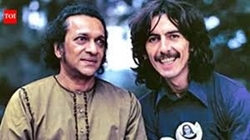
The announcement that Farhan Akhtar will play Ravi Shankar comes with an image most people already recognise: Shankar on stage at The Concert for Bangladesh, quietly changing the rules of what popular music could be used for. That moment in 1971, when George Harrison helped organise the first major charity concert in rock history at Shankar’s urging, was not a late-career footnote. It was the culmination of an influence that had begun years earlier, when a sitar entered the Beatles’ world and refused to behave like a pop instrument.Ravi Shankar did not merely lend the Beatles a sound. He introduced them to discipline, to seriousness, and to the idea that music could carry moral weight without becoming spectacle. The sitar was not a prop
When the sitar entered Beatles music, it was immediately treated in the West as a symbol. But to Ravi Shankar, it was never symbolic. It was a demanding classical instrument rooted in lineage, years of apprenticeship, and a relationship between teacher and student that left no room for shortcuts.That difference in attitude created an early tension. Shankar would later say of the first sitar-heavy Beatles track, “I was very shocked. I didn’t like it at all.” He added, with characteristic bluntness, that it sounded “so terrible” to him.
The honesty matters. This was not a guru indulging a pop experiment. It was a classical musician refusing to flatter fame.What changed his mind was not the sound, but the sincerity behind it.
Source: timesofindia.indiatimes.com