- Register
- Log in to Tune-In
- Wishlist (0)
-
Shopping cart
(0)
You have no items in your shopping cart.

In 1970, George Harrison bought a crumbling Victorian mansion from a group of nuns for £140,000.
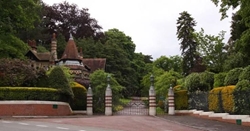
In January 1970, George Harrison walked through a vast, decaying house on a hill above Henley-on-Thames, in Oxfordshire. Grass was growing through the floorboards. Outside, the gardens had disappeared under brambles and overgrown yew.
Harrison was 27 and still a Beatle, though the band was weeks away from breaking up. He bought the place anyway. It would become his home, his recording studio and his life’s great project for the next three decades.
The eccentric lawyer who built it
Friar Park was the creation of Sir Frank Crisp, a wealthy London lawyer and passionate amateur gardener. In 1889, he bought land on the edge of Henley and built a sprawling Gothic Revival mansion, finished in the mid-1890s, with towers, spires and well over 100 rooms.
The house was striking, but the grounds were the real spectacle. Crisp filled them with surprises: caves, underground passages, a subterranean boating lake, grottoes lit to look magical, and a huge alpine rock garden topped by a model of the Matterhorn, built with thousands of tons of stone.
Crisp also had a sense of humor. He loved garden gnomes and placed many of them around the grounds. Stepping stones were hidden just beneath the surface of one pond, so visitors appeared to walk on water. During his lifetime, the gardens were regularly opened to the public.
Decline and the threat of demolition
After Crisp died in 1919, the estate passed through other owners. In the early 1950s, it was bought by an order of Catholic nuns, the Salesian Sisters of St John Bosco, who used it for teaching.
The nuns could not afford to maintain such an enormous property. A garden that once needed dozens of gardeners slowly fell into ruin. The lakes silted up, the glasshouses lost their glass, and the house itself began to rot.
Source: britishheritage.com