- Register
- Log in to Tune-In
- Wishlist (0)
-
Shopping cart
(0)
You have no items in your shopping cart.

Beatles News
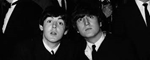
Aside from writing a majority of the entire Beatles catalog, in their earliest days as songwriters, John Lennon and Paul McCartney also wrote and produced songs for other artists.
Their songs, some of which were written by the duo in the late 1950s, were also recorded by The Beatles later on. Lennon-McCartney was credited with The Rolling Stones‘ 1963 hit “I Wanna Be Your Man,” along with several tracks for groups like The Fourmost, Billy J. Kramer with The Dakotas, and pop due Peter and Gordon.
Lennon-McCartney also offered songs —many of which became hits— to singer and fellow Liverpool friend Cilla Black, along with Mary Hopkin (also produced by McCartney) and her No. 2 single “Goodbye,” The Strangers with Mike Shannon (“One and One is Two”), singer P.J. Proby (“That Means a Lot”), The Applejacks (“Like Dreamers Do”), among other acts.
In addition to the initial American Songwriter list of 6 Songs You Didn’t Know Lennon and McCartney Wrote for Other Artists in 2022, here’s a look at five more songs by other artists that are credited to Lennon-McCartney.
Source: Tina Benitez-Eves/americansongwriter.c details
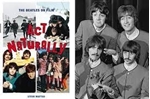
On Monday, July 6, 1964, Shaftesbury Avenue in London's West End was a scene of pandemonium the likes of which London hadn't witnessed since the day the Second World War ended. On this hot summer night, an invasion that had been percolating in the north of England for years finally came to a full boil. The Beatles' debut film was having its world premiere at the London Pavilion, replacing Tom Jones, the film that heralded the critical and even more importantly commercial arrival of the new British cinema explosion.
The Beatles — John Lennon, Paul McCartney, George Harrison and Ringo Starr — had burst onto the international pop music scene. Only a few short years ago, they were scruffy young lads from Liverpool, the industrial port city of the north of England, in love with rock 'n' roll, with faint dreams of stardom. The current lineup began with John Lennon asking Paul McCartney to join his group the Quarrymen, McCartney bringing in Harrison, with Lennon's art-school friend Stuart Sutcliffe joining and Pete Best settling in as their drummer, after many held that position in the group. Sutcliffe eventually dropped out to stay in Hamburg and pursue a career in art. When the group finally signed to Parlophone details
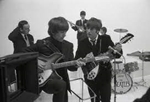
All of The Beatles processed John Lennon’s death in different ways. Paul McCartney had a tough time discussing it and initially called it a “drag,” while Ringo Starr left his trip in the Bahamas to fly to New York to be with Yoko Ono. The news crushed George Harrison, but instead of grieving in silence, the former Beatledecided to record music.
John Lennon was fatally shot outside his New York City apartment on Dec. 8, 1980. The news stunned the world as many networks and broadcasts stopped what they were doing to announce his death. Harrison was set to record music for his upcoming album, Somewhere in England.
When he heard the news, many believed he would postpone the session to another day. However, drummer Dave Mattacks said Harrison wanted to go through with the session as recording a song would be “therapeutic.”
“Ray [Cooper] called on the morning of the sessions and said, ‘I’m not sure whether it’s going to happen,’” Mattacks told Uncut magazine. “I asked why. ‘Have you not heard? John Lennon has been shot.’ There was a two- or three-hour gap when nothing happened, then Ray called back and the conversation was some details
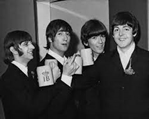
During the 1960s, music fans would always anticipate the latest single from The Beatles, who were taking the music industry by storm. The single’s A-side was almost guaranteed to be a hit, with the B-side usually landing with mixed results. However, Paul McCartney said The Beatles always tried to deliver excellent B-sides, even if they flopped.
The Beatles had many excellent A-side singles like “Hey Jude” and “Can’t Buy Me Love” that dominated the charts in the 1960s and are still widely listened to today. However, there are a few deep-cut B-sides that many people, including The Beatles themselves, believe are better than the A-side they were on. A few examples of these include “I Saw Her Standing There”, “I Am the Walrus”, and “Rain”.
“Rain” was released as the B-side to “Paperback Writer”. “Paperback Writer” was a No. 1 single, but The Beatles thought “Rain” was the better song. In the book The Beatles: Off the Record, Ringo Starr said “Rain” is one of his favorite Beatles songs and said it’s the best piece of drumming he did with the band.
Source: Ross Tanenbaum/che details
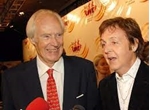
Paul McCartney helped create one of The Beatles’ best songs with “A Day in the Life.” That makes it one of the most iconic songs of its generation. The Sgt. Pepper’s Lonely Hearts Club Band finale stands as the greatest John Lennon-Paul McCartney song. Paul had a crazy thought to record an entire orchestra for the piece’s crescendo, but producer George Martin stepped up with a genius idea and made the climax even better.
“A Day in the Life” was essentially two songs — John’s disturbing opening vignette with Paul’s slice-of-life narrative attached after it. Macca’s crazy plan was to have an entire symphony orchestra play the swelling buzz of sound that married the two halves and reappeared at the end of the song.
Even crazier, Paul wanted to conduct the orchestra — 80 musicians or more — and have them play by feel instead of following sheet music. Both parts of that plan never really got off the ground, but Martin had a genius plan to save Paul’s crazy idea, writes Paul McCartney: A Life author Peter Ames Carlin:
Source: Jason Rossi/cheatsheet.com
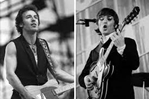
John Lennon was a fan of a Bruce Springsteen song and a Cars song for the same reason. He liked 1980s music with 1950s vibes as well as classic rock songs from the 1950s. The Springsteen song was huge in the United States but not the United Kingdom.
John Lennon was a big fan of one of Bruce Springsteen’s songs. He said it reminded him of 1950s music. In addition, John felt the Springsteen track was similar to one of his biggest solo hits.
The book Lennon on Lennon: Conversations with John Lennon includes an interview from 1980. In it, John compared some recent singles to his song “(Just Like) Starting Over.” For context, “(Just Like) Starting Over” is deeply indebted to the music of Elvis Presley and other early rock ‘n’ roll stars.
“Bruce Springsteen’s ‘Hungry Heart’ — which I think is a great record — is to me the same kind of period sound as ‘Starting Over,'” John said. “I think The Cars’ ‘Touch and Go’ is right out of the ’50s. ‘Uh, uh, oh … ‘ That new wave, a lot of it is ’50s stuff. But with the ’80s styling, and that’s what I think &lsqu details
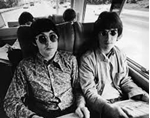
During an early performance with The Quarry Men, Paul McCartney realized George Harrison should take over his role in the band. Before the future Beatle was a bassist, he favored the guitar. While his skill at the instrument landed him a position in the band, he struggled to make it through his first performance. His moment of stage fright ultimately secured Harrison’s position with The Beatles.
McCartney first met John Lennon after his band, The Quarry Men, performed at a church fest. He introduced himself to the group afterward and played the guitar for them. McCartney impressed Lennon and, shortly thereafter, accepted an invitation to join the band.
McCartney joined the band in rehearsals and proved he was talented enough to play a solo during his first performance with the band. Once he got on stage, though, things didn’t go as planned.
“For my first gig, I was given a guitar solo on ‘Guitar Boogie,'” McCartney said, per The Beatles Anthology. “I could play it easily in rehearsal so they elected that I should do it as my solo. Things were going fine, but when the moment came in the performance I got sticky fingers; I thought, ‘What am I doing here?'”
The Beatles had an extensive catalog and a relatively brief touring career; as a result, there were a number of songs they never performed live as a band. In his solo career, Paul McCartney has dusted off some previously unplayed songs in concerts, but many have still gone unperformed. Here are five songs The Beatles never performed live.
‘And Your Bird Can Sing’
John Lennon wrote the Revolver song “And Your Bird Can Sing” in 1966, and it has puzzled listeners since. People have speculated that the song is about anyone from McCartney to Frank Sinatra to Mick Jagger and Marianne Faithfull. Lennon did little to clear it up. When reflecting on the song, Lennon rolled his eyes at it.
Because The Beatles stopped touring in 1966, they didn’t perform many songs from Revolver. Per NME, this was one that never saw the light of day during concerts.
Source: Emma McKee/cheatsheet.com
details
The world was shocked to hear the news of John Lennon’s death in 1980. Each member of The Beatles had a different reaction to the news, as they never expected to lose their bandmate and friend so soon. Ringo Starr was on vacation when he heard John Lennon was shot, and he immediately abandoned his trip to be with Lennon’s wife, Yoko Ono. On Dec. 8, 1980, Lennon was shot and killed just outside his apartment building in New York City. The former Beatle lived in New York with Ono, and their son, Sean Lennon. The news broke worldwide soon after, and tributes to the “Imagine” singer began emerging. The Beatles’ former drummer Starr was on vacation in the Bahamas at the time. In an interview with Howard Stern, Starr said he quickly abandoned his trip and flew to NYC to be with Yoko.
Source: Ross Tanenbaum/cheatsheet.com
details
Paul McCartney and John Lennon often collaborated on early drafts of Beatles songs. One would bring the song to the other, and they were often brutally honest about changes that needed to be made or if it was just plain bad. McCartney brought an unfinished draft of “Drive My Car” to Lennon, but the pair decided to change it with a different title.
Paul McCartney and John Lennon formed a songwriting partnership before The Beatles were even a concept. They became friends in Liverpool and bonded over their love of rock n’ roll. Once The Beatles started, the Lennon-McCartney partnership became responsible for hits such as “I Want to Hold Your Hand”, “Eight Days a Week”, and “Can’t Buy Me Love”.
After The Beatles ended, McCartney wondered if he would ever find another partner as perfectly suited for him as Lennon. In an interview with Rolling Stone, McCartney said it was impossible to find somebody as compatible as his former bandmate, saying they were practically “soulmates.”
Source: Ross Tanenbaum/cheatsheet.com
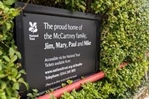
When Mike McCartney first saw his brother Paul on TV, he could only think of one thing: Where had his thick accent come from?
“I could not believe how Scouse our kid sounded,” Mike, 79, says. “I said to him after, ‘What was that all about?’
“He said he was putting it on so they would all sound more authentically Scouse. But only Ringo really had a strong accent, and George. We never did… Mum wouldn’t allow it.”
Matriarch Mary McCartney was very particular, setting high standards for herself, her children and her home.
The family’s post-war council house – 20 Forthlin Road in Allerton, south Liverpool – would become the birthplace of the Beatles.
It was where Paul, and his Beatles bandmates would create the sound that changed music for ever. It was the only home on the street with a phone – Mary was a midwife and always on call. It was also the only house in the area with a living room that had mismatched wallpaper, but wallpaper of the highest quality.
Source: Sanjeeta Bains/mirror.co.uk
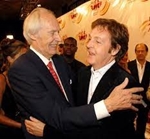
Paul McCartney played a huge role in The Beatles’ success. As one of the group’s main songwriters (along with John Lennon), Macca created some of the band’s biggest hits. Producer George Martin was also a key player. He was responsible for making the songs sound great. Paul and Martin worked together on Beatles songs for years, but there’s a connection between the producer and the self-professed instigator of The Beatles.
The influx of money that came with being pop stars meant The Beatles could afford to live almost anywhere. His bandmates settled in the London suburbs, but Paul remained in the city.
He moved in with his girlfriend, Jane Asher, and her family: Parents Richard and Margaret, and her older brother Peter.
Paul and Martin both had a connection to Margaret Asher. As Peter Ames Carlin writes in Paul McCartney: A Life, the bass-playing Beatle lived with her for several years, and Martin had her as a music teacher at the Guildhall School of Music & Drama years before he became a renowned producer of the most famous band in the world.
Source: Jason Rossi/cheatsheet.com
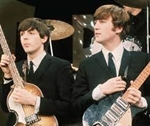
Paul McCartney is a huge fan of The Beatles’ “Here, There and Everywhere.” He said the track reminds him of Fred Astaire’s version of Cole Porter’s “Cheek to Cheek.” The song isn’t as good as other Beatles ballads like “Yesterday,” “Something,” and “In My Life.”
During a 2021 interview with NPR, Paul was asked why The Beatles’ “Here, There and Everywhere” is one of his favorite songs. “I think the structure of it,” he said. “I like it. It always reminds me, in structure, of a great Cole Porter song, ‘Cheek To Cheek,’ which Fred Astaire sang.
“And it starts off, ‘heaven, I’m in heaven, da la la la la,'” he added. “It goes through it. And then in the middle, it goes, ‘We’re out together dancing, da da da da da da.’ But it takes me back to heaven. And it’s so neat the way it just wraps itself up that I always thought, ‘Wow, that’s a great trick, you know?'”
Source: Matthew Trzcinski/cheatsheet.com
George Harrison spun musical gold throughout a four-decade-long career. Whether his talents were lent to the Beatles, the Traveling Wilburys, or to his own solo endeavors, he crafted great masterpieces in song. His works sounded unearthly and were lyrically profound, textured by inventive arrangements, and set alive with spirituality.
While the Harrison name itself carries a lot of weight, his style is unmistakable and instantly recognizable in the recordings of others. We’ve touched on a few, but here are three more songs George Harrison wrote for other artists that still echo his mystifying songcraft.
1. “Far East Man” – Ron Wood (1974)
Harrison joined forces with another great rocker, The Rolling Stones’ Ronnie Wood, to produce the slow grooving 1974 hit, “Far East Man.” They both would release recordings of the tune that year only months apart. Wood’s appeared on his solo debut, I’ve Got My Own Album to Do, released that September with Harrison’s arriving on his acclaimed Dark Horse in December.
While it was a collaboration that was born from the pair’s various romantic entanglements at the time, the result was a song about friend details
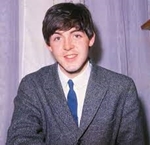
Paul McCartney said he wrote a song for The Beatles’ The White Album with Donovan. The track was originally about the moon but it turned into a song with simple lyrics. Paul is a big fan of the song but it’s nothing compared to a Hollies song with a similar name.
Paul McCartney said one song from The Beatles’ The White Album has one of his best melodies. Notably, he said another rock star helped him write the song. Despite Paul’s feelings about the track, it’s nothing special.
“I remember sitting around with Donovan, and maybe a couple of other people,” he continued. “We were just sitting around one evening after our day of meditation and I played him this one and he liked it and we were trying to write some words.”
Paul and Donovan had difficulty writing words for “I Will.” “We kicked around a few lyrics, something about the moon, but they weren’t very satisfactory and I thought the melody was better than the words so I didn’t use them,” he said. “I kept searching for better words and I wrote my own set in the end; very simple words, straight love-song words really. I think they’re quite effective.&rdqu details