- Register
- Log in to Tune-In
- Wishlist (0)
-
Shopping cart
(0)
You have no items in your shopping cart.

Beatles News
Bob Dylan and John Lennon were friends, but they were complete opposites in their approach to the media. Lennon was very revealing in interviews, particularly in the immediate aftermath of The Beatles’ breakup. He spoke candidly about his relationship with Yoko Ono and his distaste for other artists. Dylan, on the other hand, remained enigmatic. While he has given hundreds of interviews in his career, he is much less willing to open his private life to media scrutiny than Lennon was. In some ways, though, this has increased speculation about him.
A black and white picture of Bob Dylan holding a cigarette by a window. John Lennon wears a white turtleneck and glasses.
Dylan first met The Beatles in 1964 and quickly gravitated toward Lennon. The Beatles’ road manager Neil Aspinall believed that Dylan recognized Lennon as the leader of the band. Lennon also took a great deal of musical inspiration from Dylan and enjoyed his friendship.
“And John was a very good friend of Dylan’s,” director D.A. Pennebaker said, per the book The Ballad of Bob Dylan: A Portrait by Daniel Mark Epstein. “John just loved him. And vice versa. They adored each other. And the rest of the Beatles? Pau details
Paul McCartney has written many love songs about the woman in his life, and several are about his first wife, Linda. The two were married for almost 30 years before her death in 1998. During their time together, McCartney expressed his love in various ways, including writing songs about her.
“The Lovely Linda” is the opening track on McCartney’s first solo album, McCartney. He wrote the song in the early days of their relationship, and it features sounds of the pair hanging around the house. In an interview with Billboard, McCartney called the song a “direct diary.”
“That was when Linda and I first got together,” he said. “The record is me playing around the house. You hear her walking through the living room doorway out to the garden, and the door squeaks at the end of the tape. That’s one of the songs from my personal experience, with ‘the flowers in her hair.’ She often used to wear flowers in her hair, so it’s a direct diary.”
Source: Ross Tanenbaum/cheatsheet.com
details
Paul McCartney loved writing songs with John Lennon. However, if he had to choose one of the most exciting things about their time as songwriter partners, Paul said they came at songs from different angles. They were opposites most of the time but complimented each other.
In The Lyrics: 1956 to the Present, Paul wrote that no one was interested in his songs until he met John. In The Beatles’ early days, the songwriting pair wrote at least one song daily and only came close to a dry songwriting session once.
A dry songwriting session was rare for Paul and John because they knew how to work together. If one were stuck, the other would know how to help. “We could suggest the way out of the maze to each other, which was a very handy thing to have. We inspired each other,” Paul wrote.
Source: Hannah Wigandt/cheatsheet.com
details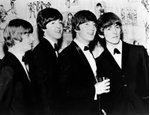
Many actors have a hard time watching their movies, and The Beatles were no different regarding their first movie, A Hard Day’s Night. While attending a screening of A Hard Day’s Night, every member failed to sit through the screening, except George Harrison. Harrison sat through the whole thing, which could be because he was the only one who could stand his acting.
The Beatles acted in movies such as A Hard Day’s Night, Help!, and Magical Mystery Tour. Each film was a musical comedy that featured excellent soundtracks promoting The Beatles’ music. None of the fab four were trained actors, so this was a new experience for them.
In the book George Harrison on George Harrison, Paul McCartney admitted they weren’t the best actors. Part of it was that they were lazy and would learn their lines shortly before shooting each scene. However, they did enjoy the experience of making their first movie.
Source: Ross Tanenbaum/cheatsheet.com
details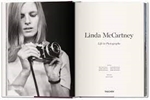
Did you know that legendary Beatle Paul McCartney's first wife was a professional photographer? And a brilliant one at that! Linda McCartney (1941-1998), born Linda Eastman, was the first-ever female photographer to shoot a cover image for Rolling Stone magazine - with an image of Eric Clapton. She was a renowned music photographer in her own right covering the early New York doo-wop scene.
The Linda McCartney Retrospective is an exhibition opening this week at the University of Arizona’s Center for Creative Photography, and has been curated by Paul McCartney and their daughter Mary McCartney, who is now also a photographer and documentary filmmaker, to showcase Linda's entire career from 1965 to 1997.
Source: Beth Nicholls/digitalcameraworld.com
details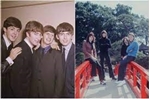
The Beatles and Pink Floyd were two of the world’s biggest bands in the 1960s and 1970s. And they hardly crossed paths while both bands were active, even though Floyd recorded their debut next door to The Beatles. Pink Floyd cut Paul McCartney’s contribution to their legendary 1973 album The Dark Side of the Moon, but The Beatles’ music made a surprise and nearly-hidden cameo on the record.
The Dark Side of the Moon features several voice cameos. Pink Floyd asked various Abbey Road Studios employees and others to answer questions (some simple, some existential) and included their responses on the album.
But not Paul’s.
Source: Jason Rossi/cheatsheet.com
details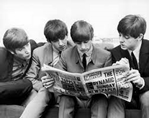
The Beatles often wrote songs about their personal experiences in their music. This included writing about real locations, such as places that impacted their lives while growing up in Liverpool. Several settings they wrote about are places that Beatles fans can still visit.
Here are 3 Beatles songs written about real locations
“Penny Lane” was released in 1967 as a double-A side single with “Strawberry Fields Forever”. The track was primarily written by Paul McCartney and is about a street in Liverpool called Penny Lane. The song is McCartney’s recollection of the street from his upbringing. In a 2009 interview with Clash, McCartney reflected on “Penny Lane”, saying it was a place he and John Lennon knew well.
Source: Ross Tanenbaum/cheatsheet.com
details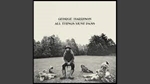
While The Beatles didn’t split until 1970, George Harrison already had ideas for his triple album, All Things Must Pass. He knew he wanted to go forward with his solo career, and Paul McCartney said he had an “affectionate” description for the album that sounded crude but could be considered an accurate metaphor.
While John Lennon and Paul McCartney were the first to announce their departures from The Beatles, George Harrison was the first Beatle to embark on their solo career. He had released two albums before the band split up: Wonderwall Music and Electric Sound. All Thing Must Pass was his third studio album and was a triple album consisting of 23 songs, including unreleased tracks that he wrote when he was with The Beatles, such as “Wah-Wah.” The album includes “My Sweet Lord,” his single that hit No. 1 on the charts, making him the first Beatle to reach that accomplishment alone. The album reached No. 1 on the Billboard 200 for seven consecutive weeks.
Source: Ross Tanenbaum/cheatsheet.com
details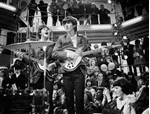
George Harrison was given the nickname the “Quiet Beatle” because he was reportedly shy and was often in the background of John Lennon and Paul McCartney. However, his contributions often went underappreciated by fans, who were mainly focused on who sang or wrote each song. George Harrison didn’t receive the same attention as McCartney and Lennon, but his guitar skills made him irreplaceable. Harrison proved in his solo career that he could write fantastic songs, but his songwriting talents were neutered in The Beatles. He did write a few hits, such as “Something” and “Here Comes the Sun,” but primary songwriting duties were given to Lennon and McCartney. In an interview with Salon, Harrison’s ex-wife Pattie Boyd said the singer was often frustrated that he was taking a backseat to his other bandmates.
Source: Ross Tanenbaum/cheatsheet.com
details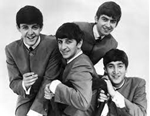
The Beatles are the rock band behind Revolver, an LP featuring “Yellow Submarine,” “Taxman,” and other hit songs. With such a new direction for this rock band, McCartney revealed the band almost recorded in the United States.
Here’s what we know about the 1966 release — which later premiered as Revolver (Super Deluxe).
In 1966, the Beatles released Revolver — even if it was considered the Tusk of the Beatles albums decades later. It featured songs “Love You To,” “Taxman,” and “Tomorrow Never Knows,” dipping into more creative recording processes for the rock band.
This collection continues to earn praise, with “Yellow Submarine” and “Eleanor Rigby” later featured in the Beatles’ animated film Yellow Submarine. According to Mental Floss, this was one of the first albums featuring a backward guitar track.
The website reports the Beatles used backward vocals on “‘Rain,’ the B-side to “Paperback Writer,” released just before they started recording Revolver. The backward guitar features prominently on ‘I’m Only Sleeping,’ the LP’s third track details
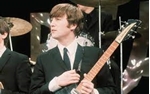
John Lennon once explained the meaning of The Beatles’ “I’m Only Sleeping.” Paul McCartney revealed why the song features the sound of a guitar getting played in reverse. The tune appeared on Revolver, which was more popular in the United States then the United Kingdom.
The Beatles‘ “I’m Only Sleeping” was inspired by an aspect of John Lennon’s life. Subsequently, Paul McCartney explained why the song features the sound of a guitar played backward. “I’m Only Sleeping” isn’t the only time The Beatles sang about wanting to sleep.
The book All We Are Saying: The Last Major Interview with John Lennon and Yoko Ono features an interview from 1980. In it, John was asked about the meaning of “I’m Only Sleeping.” “That’s me — dreaming my life away,” he said.
In the 1997 book Paul McCartney: Many Years From Now, Paul discussed the origin of “I’m Only Sleeping.” “It was a nice idea, there’s nothing wrong with it,” he said. “I’m not being lazy, I’m only sleeping, I’m yawning, I’m meditating, I’m having a lay-in the luxur details

London’s EMI/Abbey Road Studios were a microcosm of musical evolution in the 20th century. So, it makes sense that the connecting thread through a lot of that development is the most innovative band ever to exist in a year with a 19 in front of it. The monolithic discography The Beatles created at 3 Abbey Road both benefited from and inspired loads of other classic records made within those hallowed walls.
The elaborate three-studio setup built at that august address by EMI opened for business in 1931. The first client at what was then called EMI Studios was Sir Edward Elgar, the British composer most famous for writing Pomp and Circumstance. He led the London Symphony Orchestra through that perennial graduation march to cut the ribbon on the place.
The Beatles album Sgt Pepper’s Lonely Hearts Club Band can be bought here.
Source: Jim Allen/udiscovermusic.com
details
Paul McCartney rarely says anything negative about The Beatles and the band’s songs. He has said slightly negative statements about specific pieces, but it’s not usually a mean or biting comment. With that being said, he disliked a few Beatles songs, even if it can be hard to tell.
Here are 5 Beatles songs disliked by Paul McCartney ‘She Said She Said’ Paul McCartney and George Harrison | Edward Wing/Daily Express/Hulton Archive/Getty Images
“She Said She Said” is a favorite song for many Beatles fans, but Paul McCartney doesn’t share the same attachment. However, it may have to do with the story behind the song rather than the track itself. “She Said She Said” is based on an acid trip that George Harrison and John Lennon embarked on with actor Peter Fonda.
Source: Ross Tanenbaum/imdb.com
details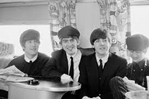
Paul McCartney revealed there’s a secret chord in The Beatles‘ “I’ll Get You.” He and John Lennon wrote the song while still living in Liverpool. The songwriting partners didn’t know many chords back then, but they had recently learned a new one when they wrote the tune.
The Beatles’ “I’ll Get You” was the B-side of their 1963 hit single, “She Loves You.” However, Paul and John wrote it years before while still living in Liverpool.
In The Lyrics: 1956 to the Present, Paul wrote that he and his songwriter partner wrote the tune at John’s house on Menlove Avenue. John’s Aunt Mimi raised him starting from when he was a toddler. She was a strict, strong-willed woman who didn’t want her nephew to waste his life on music.
According to Paul McCartney, John was “the posh one,” living in a nice neighborhood, but Mimi hated when John’s friends came over to play music. She treated them like they were the worst company in the world.
Source: Hannah Wigandt/cheatsheet.com

Sir Paul McCartney has been named as the UK's top choice to perform at King Charles' coronation.
King Charles III's coronation will take place on May 6. Reports in the past week claimed several artists had turned down the opportunity to perform at the event, including Harry Styles and Sir Elton John.
A survey by pub chain Hungry Horse asked 2,000 people for their choice on the ideal performer.
Adele, who came out as the UK’s favoured choice to perform with 16% of the vote, has also reportedly ruled out a coronation performance, meaning Sir Paul McCartney (8%) is the top artist yet to rule themselves out of the celebrations.
1980s icon Kate Bush took 8% of the vote, after her 1985 hit Running Up That Hill saw a huge resurgence throughout 2022 thanks to its use in TV series Stranger Things. Lewis Capaldi (8%), Stormzy (7%) and Tom Jones (6%) also finished within the top ten.
details