- Register
- Log in to Tune-In
- Wishlist (0)
-
Shopping cart
(0)
You have no items in your shopping cart.

Beatles News

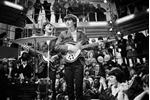
Initially, George Harrison was hesitant about participating in The Beatles: Anthology. However, he realized this was his group’s first and only chance to tell their story how it truly happened. Still, George had problems with certain scenes that painted inaccurate pictures or sensationalized rumors of some of the band’s worst times.
In Here Comes The Sun: The Spiritual And Musical Journey Of George Harrison, Joshua M. Greene wrote that George was initially reluctant to participate in The Beatles: Anthology. The project became an eight-part documentary, album, and book.
In an interview about the documentary, George said it was difficult at first because all three of the remaining Beatles, including John Lennon’s widow, Yoko Ono, wanted to tell the story they wanted.
“It is difficult when four people are telling the story because it’s actually four different stories,” George said. “I mean, you must realize it’s got to be somewhat of a compromise when four people are involved. But we’re trying to just say how it felt to us.”
Source: Hannah Wigandt/cheatsheet.com
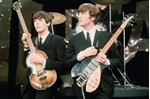
Paul McCartney and John Lennon were the gas that fueled The Beatles’ engine. The pair were awful to former bandmate Stuart Sutcliffe, and they didn’t necessarily end their relationship with drummer Pete Best on good terms. Still, John and Paul’s individual and combined songwriting talents helped propel the Fab Four to international fame. Their relationship soured by the time The Beatles broke up, but Paul praised John by saying he was like The Beatles’ “little Elvis” decades after they played their final note together. There might not have been any higher praise than that.
Source: Jason Rossi/cheatsheet.com
details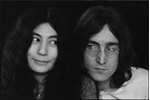
John Lennon helped put The Beatles on the map. His innate songwriting skills and competitive partnership with Paul McCartney led to dozens of hit songs for the Fab Four. Those enduring tunes are lucrative enough that John’s son lives off The Beatles’ money. Yet he was ready to leave it all behind as soon as he met Yoko Ono. Their relationship included several artistic collaborations, but Yoko criticized John’s contributions to their first work together.
John married his first wife, Cynthia, in 1962, around the time The Beatles first entered the British charts with “Love Me Do.” We all know what happened next. A stream of hit songs and groundbreaking albums followed, and the Fab Four rewrote the rulebook for popular music.
Yet everything changed when John met Yoko at an art exhibit in 1966. He almost instantly fell in love with the no-holds-barred artist. John’s passion for Yoko was so strong that he once said he had no interest in The Beatles after meeting her. They married in 1969, and the Fab Four soldiered on until 1970 despite John’s seeming disinterest.
Source: Jason Rossi/cheatsheet.com
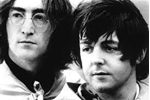
John Lennon made fun of Paul McCartney‘s “Another Day” in his tune “How Do You Sleep?” He was responding to his former bandmate’s song “Too Many People.” In 1970, The Beatles split. Shortly after, Paul sued the others in London’s High Court of Justice. He sought to dissolve the band’s contractual partnership after his bandmates appointed Allen Klein to preside over The Beatles’ financial affairs.
Paul wanted his father-in-law and brother-in-law, Lee and John Eastman, to be the group’s managers. However, as George Harrison said, he, John, and Ringo Starr weren’t trying to do what was best for Paul’s in-laws.
After Paul opened the lawsuit, John gave a defamatory interview with Rolling Stone. Paul grew sick of all the drama and wrote “Too Many People,” which appeared on 1971’s Ram. In The Lyrics: 1956 to the Present, Paul wrote it was a time when “John was firing missiles at me with his songs, and one or two of them were quite cruel. I don’t know what he hoped to gain, other than punching me in the face. The whole thing really annoyed me.”
Source: Hannah Wigandt/cheatsheet.com
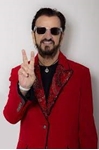
Ringo Starr and His All Starr Band - Steve Lukather, Colin Hay, Edgar Winter, Warren Ham, Hamish Stuart, Gregg Bissonette - announced they will be touring in the Spring. It will be primarily a west coast tour, starting May 19 and concluding June 17. The 20 dates will include shows in California, Arizona, Nevada, Oregon, Washington, Colorado and Utah. It will also see Ringo return to the Greek Theatre June 15.
“It’s a new year and here are some new tour dates,” Ringo affirmed. “I love playing with the All Starrs and can’t wait to be back out on the road again with this band. I send Peace and Love to you all and we hope to see you out there.”
Here is the list of tour dates:
Source: thebeatles.com
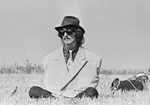
George Harrison didn’t know if his life was a “blessing or a curse.” On the one hand, George was blessed and fortunate enough to have become a rich and internationally famous rock star. On the other hand, there were times when he felt as if no one gave him the privacy he desperately craved.
According to Graeme Thomson’s George Harrison: Behind the Locked Door, George visited his childhood home in Liverpool in the mid-1970s. Looking up at the building, he thought: “How do I come into that family, in that house, at that time – and who am I anyway?”
After being with The Beatles and achieving worldwide success, George often questioned why God had placed him in that particular body and given him the life he had. Spirituality later taught him that everything was predetermined. George believed that God wanted him to be famous so that he could spread the spiritual word to all his fans. However, sometimes being famous wasn’t all that great.
Source: Hannah Wigandt/cheatsheet.com
details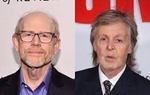
Ron Howard has reflected on his experience directing The Beatles documentary Eight Days A Week – The Touring Years, including meeting Paul McCartney.
The 2016 documentary film charted the band’s touring years from 1962 to 1966, including their final full public concert at San Francisco’s Candlestick Park.
Speaking to NME during an exclusive Absolute Scenes interview about the project (shown above), Howard said: “I really related to and respected Paul McCartney. What a work ethic. He loves it.
“I feel that way about directing. I feel that way about telling stories.”
While making the documentary, Howard explained that he gained a further appreciation of the band’s songwriting.
Source: Adam Starkey/nme.com
details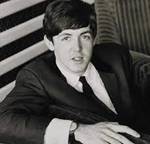
Paul McCartney said The Beatles’ “The Fool on the Hill” embodied the 1960s. He said it became relevant because of the fall of the Berlin Wall and other events from the 1980s. Björk covered “The Fool on the Hill” when she was a child.
Paul McCartney said The Beatles‘ “The Fool on the Hill” is one of his favorites among his own songs. He said it embodied the zeitgeist of the 1960s. In addition, he felt it was especially relevant after the fall of the Berlin Wall.
In a 1989 interview with the Los Angeles Times, Paul was asked to name his favorites among his own songs. “The more we go through this, the more I think [Bob] Dylan was right when he said all your songs are like your children,” he said. He said “The Fool on the Hill” was one of his best.
“It’s something I wrote at my dad’s house at Liverpool one weekend,” he added. “It’s good to do it in the concert now because I enjoy the way it seems to reflect the spirit of the ’60s.”
Source: Matthew Trzcinski/cheatsheet.com
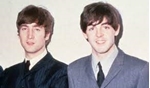
The Beatles' first major commercial hit turns 60-years-old this year. At the time of its release, in 1963, the Fab Four were still a growing band who - despite having found a lot of success already - struggled to get their songs atop the singles charts. Eventually, after releasing Please Please Me on January 11, 1963, changed everything for them. But John Lennon later revealed how he wrote the song alone before producer George Martin perfected it.
Please Please Me was The Beatles' first-ever number-one single. After being released on January 11 it reached the top of both the New Musical Express and Melody Maker charts. However, it only hit number two on the Record Retailer chart, which eventually evolved to become the Official UK Singles Charts, so the certification of the track's number-one status has since been called into question.
Regardless, it was extremely successful, selling more than 1 million units in the USA, and hitting platinum status in the process.
Source: Callum Crumlish/express.co.uk
details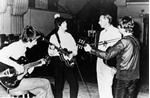
Paul McCartney said bandmate George Harrison and The Beatles‘ producer, George Martin, brought something interesting to his song, “And I Love Her.” They made it more “musical.”
During The Beatles’ early career, their manager, Brian Epstein, arranged for them to move to London, where the music business was, and live in an apartment in Mayfair. London was experiencing a massive redevelopment after World War II, and it was an exciting place to be. However, for Paul, that excitement didn’t extend to their living arrangements.
In The Lyrics: 1956 to the Present, Paul wrote he moved in with then-girlfriend Jane Asher and her family in their posh Marylebone home because the apartment Epstein picked “had no soul,” unlike the home where he grew up.
Source: Hannah Wigandt/cheatsheet.com
details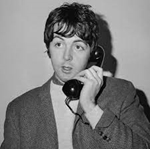
Paul McCartney really likes a cover of The Beatles’ “Yesterday” by a famous singer. He discussed his feelings about the singer in general.
The original version of “Yesterday” became a massive hit in the United States.
Paul McCartney said he sometimes considers The Beatles‘ “Yesterday” his favorite song. He liked one version of the song better than the Fab Four’s. On the other hand, he was less impressed with an Elvis Presley performance of “Yesterday.”
In the 2015 book Conversations with Paul McCartney, Paul discussed his favorite song. “When I’m asked which is my favorite song, it’s always a difficult question,” he said. “I sometimes say ‘Yesterday’ because it’s been covered by so many people.
“But more often I say ‘Here, There and Everywhere,'” he added. “It makes it on a number of levels. If it were someone else’s song, it would be one of my favorites.” For context, “Yesterday” became a massive hit while “Here, There and Everywhere” is an album track from Revolver that never became a single.
Source: Matthew Trz details
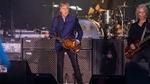
As one of only two remaining living members of The Beatles, Paul McCartney has a duty to the music community and the world to stay alive as long as possible.
For the most part, McCartney generally lives up to that duty.
The 80-year-old still tours and by all accounts is in fantastic shape for his age. McCartney even invited Foo Fighters founder and former Nirvana drummer Dave Grohl on stage last year for his first live appearance since the tragic passing of Foo Fighters drummer Taylor Hawkins.
But sometimes life can sneak up on you. And that’s exactly what happened to an unsuspecting McCartney over the weekend.
Source: Clay Sauertieg/brobible.com
details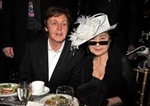
While Paul McCartney didn’t initially get along with John Lennon’s widow, Yoko Ono, the two seem to have a better relationship today. The pair began to connect after Lennon’s assassination in 1980, and McCartney said that speaking with Ono about John helped him get through his grief. In a 1984 interview with Playboy, Paul McCartney reflected on his reaction to John Lennon’s death and his current relationship with Yoko Ono. McCartney admitted he “never really got on that well” with Yoko when she was with Lennon. The former Beatle says that John changed after meeting her, but he understood he was in love. Following his death, McCartney said he started to get to know her better and found that they have some things in common. “I only started to get to know her after John’s death. I began wanting to know if I could be of any help, because of my old friend. And at first, I was a bit put off by her attitude of ‘I don’t want to be widow of the year.’ That’s what she said. At first, I felt rebuffed and thought, Oh well, great! Well, sod you! But then I thought, Wait a minute, come on. She’s had the tragedy of a lifetime here, and I’m being craz details
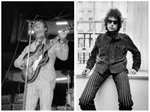
When The Beatles met Bob Dylan in 1964, John Lennon, Paul McCartney, George Harrison, and Ringo Starr were some of the world’s biggest names. Still, they were excited to meet the American musician. After their first meet up, during which Dylan famously gave the band marijuana for the first time, Dylan reportedly began focusing on one Beatle in particular. He believed Lennon was the band leader, so he paid him the most attention.In 1964, Dylan met The Beatles at the Delmonico Hotel in New York City. Dylan offered them a joint, but before anyone could take it, Lennon ordered Starr to try it first. Starr seemed hesitant, but Lennon told him he had to be the band’s “royal taste tester.” After a moment, he agreed. According to journalist Al Aronowitz, this move “instantly revealed The Beatles’ pecking order” (via the book Ringo: With a Little Help by Michael Seth Starr).
Source: Emma McKee/cheatsheet.com
details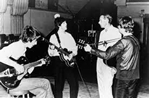
Paul McCartney said bandmate George Harrison and The Beatles‘ producer, George Martin, brought something interesting to his song, “And I Love Her.” They made it more “musical.”
During The Beatles’ early career, their manager, Brian Epstein, arranged for them to move to London, where the music business was, and live in an apartment in Mayfair. London was experiencing a massive redevelopment after World War II, and it was an exciting place to be. However, for Paul, that excitement didn’t extend to their living arrangements.
In The Lyrics: 1956 to the Present, Paul wrote he moved in with then-girlfriend Jane Asher and her family in their posh Marylebone home because the apartment Epstein picked “had no soul,” unlike the home where he grew up.
Paul met Asher in the spring of 1963 when she interviewed The Beatles for the Radio Times at the Royal Albert Hall.
He wrote, “She and I started dating shortly afterwards, and towards the end of the year the Ashers must have heard me grumbling about Mayfair and said, ‘Well, do you want to stay here?’ This gesture was in the long tradition of giving a garret room to a starving artist. So, I details