- Register
- Log in to Tune-In
- Wishlist (0)
-
Shopping cart
(0)
You have no items in your shopping cart.

Beatles News
Paul McCartney has been touring for decades, whether he’s with The Beatles, Wings, or his solo career. The artist often performs in his native country, the UK, but he often comes to America to entertain his millions of fans across the Atlantic. While he enjoys touring worldwide, there are two particular things Paul McCartney likes about performing in the U.S. In an interview for his website, Paulmccartney.com, the former Beatle discussed his GOT BACK tour, his 15th tour as a solo artist. The tour began in April 2022 and concluded in June 2022 with a performance at the Glastonbury Festival in England. McCartney has been performing for decades and in front of sold-out crowds possibly thousands of times.
Source: Ross Tanenbaum/cheatsheet.com
details
Ringo Starr once admitted that Paul McCartney had to call the rest of The Beatles to come to work. Paul always assumed the role of boss in The Beatles, whether he liked it or not.
The Beatles are frequently recognized as one of the best rock ‘n’ roll bands. However, like everyone else, they didn’t exactly want to come to work every day. “They” meaning George Harrison, John Lennon, and Ringo.
Besides being late for The Beatles’ first official meeting with their soon-to-be manager, Brian Epstein, because he was bathing, Paul was always punctual and ready to take on anything in the recording studio and beyond. He was often the overachiever, which later morphed into an authoritative, bossy demeanor.
Paul often called the rest of The Beatles to come into the recording studio after none of them showed up. In Martin Scorsese’s documentary, George Harrison: Living in the Material World, George explained he, John, and Ringo lived close to each other in Surrey. John would pick them up, and they’d smoke a lot of marijuana while Paul waited for everyone in the studio.
Source: Hannah Wigandt/cheatsheet.com
details
The Beatles, also known as Liverpool’s Fab-Four, were responsible for some of the greatest hits of all time during their brief timespan.
John Lennon, Paul McCartney, George Harrison and Ringo Starr burst onto the music scene in 1963 and became superstars across the globe.
However, everything good has to end, and the band left fans heartbroken after splitting in the 1970s.
But why did the band’s members decide to go their separate ways? Here we take a look at all the different reasons for the split.
There are numerous factors attributed to the break up of The Beatles, who parted in the 1970’s.
The sudden tragic death of their manager Brian Epstein in 1967 is thought to have been a huge contributing factor. After Epstein died of a medical drug overdose, the band were forced to take business matters into their own hands, which added extra stress to their already chaotic lives.
While Lennon, Harrison and Starr wanted Allen Klein, manager of the Rolling Stones, to take over, McCartney proposed his father-in-law’s company take charge and became unhappy when he was outvoted.
Source: Kian Rains/liverpoolworld.uk
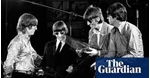
Yellow Submarine, Ringo Starr’s turn on Revolver, has been a gateway for children into the music of the Beatles since its release in 1966. A new reissue of the album makes that relationship more explicit: Giles Martin, son of original producer George and the sonic custodian of the Beatles catalogue, says his “de-mixing” of the album – using AI to separate individual instruments that were originally squeezed together on four tracks – was done in part with a playlist-listening younger audience in mind.
Martin recently told Variety that his teenage children listen to old and new music side by side, veering from Fleetwood Mac to Billie Eilish and Olivia Rodrigo. “[W]hat I want to make sure is that when people hear the Beatles, that it has the same dynamic as the other stuff they’re listening to,” he said. He added that 1969’s Abbey Road, recorded on a then luxuriant eight tracks and the first Beatles album not released in mono, stands out from the band’s catalogue as “it sounds more hi-fi than the other Beatles albums”. This might be, he proposes, one reason why it performs so well on streaming services.
Source: Eamonn Forde/theguardian.com
details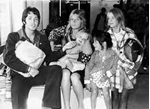
One challenging aspect of being a famous musician is balancing having a family while on tour. Many artists don’t take their kids on tour with them. However, Paul McCartney did bring his children on tour with him and still believes it was great for them.
While The Beatles were his musical family, Paul McCartney has a large family outside of music with five kids. He raised four of his children — Heather (legally adopted by McCartney), Mary, Stella, and James — with his wife, Linda, who he remained with until her death from breast cancer in 1998.
In 2002, McCartney married Heather Mills, and the two welcomed their child, Beatrice Milly, in 2003. Heather and Paul separated in 2006 and divorced in 2008. McCartney is currently married to Nancy Shevell, who he met in 2007.
In an interview for his website, Paulmccartney.com, the “Live and Let Die” singer explained what it was like to tour with his kids. McCartney called it “interesting” and “wacky” but was happy he decided to bring his family with him. He believed it was a helpful experience for his kids as traveling to various locations became a part of their education.
Source: Ross Tanenbaum/cheatshee details

After The Beatles broke up, Paul McCartney noticed a difference in the way the public perceived himself and John Lennon. He believed that traits people thought of as marks of creative genius in Lennon were seen as flaws in himself. McCartney also noted that people thought of Lennon as a deep thinker but didn’t think of him the same way. He didn’t believe that Lennon was a more profound thinker than him.
Lennon was murdered in 1980, and McCartney believes that fans rewrote history to make his contributions to The Beatles seem more substantial.
“The minute John died, there started to be a revisionism,” McCartney told Rolling Stone in 2001. “There were some strange quotes, like, ‘John was the only one in the Beatles.’ Or ‘Paul booked the studio’ — I don’t want to get into who said what, but that was attributed to someone who very much knew better. ‘John was the Mozart; Paul was the Salieri.’ Like, John was the real genius, and I was just the guy who sang ‘Yesterday’ — and I got lucky to do that.”
McCartney said that he tried to ignore this, but he couldn’t help but feel hurt by it.
Source: Emm details
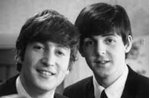
Paul McCartney and John Lennon were friends and collaborators for years. While their relationship grew fraught in their post-Beatles days, they repaired their friendship before Lennon’s death in 1980. Long before the public breakdown of their relationship in the early 1970s, McCartney and Lennon had a breakthrough emotional moment while in Florida. McCartney shared what they bonded over.In 1982, McCartney released the song “Here Today,” which he wrote shortly after Lennon’s death.
“What about the night we cried/Because there wasn’t any reason left to keep it all inside?/Never understood a word/But you were always there with a smile/And if I say/I really loved you/And was glad you came along/Then you were here today.”
The song was about his relationship with Lennon and referenced specific moments in their friendship.
Source: Emma McKee/cheatsheet.com
details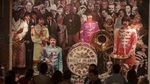
The painting that reportedly inspired the cover for The Beatles' legendary Sergeant Pepper album has been sold for €52,722 (£45,360) at Sotheby's in London, bringing the artwork back to public attention after 60 years in the hands of the same private collector.
"Homage to Douanier Rousseau" was painted by 22-year-old John Bellany in 1964 and portrays the Scottish artist himself (on the far right) alongside his friends and the four members of The Beatles Paul McCartney, John Lennon, George Harrison and Ringo Starr.
The artwork is a monumental diptych that Bellany painted after travelling to Paris on a scholarship in April 1963. There, the Scottish painter had the chance to observe the masterpieces from the time of the French Revolution, and when he returned to Edinburgh - where he attended the College of Art - he decided to produce "Homage to Douanier Rousseau".
Source: euronews.com
details
Pattie Boyd was nervous when she accepted a bit part in the 1964 movie A Hard Day's Night. Sure, she only had one line — "Prisoners!?" — but she was delivering it to the Beatles.
At the time, the 19-year-old was making a name for herself as a rising star in the modeling world, posing for haute couture fashion spreads with legendary photographers like David Bailey and John French. To date, the most screen time she'd had was a TV ad for potato chips. She assumed this audition was for just another commercial, but then she learned she'd snagged a role in a feature film alongside the four most famous men on the planet. The pressure was on.
"Initially I thought, 'I can't do this. I'm not an actress. There's no way I can do this,'" Boyd tells PEOPLE. "But my agent said to me, 'Don't worry, you've only got one word to say. Easy peasy. It'll be fine.'"
Source: Jordan Runtagh/people.com
details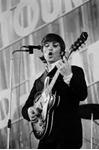
John Lennon wrote many hit songs for The Beatles and his solo career. Many of the songs he wrote include “Help!,” “Strawberry Fields Forever,” “Please Please Me,” and “Come Together.” One song he wrote during his tenure with The Beatles he called his “first real major piece of work.”
“In My Life” debuted in 1965 on The Beatles’ album Rubber Soul. While the song is credited to Lennon and Paul McCartney, Lennon wrote most of the lyrics. McCartney admitted later in an interview with Hit Parader that he wrote the music while the lyrics were “words that John wrote.”
The song was personal for Lennon as the lyrics referenced aspects of his life. The lyrics are based on a bus route he used to take in Liverpool, alluding to various locations along the way, including Penny Lane and Strawberry Field. These locations would later become Beatles’ song titles.
Source: Ross Tanenbaum/cheatsheet.com
details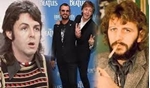
In the aftermath of The Beatles’ breakup, John Lennon, George Harrison, and Ringo Starr were not happy with Paul McCartney. They complained publicly about his desire to get his way, but they also were embroiled in a legal battle with him. McCartney did not like Allen Klein, who the other band members had hired as their manager, and sued the group so Klein didn’t have complete control over their music. On top of speaking negatively about McCartney’s personality, his former bandmates slammed his solo music. Starr said it made him sad.
When The Beatles broke up, some members, like Harrison and Lennon, felt a sense of relief. Starr, however, was left with feelings of resentment that would linger for the next two decades.
“I was mad,” he said, per the New York Daily News. “For 20 years. I had breaks in between of not being.”
Source: Emma McKee/cheatsheet.com
details
In 2011, Martin Scorsese released a documentary about George Harrison, and Paul McCartney’s daughter Stella felt it was an important watch. Her father and Harrison didn’t always get along, due in part to the fact that Harrison believed McCartney and John Lennon overlooked his contributions to The Beatles. She thought it was good for audiences to get to know Harrison through the documentary, as he didn’t get as much attention as Lennon and McCartney.In 2011, Scorsese released the two-part documentary George Harrison: Living in the Material World. The Harrison family specifically reached out to Scorsese because they wanted a capable filmmaker who could portray Harrison’s music and his spiritual life.
Source: Emma McKee/cheatsheet.com
details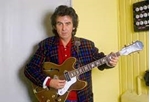
George Harrison had some conflicting thoughts on his legacy. Mostly, the former Beatle didn’t think people would remember him years after he died. If anyone did remember him, he didn’t want them to think of him as one thing. He wasn’t just a lead guitarist, record producer, or Beatle.
For some reason, George didn’t think many people would remember him years after his death. He spoke about his legacy with his wife, Olivia. She was surprised by what her husband said.
Olivia told the LA Times that George knew his music, especially his triple album, All Things Must Pass, “meant things to people. He knew it helped people in their lives — people wrote to him, they told him. And he said, ‘Even if it’s one person, even if it helps somebody, then that’s great.’ But he wasn’t concerned about how he would be remembered,” Olivia said.
Source: Hannah Wigandt/cheatsheet.com
details
The Beatles are known for shattering records with several albums and hit songs that dominated the charts and sales. One of their albums holds the record for the fastest-selling album. However, this album wouldn’t debut until years after the band already disbanded. 1 debuted in 2000 and is a compilation album of all of The Beatles’ number one hits. The album debuted 30 years after the band broke up but was still able to capitalize on the band’s everlasting popularity. 1 is a massive catalog of Beatles’ hits, consisting of 27 songs, including “Let it Be,” “Hey Jude,” “I Want to Hold Your Hand,” “Can’t Buy Me Love,” “Eight Days a Week,” “Yellow Submarine,” “All You Need Is Love,” and “Yesterday.”
Source: Ross Tanenbaum/cheatsheet.com
details
A five-disc set reveals a band awash with musical and sonic ideas, having fun and making breakthroughs.Imagine — or if you’re young or distant enough, enjoy — a moment when Beatles songs weren’t bone-deep familiar, weren’t canonical, weren’t thoroughly embedded in succeeding generations of rock and pop. A moment when the band that had worked its way up to becoming the most popular act in the Western world was still just four guys knocking songs around in a room and keeping themselves loose and whimsical. The room, however, was a well-equipped recording studio — creating what were then state-of-the-art four-track master tapes — and for all their joking around, the Beatles were also pushing themselves to evolve while applying ruthless quality control.
Source: Jon Pareles/nytimes.com
details