- Register
- Log in to Tune-In
- Wishlist (0)
-
Shopping cart
(0)
You have no items in your shopping cart.

Beatles News
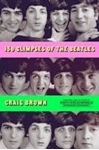
“They are awful. But I also think they’re fabulous. Let’s just go and say hello.”
What if young record store manager Brian Epstein had not, in 1961, after a scrappy gig in a “sweaty basement,” popped over to say hello to the band? What if, as Craig Brown wonders in 150 Glimpses of the Beatles, Paul had done better in his exams, moved up a school year, and never gotten to know George? Or Ringo had had more patience with U.S. immigration forms and succeeded in moving to Houston? Or the engine fire on a 1965 flight from Minneapolis to Portland had ended in catastrophe, cutting the band off in their prime? “Think what we would have missed if we had never heard the Beatles,” the Queen once mused. As the world marks 40 years since the murder of John Lennon — gone, now, for as long as we had him — shimmering alternative histories are especially poignant. A feeling of loss is palpable.
Source: Charles Arrowsmith/santafenewmexican.com
details
Legendary Beatle Paul McCartney teamed up with surf filmmaker Jack McCoy to produce Wine Dark Open Sea, a music video featuring McCartney’s heartfelt song of the same name written in tribute to the ocean and the graceful longboarding of Belinda Baggs, which premiered on November 5. The video is available on Epicentre.tv for a five-dollar donation that will go to supporting the work of brand new organization Surfers for Climate as well as partner organizations Surfrider Foundation Australia and Seed Mob.
Fight for the Bight brought surfers from Australia and all over the world together to fend off Norwegian oil giants intending to drill in the Great Australian Bight as the biggest coastal environmental action in Australian history. Now, having found their voice in defending their local coastline, many of these same surfers and activists have come together to defend coastlines all over the world from the ever-present threat of climate change under the organization of Surfers for Climate, founded by longboarding champion Belinda Baggs and former pro-surfer Johnny Abegg. And they’re not without help. Pro surfers Adrian “Ace” Buchan, Laura Enever, Pacha Light, McCoy, and musician Jack River stand in s details
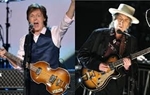
Sir Paul McCartney has said he sometimes wishes he could “be more like Bob Dylan”.
The acclaimed Beatles musician said the American singer-songwriter’s latest album, Rough And Rowdy Ways, is “really good”.
The 78-year-old told Uncut magazine: “I always like what he does. Sometimes I wish I was a bit more like Bob. He’s legendary … and doesn’t give a shit! But I’m not like that.
“His new album? I thought it was really good. He writes really well. I love his singing – he came through the standards albums like a total crooner. But, yeah, I like his new stuff.
“People ask me who I’m a fan of and Bob Dylan and Neil Young always make the list.”
Dylan scored his ninth number one album with Rough And Rowdy Ways – breaking two chart records in the process.
Source: Kerri-Ann Roper/uk.news.yahoo.com
details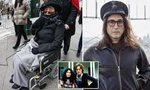
Yoko Ono appears to have stopped working and has handed many of her business interests over to her son Sean as she slows down at the age of 87.
The widow of Beatles legend John Lennon has been vocal for decades about global peace and used to personally attend exhibitions of her artworks.
But she has not been seen in public for more than a year and on October 5 we can reveal Sean Yoko Lennon was appointed a director at eight companies linked to Yoko and the Beatles, including Apple Corp.
He also joined the board at Lensolo, which deals with music rights of some of John’s solo work.
On what would have been John’s 80th birthday in October, Sean made a BBC documentary and an Apple Music show, but Yoko only tweeted a video where she appeared to be reading from a script.
A report in the New York Post in July suggested she needs a
wheelchair much of the time.
Source: Mark Jefferies/mirror.co.uk
details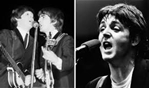
The Beatles’ back catalogue is pretty massive, with most of the songs written by the famous duo Lennon-McCartney. They were the brains behind many songs we know and love, from Hey Jude to I Am the Walrus. But which song is Sir Paul McCartney’s favourite?
As is often the case in music, it is hard to pinpoint one’s favourite song, album or even musician.
For Sir Paul and John Lennon, their music was likely very close to them, as they poured their hearts and souls out into their lyrics and melodies.
John spoke about his disdain for some music by The Beatles in his later years, while also admitting to some real favourites.
Sir Paul has never been quite so anti-The Beatles, but which song was his favourite?
Here are some of the songs which would likely appear in Sir Paul’s top selection.
Source: Jenny Desborough/express.co.uk
details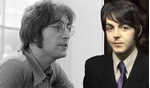
The Beatles unprecendented success in the 1960 made them the most popular act in the world. But with the world’s eyes on them, they could not escape some bizarre rumours hitting the newspapers - with the most tantalising being that Paul McCartney died in 1966.
The rumour goes that on this day, November 9, in 1966, McCartney died in a car crash on the M1 motorway in the UK.
It continues to say that, to spare the public the sheer grief of losing one of the band’s founding members, The Beatles secretly replaced him.
Even more bizarre is the suggestion that the surviving members of The Beatles held a McCartney “lookalike contest”, awarding the winning person the slot in the band.
The “new” McCartney was then, sometimes, referred to as William Campbell or Billy Sheers.
Source: Callum Crumlish/express.co.uk
details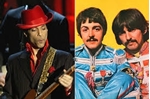
The Beatles and Prince are both iconic but they made very different music — or did they? Some believe Prince based his album Around the World in a Day on Sgt. Pepper’s Lonely Hearts Club Band after listening to the Fab Four for the first time as an adult. Is this rumor true? Here’s a look at what a member of the Revolution and Prince himself had to say.
The first Beatles song Prince ever heard was very strange
In an interview with Diffuser.fm, Bobby Z. of the Revolution discussed the time he played Sgt. Pepper on Prince’s tour bus and the Purple one heard the Fab Four for the first time. Prince heard the song “Good Morning, Good Morning.” The avant-garde song features animal sounds and snorts.
Source: americansongwriter.com
details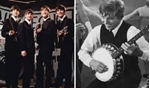
The Beatles and many other bands headed to the USA in the 1960s and penetrated the music industry. This was a major thing, and it was duly named the British Invasion. While their music was inspired by American artists such as Elvis, it turns out there was more to it than just this, and skiffle also played its part.
In an exclusive interview with Express.co.uk, Paul Endacott of Music Heritage London spoke about how skiffle affected the band in their early days.
Skiffle is a genre with influences from blues, jazz, and American folk music, which originated as a form in USA in the early part of the 20th century.
It became extremely popular in the UK in the 1950s, with artists known as Lonnie Donegan among the big names.
It is unknown where the name skiffle came from, but it has been suggested it was a slang term for the parties where skiffle bands would perform.
Source: Jenny Desborough/express.co.uk
details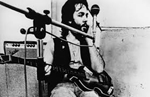
What made the 1968 White Album sessions so unpleasant for The Beatles? The list is long, but you can’t answer the question without mentioning the arrival of Yoko Ono on the scene and the growing creative frustrations of George Harrison.
These were the sessions at which Harrison couldn’t interest his bandmates in “While My Guitar Gently Weeps,” after all. And Ringo Starr actually left the group for a spell that summer. When Paul McCartney later described it as “the tension album,” he wasn’t exaggerating.
But McCartney had an idea for getting the band playing together in a looser setting for the next album. It involved a more stripped-down approach — the four Beatles and their instruments — and at the end of filmed rehearsals they would play their first concert in three years.
Source: cheatsheet.com
details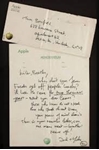
n angry letter John Lennon wrote to a Lexington man about his religious beliefs is going up for auction.
“Listen, Brother, Why don’t you Jesus Freaks get off peoples backs?” Lennon said in the handwritten letter dated Oct. 1, 1971.
He continued, “its been the same for two thousand years — wont you ever learn? those who know do not speak, those who speak do not know, your peace of mind doesn’t show in your neurotic letter, son. One mans meat — brother! Peace off!”
The missive, written on the letterhead of Apple, the Beatles’ record label, is signed “John & Yoko, ’71.”
The framed note and envelope addressed by Lennon himself, along with a matchbook and statement of provenance, are up for bidding online through RR Auction.
The recipient of the note was Tom Bonfield, who at the time lived in an apartment at 628 Lawrence Street, which is in the South Hill neighborhood near the University of Kentucky campus.
Lennon was writing in response to a letter Bonfield had sent him about his Christian faith.
Source: usnews.com
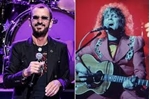
At last night’s (November 7) Rock and Roll Hall of Fame ceremony, late T-Rex frontman Marc Bolan was among the new inductees, and he was welcomed into the Hall by Beatles drummer Ringo Starr.
Alongside Bolan, Nine Inch Nails were also inducted, with Iggy Pop giving a speech to welcome Trent Reznor and co, while Depeche Mode also joined the revered list.
“People knew him as a great musician, a songwriter, a guitarist, but he was also a poet,” Starr said of his friend, who died in a car crash in 1977. “And he was really proud of that.
“He was always telling me that he was the Number One selling poet in Britain. In fact, his poetry was as important to him as his music. He had great style and was really unlike anyone else I have ever met.
Ringo added: “He was a great performer, just incredible. And that’s why I called the film we did together Born to Boogie, because he really was. I told Marc, I’ll bring the camera and everything else, you just bring yourself. We had a lot of fun together. I remember lots of laughter.
Source: Will Richards/nme.com
The Beatles’ company, Apple Corps took in over 50 million pounds last year.
Surviving members of the Beatles, Sir Paul McCartney and Ringo Starr, along John Lennon’s widow Yoko Ono and George Harrison’s widow, Olivia received 6.1 million pounds each.
This was made up of £1,417,000 in dividends and £4,719,500 in “connection with the provision of promotional services and name and likeness rights”.
Apple Corps Limited’s annual accounts showed a turnover of £50,244,899 for the 12 months ending in January, the equivalent of £137,657 a day, despite the group breaking up more than 50 years ago.
The company’s figures also revealed a pre-tax profit of £8,606,191. It was also revealed that a large proportion of that came from the Las Vegas stage show ‘Love’ which was a joint venture with Cirque de Soleil.
The figures show substantial growth on the previous year, when turnover was £36.5 million with a pre-tax profit of £5.5 million, and shares to McCartney, Starr, Ono and Olivia were £3,685,000.
Source: Paul Cooney/nova.ie
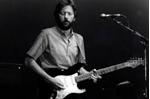
It was midsummer 1970 in Florida. Eric Clapton looked out over the blue water knowing his life was at yet another crucial crossroad.
"I was standing there wondering which way to go and was paralysed with fear about making a decision," he would later recount.
"It seemed there were all these choices, musically and emotionally."
Fed up with stardom, he'd dismantled his supergroup Blind Faith and fled Britain with a drug habit, a broken heart and a crazy plan to make an album that would win back a lost love.
A man with black hair poses close to a women with blonde hair in a black and white photograph
Pattie Boyd and George Harrison photographed in 1966, shortly before their wedding.(By Robert Freeman)
The woman in question was Pattie Boyd. She was the wife of one of Clapton's closest friends: former Beatle George Harrison.
Neglected and betrayed by her own husband, Pattie had grown close to Clapton, but in the end she could not bring herself to run away with him.
Source: abc.net.au
details
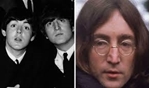
The Beatles started out with a bluesy, skiffle edge before they became famous. Their music evolved as their fandom grew, and by the end, their songs were far more experimental and full of intrigue. There are classic songs in every era of The Beatles - but which was John Lennon’s favourite one?
What was John Lennon's favourite song by The Beatles?
This is a tricky thing to work out as John spoke openly about various songs.
Naturally, as a songwriter it would make sense for him to lean closer to his own style, however in a number of interviews John spoke about which tracks meant the most to him, and some have mainly been written by his songwriting partner Sir Paul McCartney.
While it is hard to pin down his exact favourite song, there are some which he lauded in his lifetime which can give us a clear glimpse at his taste.
Source: Jenny Desborough/express.co.uk
details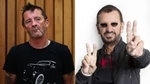
Phil Rudd has recently joined AC/DC with Brian Johnson and Cliff Williams to release an album amid the ongoing coronavirus pandemic. The album titled ‘PWR/UP‘ and will be released on November 13th.
Whatever, recently, during the interview, the successful drummer was asked, “Who were your guys, the drummers that you were rocking to when you started out?”, Phil Rudd replied and said:
“Well, we got Ringo, Charlie Watts, Ian Paice, just those ’60s guys, British rock guys, and Ringo’s sort of always a special kind of a dude. He was great – he was great, he had really great attitude.”
Following that conversation, the interviewer said that it’s funny to think of Ringo Starr and that if he thinks whether he is so underrated. Phil replied:
“I saw him play with Carl Perkins and Eric Clapton on that Carl Perkins birthday show they did – he’s just hot, he’s on it.
Source: Talha Cetinbas/metalcastle.net
details