- Register
- Log in to Tune-In
- Wishlist (0)
-
Shopping cart
(0)
You have no items in your shopping cart.

Beatles News

It wasn’t easy being John Lennon’s friend, and Yoko didn’t make things any easier.
“If anyone was doing the hanging on, it was John. He hung on to me, always had done. He always made me feel special, made it clear he was desperate for my company, especially when he was depressed and fed up, which he was for many years. He used to say to me: ’I don’t want to be a Beatle any more, stuck in a bag marked Beatle. I want to open the bag and let the Beatles out. I want to be myself.’” – Pete Shotton (as told to Hunter Davies)
As anyone who’s ever tried it will tell you, it’s hard to be a friend. However close or long term a friendship, there are always moments when a friendship is tested by actions or circumstances that make or break the friendship. In many, if not most, cases friendships fail these tests. Those few that survive (one hesitates to use the word pass, as friendships are acts of endurance rather than one-off events like tests) can reach a level of intimacy and trust that provide the persons involved with comfort on the long, hard road of life.
But how does one stay that kind of friend when that friend becomes one of the most famous p details
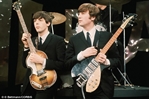
Sir Paul McCartney has revealed that he and John Lennon wrote their best tracks while sitting ‘opposite each other on twin beds’. The Beatles star recalled moments where the two of them would ‘spin off each other’ as they came up with new melodies.
Asked about his experience of writing music, the 74-year-old, who formed the Beatles in 1960 with Lennon, George Harrison and Ringo Starr, said: ‘There’s a million ways to write, but the way I always used to write was with John and it would be across from each other, either in a hotel bedroom on the twin beds, with an acoustic guitar and we’re just looking at each other.
‘He’d make up something, I’d make up something and we’d just spin off each other. ‘It’s always my big memory, is seeing John there, him being right-handed, me being left-handed, it felt to me like I was looking in a mirror.’
He said that the reason they worked so well together was because they had grown up together, and therefore had ‘developed a way of working’. Such was his fondness for that method that when it came to writing his final album of the 80s, Flowers In The Dirt, with Elvis details
Yes, we know that The Beatles are great. Yes, they are unarguably the most import band in musical history, achieved more in their brief period together as any band have before or since, and released a shed load of songs that are now stitched firmly into our cultural heritage.
Yes, John Lennon is one of the UK’s true icons, Paul McCartney is the most beloved and revered songwriter of our time, George Harrison is an underrated genius and Ringo – erm- narrated Thomas the Tank Engine.
We know all of this, but that doesn’t mean everything they released was great, does it? For every ‘A Day In The Life’ there is the repetitive horrors of ‘Why Don’t We Do It in the Road?’ For every ‘In My Life’ there is the bafflingly pointless ‘Flying’. For every ‘Dear Prudence’ there is the just plain awful ‘Piggies’, a song that somehow managed to inspire a mass murder.
No band can ever be that incredibly visionary, delicious and just plain brilliant the entire time so it’s time to shine a light on the very worst that The Fab Four has to offer. Here are the 10 worst Beatles songs.
10) ‘Ob-La-Di, Ob-La-Da’< details
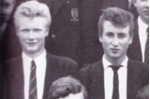
Tributes have been paid to Pete Shotton, the best friend of John Lennon, who has died aged 75.
It is thought he died from a heart attack at his home in Knutsford, Cheshire and funeral arrangements are currently being made.
Pete attended Dovedale Primary School and Quarry Bank High School alongside the future Beatle, and he later joined John – as a washboard player – in The Quarrymen. At school the inseparable friends came to be known as “Shennon and Lotton” or “Lotton and Shennon.”
Pete, with the financial backing of his long-time friend, bought a supermarket in Hayling Island, near Portsmouth, and later founded and built up the successful Fatty Arbuckle’s chain of restaurants, which he sold in the early 2000s. Pete was the co-author of John Lennon: In My Life, which was published in 1983, and later republished as The Beatles, Lennon and Me.
He remained close to John during The Beatles’ heyday, and his step son, Phillip Gouldbourn, told the ECHO: “One thing he was really proud of was that he was at times the only person, outside The Beatles and the producer, engineer and technicians, who was allowed in the studio with the band when they were r details
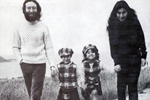
It was a place where John Lennon was to bring his own children to share his love of long summers in the Highlands. The ex-Beatle was to be a regular visitor to Durness in Sutherland during his younger years after his dear Aunt Mater remarried a dentist called Bert who owned a home that overlooked Sango Bay.
John, who travelled north with his cousin Stanley Parks, who lived in Edinburgh and later in Largs, would head to the coast for weeks on end, often being dragged into helping his uncle fix up the house.
But fishing, walking and shooting were the norm, Parks later recalled, with a young Lennon heading up into the hills on his own. The musician has also been remembered for his high jinks in the Highlands, with the singer tying seaweed to shop doors to stop workers from leaving.
“The family party roughed it in a primitive farmhouse lit by oil lamp and candles and noisy with the screeches of Mater’s pet parrot,” wrote Philip Norman in his biography John Lennon: The Life. The house where Lennon holidayed at Sangomore, a settlement at Durness, was demolished around four years a go with a new property built by the owners.A plaque on the wall of the property marks the association with the Be details
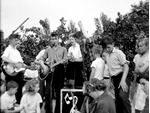
It was one of the most important days in pop history and in case you weren’t there it’s being recreated 60 years on.
When St Peter’s Church in Woolton hosted a fete on the afternoon of July 6, 1957, the decision to have local bands performing for the amusement of the crowds led to a meeting which changed the direction of music in this country.
This was the day when a young Paul McCartney was introduced to a 16-year-old John Lennon , who was there with his group The Quarrymen. To mark the diamond jubilee of the friendship which led to The Beatles being formed just a few years later, the fete is being staged again for a 21st Century crowd.
The Quarrymen - still touring today - have already confirmed for the event. Like in 1957, they will perform on the back of a flatbed truck on a tour of Woolton Village with Doug Chadwick, the man who was behind the wheel on that momentous day when the band sang from a similar vehicle.
Julia Baird, John Lennon’s sister who was also in attendance at the original fete, will judge the children’s fancy dress competition.
As is traditional with summer fetes, the Rose Queen will be crowned and visitors can also tuck in to foods from details
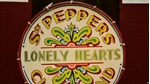
It was 50 years ago today — almost — that Sgt. Pepper taught the band to play.
The English city of Liverpool is getting set to celebrate the half-centenary of “Sgt. Pepper's Lonely Hearts Club Band,” one of the most influential albums by local heroes The Beatles.
The city announced Wednesday that it has commissioned 13 artists to create works based on the album's 13 tracks. They include choreographer Mark Morris' dance tribute to the title song, cabaret artist Meow Meow's “outlandish procession” based on “Lovely Rita” and a mural by U.S. artist Judy Chicago inspired by “Fixing a Hole.”
There will also be a singalong by 64 choirs of the jaunty “When I'm Sixty-Four.”
The works will have their world premieres at venues across Liverpool between May 25 and June 16. On June 1 — the anniversary of the album's release — the city will host a fireworks extravaganza by French pyrotechnic artist Christophe Berthonneau.
By the second half of the 1960s, The Beatles had tired of touring. They played their last live concert in August 1966 and devoted their energies and creativity to the studio. “Sgt. Pepper” w details
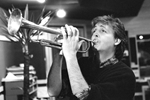
By the late-1980s, Paul McCartney may have been the only artist on the planet uninterested in sounding like the Beatles. But then his new collaborator, fellow British superstar Elvis Costello, reunited him with an old friend: his iconic violin-shaped Hofner bass. The instrument had last seen action during the band’s final live performance on the roof of their London offices almost two decades before, and a faded setlist from their last tour remained affixed to the side with yellowed scotch tape. “He was a big Beatles fan and said, ‘Hey, do you still use your Hofner?’” McCartney tells PEOPLE exclusively. “I had semi-retired it. But he said I should get it out, and I rediscovered it.”
In doing so, he rediscovered his voice. After several years of exploring the latest synth-pop trends with mixed commercial success, McCartney got back to where he once belonged on his 1989 album Flowers in the Dirt. The four tracks co-written with Costello at McCartney’s Hog Hill Mill studios in rural Sussex, England, formed the foundation of his most vibrant and daring work in years. In preparation of an extensive reissue featuring unheard demos and rare session outtakes due out March 24, McCa details
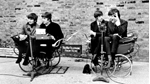
Saturday’s 2017 San Diego Beatles Fair comes 53 years and 45 days after The Beatles first performed on “The Ed Sullivan Show.” An audience of 73 million tuned in to watch that telecast on Feb. 9, 1964. The impact of the four-man band from Liverpool was profound for several generations of musicians and fans alike.
How profound? These quotes from various Union-Tribune interviews help tell the story.
“That one performance changed my life," Billy Joel recalled.
“I was like every kid in America: I sat there, mesmerized, and it was life-changing,” said former Arkansas Governor Mike Huckabee.
"I'm amazed at The Beatles’ ingenuity and willingness to experiment with different instruments and music," Rage Against The Machine guitarist Tom Morello said.
"There was nothing like them, before or since," agreed John Flansburgh of They Might Be Giants.
"A blueprint for me was The Beatles," Sting said.
"They turned me on to music,” Ozzy Osbourne concurred.
“Hearing The Beatles is what made me want to do what I do.” "They created an excitement that made music magic," Aerosmith guitarist Joe Perry marveled. "And then they to details

In a reflective tribute to the late Chuck Berry, Paul McCartney honored the rock icon's massive influence on the Beatles' formative music. "To us, he was a magician making music that was exotic, yet normal, at the same time," the singer wrote on his website. "We learnt so many things from him which led us into a dream world of rock & roll music."
While admitting it's "not really possible to sum up what he meant to all us young guys growing up in Liverpool," McCartney pinpointed a few signature moments that demonstrated Berry's genius as a guitarist and lyricist. "From the first minute we heard the great guitar intro to 'Sweet Little Sixteen,' we became fans of the great Chuck Berry," he continued. "His stories were more like poems than lyrics – the likes of 'Johnny B. Goode' or 'Maybellene.'"
The former Beatle also recalled meeting his rock idol in Berry's hometown, St. Louis, during a tour stop. "It's a memory I will cherish forever," he said, calling him "one of rock & roll's greatest poets."
The Beatles covered one of Berry's signature hits, 1956's "Roll Over Beethoven," on their second LP, 1963's With the Beatles. They also added their own spin to "Rock and Roll Music" on 1964's Beatles details
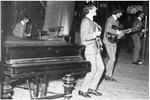
As one of the world's most iconic bands you probably won't be surprised to discover The Beatles made quite an impression on Bristol during their visits.
As part of our series celebrating the up-coming 150 anniversary of the Colston Hall we've been granted rare access to their archives and we've taken a look at when the iconic Liverpool four-piece regularly stole headlines performing in the city.
There were threats of bans, day-long queues for tickets and John, Paul, George and Ringo were even 'attacked' on stage – there was never a dull moment.
During the 1960s, The Beatles were just one of an abundance of iconic acts including The Rolling Stones, Bob Dylan, Sir Cliff Richard and Jimi Hendrix booked to play the Colston Hall.
Many of these gigs and more were penciled in by Bristol's legendary promoter Charles H Lockier. Delving through the Hall's archives, thanks to Lockier keeping newspaper cuttings, there was quite a ruckus ahead of The Beatles bringing their tour to Bristol in November, 1963.
After something of an unruly Colston Hall appearance by Gerry and The Pacemakers the city's entertainment committee, overseen by the council, seriously discussed whether Bristol s details
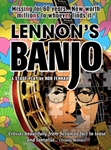
From the writer of the stage play adaptation of Helen Forrester's 'Twopence to Cross the Mersey' comes a brand-new comedy about the disappearance of Lennon's first musical instrument.
The play is based on the 2012 novel 'Julia's Banjo' by Rob Fennah and Helen A Jones and will mark the 60th anniversary of Julia Lennon's death and the disappearance of the banjo she taught her son to play.
Produced by Pulse Records Ltd in association with Bill Elms, Lennon's Banjo will open at Liverpool's Epstein Theatre on Tuesday 24th April 2018 for a two-week run until Saturday 5th May. Full cast and creative team to be announced soon.
Set in present day Liverpool: When Beatles tour guide Barry Seddon finds a letter written by John Lennon he unearths a clue to the solving the greatest mystery in pop history - the whereabouts of Lennon's first musical instrument which has been missing for 60 years. But Barry's loose tongue alerts Texan dealer, Travis Lawson, to the priceless relic. In an attempt to get his hands on the letter and the clues within he persuades his beautiful wife, Cheryl, to befriend the hapless tour guide and win his affections. The race for the holy grail of pop memorabilia is on!
"The intrigue an details
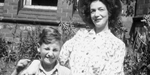
THE MUSICAL instrument on which John Lennon strummed his first tune has been billed as the 'holy grail of pop memorabilia' with experts claiming it could be worth up to £3 million.
The whereabouts of the much-fabled banjo has been a mystery more than 50 years. The last time anybody saw or heard of the banjo was before Lennon's beloved mother Julia was killed in a road accident in Woolton, Merseyside, in 1958. But now author and playwright Rob Fennah is on a personal quest to locate it. In a new novel, Julia's Banjo, Rob, 47, from Crosby, Merseyside, tells the little-known story of a teenage Lennon learning how to play his Rock 'n' Roll favourites with his mother Julia. The book tells the fictional story of Beatles tour guide, Barry Seddon, who finds a letter giving him clues to the location of the banjo before ruthless Texan antique dealer Travis Lawton hears about the priceless relic and a drama ensues.
In real life, for more than a decade Mr Fennah has combed through car boot sales and dusty attics in a bid to find the 'catalyst that changed the world'. Now he is urging people in Liverpool to rummage through their wardrobes and attics to check whether 'Julia's banjo' banjo could be lurking unacknowledged details
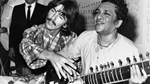
When someone nonchalantly decorated the set for the Beatles' film Help! with a sitar, they were probably thinking it added a certain Eastern exoticism. In a break between takes, George Harrison picked it up and tried to work out how to play it. That set decorator could never have foreseen how this would change the course of popular culture, if not history itself.
Chances are that George's first efforts were less than dulcet, given he'd have had little idea how to tune the labyrinth of strings. Nonetheless his interest was piqued, and so he sought, well, help.
That mainly came in the shape of Ravi Shankar, one of the great sitar players of the century. A friendship blossomed, as, gradually, did Harrison's ability on the instrument, to the point where he could add sitar to Lennon's Norwegian Wood on the Rubber Soul album. By the time the band came to record Sergeant Pepper's, Harrison was capable of playing his own much more demanding Within You, Without You, the song that, more than any other, turned a generation of Western listeners onto the shimmering enchantment of Indian classical music. From there it was a short hippie shuffle to a fascination with Indian mysticism, meditation and yoga. Suddenly mind-expandi details

The 1980s had not been going well for Paul McCartney. A series of commercial flops left even the artist taking stock. "It was time to prove something to myself," McCartney said back then. That he did. "Flowers in the Dirt," released in 1989, marked a rebirth.
But the most intriguing element of "Flowers" was shelved for decades. In 1987, McCartney had invited Elvis Costello to work with him. Four of their songs ended up on "Flowers," but a few others never came out. And both McCartney and Costello agree that their nine initial demo recordings remain the best part of their collaboration. On March 24, those demos are being released as part of an elaborate, box-set reissue of "Flowers in the Dirt."
We spoke recently with McCartney and Costello, separately and by phone, about their intense writing spurts, the challenges of turning the demos into a polished album and about their obvious differences over a certain synth-pop group.
In 1986, McCartney released his sixth solo studio album, "Press to Play," working with producer Hugh Padgham, known for his work with Phil Collins and the Human League.
McCartney: Sometimes you get caught up in trying to be the current flavor, trying to go along and flavor you details