- Register
- Log in to Tune-In
- Wishlist (0)
-
Shopping cart
(0)
You have no items in your shopping cart.

Paul McCartney, Unfiltered: On Lennon, His Love for “Getting Stoned and Having Great ...
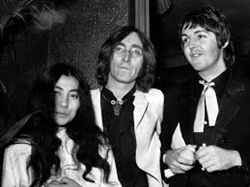
The train from London cut through the verdant English countryside like a dreamy reverie. Tidy suburbs gave way to rolling hills until I was deposited in East Sussex, the enclave along the English Channel where Paul McCartney maintains a 160-acre estate and neighboring recording studio. The landscape outside looked like Hobbiton: sheep and hares dotting the meadows, a Dutch windmill towering overhead.
When Sir Paul arrived, he was dressed entirely in black, looking spry and sunny. He guided me to an upstairs lounge, where we settled on a couch, a plate of chocolate chip cookies between us. For the next hour and 20 minutes, it was just Paul and me.
Man on the Run, a new documentary about McCartney’s formation of Wings in the 1970s, arrives on Prime Video February 27. Directed by Morgan Neville, it is another in a series of McCartney-approved films that burnish not only the Beatles’ legacy, but also his own. The occasion of the film—and Jann Wenner’s recent 80th birthday—is an opportune time to publish the full and unexpurgated interview I conducted with McCartney for Sticky Fingers: The Life and Times of Jann Wenner and Rolling Stone Magazine, only a fraction of which made it into the book. The interview is an exegesis on McCartney’s relationship with Rolling Stone and the underground press of the 1960s, but also a deep dive into Beatles history—the breakup; the legal debacles that tore the band apart; Paul’s admiration and skepticism of Yoko Ono; his rocky relationship with John Lennon in the post-Beatles years; and the duo’s eventual reconciliation in Santa Monica in 1974.
On March 25, 2015, I’d flown to England with low expectations, figuring a rock-and-roll lion of McCartney’s stature would be overly diplomatic. Instead he was candid, freewheeling, and even pointed, blaming Rolling Stone and the Rock & Roll Hall of Fame for crafting a revisionist history of the Beatles that cast him as the perennial also-ran to Lennon, whom the magazine venerated after his 1980 assassination—transforming Lennon into “the James Dean character,” says McCartney. Looking back, it was an opening salvo in Paul’s decade-long campaign to establish himself in popular memory as the co-equal to Lennon—foreshadowing Peter Jackson’s epic Get Back documentary and the many books, films, and exhibits that McCartney has since produced. In the interview—which Vanity Fair has published in two parts—McCartney was keen to separate myth from fact, taking issue with biopics of the band and even published histories, including the work of the foremost Beatles scholar, Mark Lewisohn. “It’s interesting because I’m a fact, not a myth,” he told me. “For me, this is fact.”
Source: vanityfair.com/Joe Hagan