- Register
- Log in to Tune-In
- Wishlist (0)
-
Shopping cart
(0)
You have no items in your shopping cart.

"The greatest pop record ever made. A record that never dates, because it lives outside time
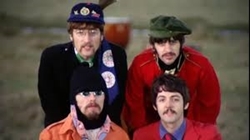
"The greatest pop record ever made. A record that never dates, because it lives outside time”: How The Beatles created Strawberry Fields Forever – the experimental masterpiece that John Lennon regarded as the best song he ever wrote for the band.
Lennon once described Strawberry Fields Forever as “one of the few true songs I ever wrote”, adding that, along with Help!, “they were the ones I really wrote from experience and not projecting myself into a situation and writing a nice story about it”.
Strawberry Fields Forever is quite simply a masterpiece, a poignant, heartfelt song that bridges the innocence of Lennon’s post-War childhood with the kaleidoscopic, heady sensation of ’60s psychedelia.
It is also a landmark moment in the rich back catalogue of The Beatles. Like everything within the exhaustively chronicled career of The Beatles, there's no shortage of opinions on when exactly John Lennon first came up with the germ of Strawberry Fields Forever.
Forums were abuzz in late 2024, when a clip in the Beatles ’64 documentary showed Lennon in a New York hotel room at the height of Beatlemania playing what certainly sounds like the opening, descending melody of Strawberry Fields Forever on a Melodica. Some observers were not convinced.
What is fairly certain is that Lennon wrote the whole song between 26 September and 6 November 1966 in Spain, during filming for the Richard Lester-directed film How I Won The War, a black comedy in which Lennon plays hapless Private Gripweed.
In David Sheff’s 1980 book, The Last Major Interview With John Lennon And Yoko Ono, Lennon recalled the writing of Strawberry Fields Forever: “We were in Almeria,” he said, “and it took me six weeks to write the song.
“I was writing it all the time I was making the film. And as anybody knows about film work, there’s a lot of hanging around. “I have an original tape of it somewhere, of how it sounded before it became the psychedelic sounding song it became on record.”
Like the Paul McCartney-penned Penny Lane, Strawberry Fields Forever was Lennon’s nostalgia-fuelled look back to his childhood years in Liverpool.
Source: musicradar.com