- Register
- Log in to Tune-In
- Wishlist (0)
-
Shopping cart
(0)
You have no items in your shopping cart.

When Paul McCartney made an epic return to the Cavern Club after 36 years
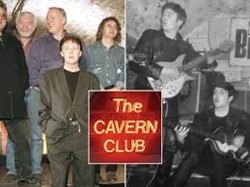
The Royal Albert Hall, Madison Square Garden, Sydney Opera House, Red Rocks amphitheatre in Colorado, Carnegie Hall, Élysée Montmartre, the Hollywood Bowl.
Throughout the world, these venues are prized by music lovers as places where music moments came to life – and in some cases became legend. But there's one particular music venue in Liverpool that quite literally birthed a legendary force in music: the Cavern Club.
Of course, it goes without saying that most of us know it was The Beatles that found their footing at this local Liverpool venue in their formative years.
The Beatles' best albums, ranked: When Ringo Starr nearly reunited The Beatles for his 1973 debut solo album. The song George Harrison wrote on the day he quit The Beatles. The Beatles biopics: Cast, director, release date and songs for the four upcoming movies.
A jazz club in its original iteration, the Cavern Club became the centre of all things Merseybeat before The Beatles burst onto the scene.
It's the venue's history with John Lennon, Paul McCartney, George Harrison and Ringo Starr (and Pete Best, in fairness), which has made it globally renowned.
So it was music to people's ears when Paul McCartney revealed he was returning to play the Cavern Club for a one-off show in 1999.
It was 36 years after The Beatles performed their for the very last time. The Beatles' final ever show at the Cavern Club unfolded on August 3, 1963, shortly before Beatlemania gripped the world. So naturally, after Macca announced his return to the venue during a televised interview with Michael Parkinson on December 3, it caused bedlam.
"I am going back for just one night as a nod to the music that has always and will ever thrill me," he revealed. "I can’t think of a better way to rock out the end of the century than with a rock ‘n’ roll party at the Cavern."
The gig took place eleven days after the announcement that he'd be returning to where the Fab Four learned their trade. The biggest issue for fans of his and The Beatles however, was that there were only 300 tickets available.
McCartney was promoting his 1999 album Run Devil Run, which was ultimately a covers album of golden oldies.
But because the album largely featured songs that he, John, George and Ringo would have been listening to in those days, his management suggesting going back to Cavern. At first, Macca had reservations about returning. Firstly, the venue had been updated and was now only 50% on the original site.
It meant that the stage was the other side of the venue, which provided a few more logistical problems. McCartney and his team knew that if any other venue hosted the gig, it'd just be like any other show. But if he returned to the Cavern Club, it'd be an explosive news story that the world would pay close attention too. They were right. Paul McCartney was finally back in the Cavern Club.
Demand for tickets went through the roof as expected, with fans having to grab any that were raffled through local HMV stores.
Ultimately it was a lottery for anybody trying to secure a coveted ticket – it was said that over a million people recorded an interest in buying one.
Fans were on the phone day and night trying to get tickets, whilst anybody that worked somewhere vaguely associated with The Beatles (Apple, EMI, Abbey Road Studios etc) wanted in.
There was truly worldwide demand to get into the Cavern Club to see Paul McCartney up close and personal.
Tickets were extraordinarily rare. But because the gig was recorded, thousands of fans congregated to watch it in Liverpool's Chevasse Park on an outdoor screen, whilst three million people were able to watch it on the internet and BBC Radio 2 broadcast it later in the evening.
Source: Thomas Edward/goldradio.com