- Register
- Log in to Tune-In
- Wishlist (0)
-
Shopping cart
(0)
You have no items in your shopping cart.

Beatles News
George Harrison wrote a Beatles song while horribly jetlagged. Here's why a Beatles associate thought it was a simpler song than expected.
In the latter half of the 1960s, George Harrison began writing more songs for The Beatles. While he hadn’t had much interest in songwriting early in the band’s career, he took it more seriously in later years. He was so dedicated to songwriting that he wrote one song while reeling from jetlag.
In 1967, Harrison traveled to Los Angeles with his wife, Pattie Boyd, road manager, Neil Aspinall, and friend, Alex Mardas. He went from the airport to his rental home, where Beatles press officer Derek Taylor was due to meet him. Taylor was running late, though.
“By the time we got there the song was virtually intact,” Taylor said, per the book A Hard Day’s Write: The Stories Behind Every Beatles Song by Steve Turner. “Of course, at the time I felt very bad. Here were these two wretchedly jetlagged people and we were about two hours late.”
Still, Harrison used the wait time to write “Blue Jay Way,” a song he named after the street where he was staying.
Source: Emma McKee/cheatsheet.com
Sir Paul McCartney is a music icon who has a special bond with his youngest daughter, Beatrice.
Her birth was a "kind of miracle" for him and his ex-wife Heather Mills who lost a limb when she was 25.
McCartney raised his daughter without a nanny and kept her away from the limelight.
Sir Paul McCartney, the iconic musician with a career that spans several decades, is not only celebrated for his unmatched contributions to music but also for his role as a devoted father. Among the many milestones in his life, the birth of his daughter is a significant chapter, that came as a surprise for both McCartney and his then-wife Heather Mills.
Their daughter's arrival came under unique circumstances, marking a tender milestone in their lives as McCartney already had adult children and Mills believed it was unlikely she would ever bear a child. Despite his age and fame, McCartney's approach to fatherhood with his youngest child was remarkably down-to-earth.
Source: Amo Mama
details
Paul McCartney was thrilled to put out a new Beatles song in 1995. Producer George Martin wasn't as sure about the finished product.
In 1995, The Beatles released “Free as a Bird,” their first new song in years. John Lennon originally wrote it in 1977, and his surviving bandmates worked on it years later. While the song was a success on the charts, longtime Beatles producer George Martin wasn’t sure how he felt about it. He gave it his stamp of approval but felt it sounded a bit odd.
George Martin wasn’t sure about the finished product of a late Beatles song
At the start of 1994, Paul McCartney called Yoko Ono to wish her a happy New Year. Through this conversation and further ones, they began discussing the possibility of working on some of Lennon’s home demos and releasing them as Beatles songs.
“I liked ‘Free As A Bird’ immediately,” McCartney said in the book A Hard Day’s Write: The Stories Behind Every Beatles Song by Steve Turner. “I liked the melody. It had strong chords and it really appealed to me…”
Ringo Starr and George Harrison joined him to complete the song “Free as a Bird” along with EL details
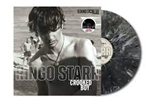
Ringo Starr recently revealed details about a new EP titled Crooked Boy on which he collaborated with songwriter/producer Linda Perry. Now the former Beatles drummer has announced that the four-song collection will be released as a limited-edition colored-vinyl disc as part of the 2024 Record Store Day event on April 20.
The EP will be available on black-and-white marble vinyl exclusively at independent record stores. Only 2000 copies of the vinyl disc will be sold.
“I’m really excited to be releasing an exclusive edition of my EP Crooked Boy for Record Store Day this year,” Starr wrote in a message on his social media sites. “I’ve always loved record stores from 81 Renshaw or Brian’s North End Music Store in Liverpool to Tower Records and Amoeba Records in [Los Angeles] and I support them with Peace and Love.”
Crooked Boy features four songs that were all written by Perry, who also produced the EP. Starr shared information about the project in a video update he posted on his in early February. The names of the songs on the EP are “February Sky,” “Adeline,” “Gonna Need Someone,” and “Crooked Boy.” Strokes guitarist details
George Harrison quit The Beatles on January 10, 1969. He was persuaded to rejoin the band after just a few days but faced other obstacles soon after. He had his tonsils removed just a week after the famous rooftop concert and then faced an arrest for possession of cannabis the following month. It was a winter that had taken its toll on the quiet Beatle.
After several weeks of not even playing guitar, Harrison found himself in the garden of his friend Eric Clapton’s house, just trying to avoid the reality of what the business of The Beatles had become. He would write a song that would go on to become the most streamed of the entire Beatles catalog despite the fact it was not released as a single. Let’s take a look at the story behind “Here Comes the Sun” by The Beatles.
Here comes the sun, doo-doo-doo-doo
Here comes the sun
And I say, it’s alright
Source: Jay McDowell/americansongwriter.com
details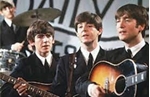
Did The Beatles ever come to Israel? Despite plans at the height of Beatlemania to bring the Fab Four to Israel, only two of them would ever make it, albeit decades later.
Sixty years after the birth of Beatlemania in America, you may wonder what any of this has to do with Israel. When The Beatles were in New York in February 1964, Ringo Starr was asked what plans the group had for that year. He specifically mentioned upcoming concerts in Israel and South Africa.
Both shows were eventually canceled, and the closest Beatlemania ever came to our borders that year was when The Beatles flew from London to Hong Kong for a performance that was to kick off their tour to Australia and New Zealand.
Their BOAC (British Overseas Airways Corporation) airliner landed at Beirut Airport to refuel. There, they were met by hundreds of young Beatles fans who tried to storm the plane. The local police actually found it necessary to use fire-fighting foam to hold the crowds back. Afterward, the aircraft was able to leave without any further incident.
Source: HOWIE KAHN/jpost.com
details
I don’t know anyone else who has a good knowledge of the Beatles except for maybe a Houghton professor and a sibling, but I’ve been listening to the Beatles since I was about 7 or 8. The first instance I was introduced to this classic boy band was Yellow Submarine, a jukebox musical adaptation, based on the song of the name, released in 1968. The story focuses on a fantasy world that is taken over by henchmen called the Blue Meanies and numerous other villains who despise music-making. A captain, Fred, then travels to Liverpool, London to seek help from the fab-four to return to Pepperland and bring music back into the paradise. The film uses a lot of unique art styles done by Czech-German Heinz Edelmann; however the voices for the Beatles were done by counterpart actors with a live-action sequence at the end of the film of the original members. Growing up, I often overheard my sibling, who is also a Beatles fan, listening to a handful of albums throughout the day including, Rubber Soul, Sgt Pepper’s Lonely Hearts, White Album, Abbey Road and a handful of others. Recently I began collecting vinyls and my first Beatles record, as a birthday present, was Rubber Soul, which has been in my top 3 favorites for some details
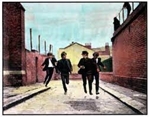
John Lennon and Paul McCartney worked closely together on 'A Hard Day's Night.' Here are Lennon's favorite songs from the film.
In 1964, John Lennon, Paul McCartney, George Harrison, and Ringo Starr starred in their first film, A Hard Day’s Night. They acted in the film and wrote music to go with it. While Lennon found some portions of the movie embarrassing, he was happy with the songs he wrote with McCartney. Here are Lennon’s favorite songs from A Hard Day’s Night.
As with most of The Beatles’ early albums, Lennon and McCartney took over songwriting duties. They wrote all 13 tracks on the album together. Lennon said it was a challenge, though they enjoyed working on it.
“Paul and I enjoyed writing the music for the film. There were times when we honestly thought we’d never get the time to write all the material,” Lennon said in The Beatles Anthology. “But we managed to get a couple finished while we were in Paris. And three more completed in America, while we were soaking up the sun on Miami Beach.”
Lennon said he had four favorite songs from the album.
details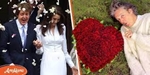
Paul McCartney unexpectedly found love with a woman who some people
deemed "not good for him." This love story unfolded on an ordinary evening that transformed into a pivotal moment in his life.
It was this evening that made the man who had loved and lost fall head over heels for a woman who he would later marry.
Paul McCartney, a titan in the music industry, has been a household name for decades. His illustrious career as a singer, songwriter, and musician has seen him rise to the pinnacle of success, but it is his roles as a loving husband and a father that have truly defined him.
His first solo album in 1970, "McCartney," released in the wake of the Beatles' disbandment, was a heartfelt reflection of these roles. The album's themes of home, family, and love, were not just passing sentiments, but a testament to the values that McCartney held dear.
Source: news.amomama.com
details
"Maxwell's Silver Hammer": classic or stinker? The three Beatles who didn't write the song have all discredited the song from 1970's Abbey Road, but Paul McCartney said that it's not so much that they didn't like the song, but rather that he pushed them so hard during its recording.
"I was very keen on it," he said about the song during the latest episode of McCartney: A Life in Lyrics on iHeartPodcasts. "It took a little bit long to record. I remember the guys getting pissed with me."
He continued, "Occasionally, I, in particular, would take too long, 'cause I was trying to get what was in my head [onto the recordings]."
Despite this friction during the session, McCartney added that the recording process was always fun for the group, even toward the end. "Recording sessions were always good, because no matter what our personal troubles were, no matter what was going down, the minute we sat down to make a song, we were good. Our skills came out, so I think we all enjoyed being in this skillful company."
Drummer Ringo Starr once told Rolling Stone, "The worst session ever was 'Maxwell's Silver Hammer.' It was the worst track we ever had to record. It went on for fucking weeks." John Lennon didn't details
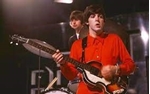
A BASS guitar stolen from Sir Paul McCartney more than 50 years ago is back where it once belonged – after being returned to the Beatles legend.
Macca, 81, was reunited with the Hofner guitar – which helped to power Beatlemania – after it was found in a loft.
Sir Paul McCartney fronting the Beatles with his lost guitar in 1964Paul McCartney’s original Höfner bass is unique, in every wayMcCartney was reunited with the original.
He bought the Hofner 500/1 electric bass for £30 in Hamburg in 1961 and played it on classics including Love me Do, She Loves You and Twist and Shout as the Beatles conquered the music world.
But the instrument – now thought to be worth more than £10 million - was stolen from a van in Ladbroke Grove west London on October 10, 1972, leaving Macca heartbroken.
Source: the-sun.com
details
In 1970, the final single The Beatles released before announcing their breakup failed to hit No. 1 because of an actor George Harrison disliked. Harrison was no fan of actor Lee Marvin or the film that won him an Oscar. It likely stung, then, when the song “Wanderin’ Star” blocked “Let It Be” from hitting No.1 in the U.K.
The Beatles’ George Harrison said he never liked this actor
While The Beatles were in California, Harrison and John Lennon tried to convince their bandmates to try LSD. While Paul McCartney refused, the others spent their day swimming in the pool and trying to avoid the attention of reporter Don Short. Later in the day, they viewed a screening of the film Cat Ballou.
“The movie was put on, and — of all things — it was a drive-in print of Cat Ballou,” Harrison said in The Beatles Anthology. “The drive-in print has the...
Source: IMDB
details
Paul McCartney seems to be enjoying sharing the backstories of some of his most popular, critically-acclaimed, and beloved songs he’s released. The singer and songwriter is in the middle of publishing episodes of season two from his Paul McCartney: A Life in Lyrics podcast, which sees him looking to the past to mine great tales from the making of his hits.
In the most recent episode, McCartney talked about the Beatles tune “Maxwell’s Silver Hammer.” During the chat with co-host and friend Paul Muldoon, the rocker revealed that he and his former bandmates were at odds over the making of the cut, and that he was to blame for the squabble.
McCartney stated that he was something of a perfectionist when it came to recording “Maxwell’s Silver Hammer,” and that didn’t please the other Beatles. “I remember the guys getting pissed with me,” the Grammy winner revealed. He added that while it “took a little bit long to record,” McCartney himself was “very keen on it.”
All four of the Beatles were known as great musicians in their own right, but McCartney remembers that he “in particular would take too long.” The amount o details
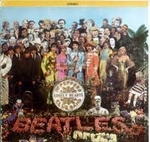
The Beatles wore costumes on the cover of 'Sgt. Pepper.' John Lennon managed to get medals from a former Beatles drummer.
John Lennon brought a connection to former Beatles‘ drummer Pete Best to the cover of Sgt. Pepper’s Lonely Hearts Club Band. While Paul McCartney and George Harrison adorned their costumes with their MBEs, Lennon did not want to do this. Instead, he reached out to Best’s family several years after unceremoniously firing him from the group. Here’s how he got a hold of his grandfather’s medals.
John Lennon requested to wear Pete Best’s grandfather’s medals on the ‘Sgt. Pepper’ cover
In 1962, The Beatles fired their drummer, Best, and hired Ringo Starr. They were too afraid to tell Best themselves, so they had their manager, Brian Epstein, let him go. Lennon admitted this was cowardly.
“We were cowards when we sacked him,” he said, per The Beatles: The Authorized Biography by Hunter Davies. “We made Brian do it. But if we told Pete to his face, that would have been much nastier than getting Brian to do it. It probably would have ended in a fight if we’d told him.”
Though they ended on bad te details
A signed copy of a book of Sir Paul McCartney’s paintings has sold for £1,000 after being donated to a charity shop.
The first-edition hardback copy of Paintings, a collection of the Beatles star’s artwork, was given to an Oxfam shop in Wirral, Merseyside, by a regular customer.
The donor, who wishes to remain anonymous, is known by staff in the West Kirby shop as “the Autograph Man” after he made donations including an envelope signed by astronaut Neil Armstrong, which sold for £400, and a Marvel comic signed by Stan Lee, which made £195.
A signed copy of another of Sir Paul’s books – Blackbird Singing: Poems And Lyrics – raised £800.
The edition of Paintings was put on sale on Oxfam’s online store on January 30 and sold overnight.
The inscription inside the book is dated 2000 and reads: “Cheers!”
Source: Eleanor Barlow/standard.co.uk
details