- Register
- Log in to Tune-In
- Wishlist (0)
-
Shopping cart
(0)
You have no items in your shopping cart.

Beatles News
Paul McCartney cites the crowds as a reason he continues touring as the 'Got Back' tour concludes.
Paul McCartney recently reflected on the “Got Back” tour and revealed why he keeps touring.
“When people ask me, ‘Why do you still do it (touring)?' it's because of the crowds,” McCartney revealed. “Brazil has been fantastic. It's a beautiful nation. When you go on stage with an audience like that, the feedback you get, it's like meeting a dear friend in the street you haven't seen for a long time. But it's that 40,000 times over.”
Since the Beatles' breakup, McCartney has continued going strong. He has released several solo albums and even formed a second band, Wings. As a part of Wings, they embarked on five tours. After Wings' dissolution, McCartney has embarked on 17 solo tours.
The “Got Back” tour was McCartney's first since the pandemic. It kicked off with a show in Spokane, Washington. 15 shows were played across North America, and the tour's first leg culminated with a headlining show at the Glastonbury Festival. In 2023, McCartney and his band hit the road again.
Source: Andrew Korpan/clutchpoints.com
Of course, Paul McCartney‘s work with The Beatles will always be a major calling card. However, his solo work is equally (if not more) impressive. Without his bandmates in tow, he could truly flex the expanse of his musicianship.
McCartney put an onus on writing and performing songs all on his own. A famously particular recording artist, McCartney has been documented making his fellow Beatles record take after take trying to get a song the way he envisioned it. Going at it completely solo likely freed him up from having to relay his vision to those around him. Instead, he simply put pen to paper and notes to tape.
Find the four best songs written and performed solo by McCartney, below.
Source: Alex Hopper/americansongwriter.com
details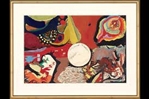
A painting by The Beatles will make $600,000 at its auction sale in New York in February if estimates are met.
The picture, Images of a Woman, is jointly credited to all four band members. John Lennon, Paul McCartney, George Harrison, and Ringo Starr have all clearly signed it.
It will be sold on February 1. The estimate is $400,000 to $600,000.
“It’s such a rarity to have a work on paper outside of their music catalog that is [a] physical relic, this tangible object with contributions from all four of the Beatles,” Casey Rogers of the auctioneers told News Miami. “It’s memorabilia, it’s a work of art… It’s a wonderful piece of storytelling.”
It’s hard to price such a unique item.
A full set of four Beatles signatures can be worth 10s of thousands of pounds with the right context.
The illustrated manuscript of “The Singularge Experience of Miss Anne Duffield,” a Lennon piece from his book, A Spaniard in the Works, fetched $209,000 when it was auctioned in 2014.
This piece is well-known. Its provenance is fully documented. The circumstances of its painting are recorded in most Beatles biographies. It a details
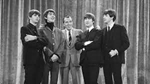
The Beatles' appearance on the Ed Sullivan show in February 1964 may have brought Beatlemania to North America and inspired a generation of musicians to try their hand at rock'n'roll, but it wasn't the first time the quartet appeared on American TV.
Three months earlier, on the November 18, 1963 edition of the Huntley-Brinkley Report, NBC News' correspondent Edwin Newman anchored a segment which gave US audiences their first taste of the excitement surrounding The Beatles. The broadcast included concert footage filmed at a show at the Winter Gardens in Bournemouth two days earlier, when three American networks – NBC, CBS and ABC – had been given permission to film.
There's no surviving footage from this broadcast – which Newman closed with the sneering comment, "Robert Percival, an artist, proposes to capture the Mersey Sound on canvas. Percival, mercifully, is deaf" – but viewers at home got further chances to acquaint themselves with the band who would change the world. Both NBC and CBS would run news bulletins that took a similar tone (NBC reported that the band made "non-music"), while ABC wouldn't use their footage at all.
Source: Fraser Lewry/loudersound.com
In tribute to the producer, who would have celebrated his 98th birthday today, Radio X picks ten songs of his greatest knob-twiddling, string-wrangling, tape-reversing genius.
"Good George Martin is our friend / Buddy, Pal and Mate / Buy this record and he'll send / A dog for your front gate."
That’s how John Lennon paid tribute to the Beatles producer in the sleeve notes to Big George’s orchestral album of Fab Four tunes, Off The Beatle Track, back in the halcyon days of 1964. Here at Radio X, we’d like to pay tribute to the late musician, arranger and producer, who died aged 90 in March 2016, by picking a handful of tracks that demonstrate his knob-twiddling genius. Thanks George - it wouldn’t have been the same without you.
Twist & Shout (from the album Please Please Me, March 1963)
Source: Martin O'Gorman/radiox.co.uk
details
When The Beatles left Hamburg, Paul McCartney said his father hardly recognized him. The experience had completely worn him out.
Paul McCartney and the rest of The Beatles grew tremendously as musicians while performing in Hamburg. While they all acknowledged that the experience shaped them into better performers, it wasn’t always easy. McCartney said that his father could hardly believe his appearance when he returned home to Liverpool. His time in Hamburg had reduced him to a skeleton.
Though Hamburg was a valuable learning experience for The Beatles, it was also an exhausting one. They slept in cramped, uncomfortable quarters and played onstage for hours each night. John Lennon admitted he used to get so tired he would fall asleep onstage.
“My voice began to hurt with the pain of singing. But we learnt from the Germans that you could stay awake by eating slimming pills so we did that,” Lennon said in The Beatles Anthology. “I used to be so pissed I’d be lying on the floor behind the piano, drunk, while the rest of the group was playing. I’d be on stage, fast asleep. And we always ate on stage, too, because we never had time to eat. So it was a real scene … It details
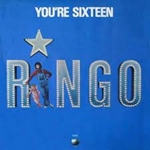
Since you are reading this in a senior publication, there’s a good chance that you not only remember Ringo Starr’s “You’re Sixteen” from 50 years ago, but the original 1960 version by Johnny Burnette, as well.
Burnette was born in 1935 and lived with his parents and brother Dorsey in a Memphis housing project that included equally poor neighbors Vernon, Gladys and Elvis Presley.
After school days ended, music lovers Johnny, Dorsey and a mutual friend formed the hard-driving Johnny Burnette Trio. They toured constantly and recorded some high-octane 45s that went nowhere. (Rockabilly collectors now lust after those obscure plastic discs.)
Later, Johnny and Dorsey Burnette moved to Los Angeles to become songwriters for Ricky Nelson (“Believe What You Say,” “It’s Late”). As a solo artist, Johnny Burnette signed with Los Angeles’s Liberty Records and proceeded to cut some minor hit singles.
Burnette’s only Top 10 career tune was the bouncy, violin saturated “You’re Sixteen,” which ended up on the best-selling soundtrack of George Lucas’ 1973 nostalgia movie “American Graffiti.” In 1964, Jo details
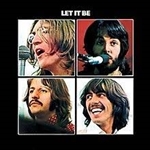
On This Day, January 2, 1969…
The Beatles began rehearsals for what would wind up being their final studio album together, Let It Be.
Rehearsals took place at Twickenham Film Studios and were marred by tension within the band, which was captured on film as cameras were recording the sessions for a documentary.
Let It Be was released in May 1970 along with the documentary of the same name, which featured The Beatles’ unannounced rooftop concert, their last public performance together. The album, which featured such classic Beatles songs as the title track, “Get Back” and “Across the Universe,” went to #1 in the U.S., the U.K. and several other countries.
The footage from the Let It Be documentary was later used by director Peter Jackson for the Emmy Award-winning docuseries The Beatles: Get Back, which was released in 2021.
Source: ABC News/kshe95.com
details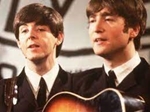
After a busy year, Sir Paul McCartney sat down to answer 23 fan questions on his official website.
Asked what his highlight of 2023 was, the 81-year-old didn’t hesitate to say: “The GOT BACK tour!”
As for what is his favourite song to play live on his solo tour, which has been to Oceania, Mexico and South America this year, he chose a Beatles classic.
He replied: “Probably Hey Jude, just to see all those thousands of people singing in harmony with each other.”
Admitting that his favourite does “vary” from time to time, he’s certainly not short of choices.
Another fan asked: “Would you ever release a soundcheck album featuring some of the covers you do before the live show?”
McCartney replied: “It’s a thought! We have the ‘jams’ – we always start the soundcheck with a made-up piece, and there’s a lot of them. So, we might go through those and do something someday.”
Check out the full list of questions here.
Source: George Simpson/express.co.uk
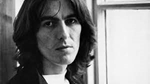
Best of 2023: There’s a memorable scene in Peter Jackson’s 2021 documentary Get Back where a microphone concealed in a pot of flowers in the dining room at Twickenham Studios picks up a discussion between John Lennon and Paul McCartney. It’s early afternoon on Monday 13 January, 1969 and the pair are discussing the sudden departure of George Harrison from The Beatles and an unsuccessful meeting the previous day to try and resolve the situation.
“It’s a festering wound and yesterday we allowed it to go even deeper and we didn’t give him any bandages,” observes Lennon drolly. “I do think that he’s right,” concedes McCartney, “that’s why I think we’ve got a problem now.”
Harrison left after McCartney allegedly accused him of “vamping” on the rehearsals for the song Get Back. But there was a deeper issue at stake. By then Harrison had emerged as a songwriter of real merit. Wedged between two mercurial talents, both unable to rescind creative ground, he doggedly and delicately chose his moments to push his own material forward.
Source: Neil Crossley/musicradar.com
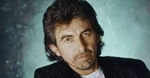
George Harrison was sued for "My Sweet Lord," and saw his bandmates from The Beatles go against him in court.
George Harrison was sued for his song "My Sweet Lord" sounding too similar to "He's So Fine" by The Chiffons.
Harrison claimed he was not aware of the similarity and would have made changes if he had known.
John Lennon seemed to side with The Chiffons, while Ringo Starr defended Harrison in the lawsuit.
Made up of Paul McCartney, John Lennon, George Harrison and Ringo Starr, The Beatles are the biggest and best band to make it in music. Though their time together was short, the band changed the face of music, leaving a lasting impression on pop culture as a whole.
Eventually, the guys all took to solo careers, and each of them found success. This includes George Harrison, whose double album propelled him to solo stardom, and showed the world that he was an underrated part of the band's success.
Source: Anthony Spencer/thethings.com
details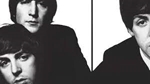
On December 31, 1970, Paul McCartney sued John Lennon, George Harrison, and Ringo Starr in the High Court of Justice in London, England for the legal dissolution of the band’s partnership. At the time, McCartney’s move may have been considered the beginning of the end of The Beatles, but it ultimately salvaged the band’s control over their music catalog, ownership of Apple Corps Limited, and more through the present day.
“I was thought to be the guy who broke The Beatles up and the bastard who sued his mates,” said McCartney in 2020. “And, believe me, I bought into that. It was so prevalent that for years I almost blamed myself.”
Problems first arose when the band hired New York City accountant Allen Klein as their manager shortly after forming Apple Corps in 1968.
The rest of the band (Lennon, Harrison, and Starr) wanted to work with Klein, who founded ABKCO Music & Records Incorporated and had previously managed Sam Cooke in the early ’60s and was also working with British acts like Herman’s Hermits and Donovan.
Source: Tina Benitez-Eves/americansongwriter.com
If this New Year’s Celebration at Times Square follows the pattern set since 1986, just before the ball drops and we turn our calendars forward, someone will sing John Lennon’s classic song, "Imagine." It is a good thing to close out the past and look to the future by imagining the world as it could be.
John Lennon sat down at his piano in Berkshire, England one morning in early 1971 and composed the song that became his most popular single. The Canadian Broadcasting Corporation named it the greatest song of the last 100 years. Australians chose “Imagine” as the greatest song of all time. But for many of us, there is a greater vision of how the world could be.
Every time we quote the Lord’s Prayer, we are invited to imagine the world as it is meant to be. Jesus taught us to pray, “Our Father who art in Heaven, Hallowed be Thy name. Thy kingdom come. Thy will be done, on earth as it is in Heaven ….” What would the world look like if that prayer were answered? How would the world differ from the world we know?
If God’s will were done on earth, there would be no more crime. Theft, violence and murder would end. Prisons would empty. Neighbor would no lon details
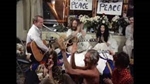
During John Lennon and Yoko Ono‘s 1969 bed-in-for-peace recording of “Give Peace a Chance,” at the Fairmont Queen Elizabeth Hotel in Montreal, Quebec, Canada, the couple had an unexpected guest performing along with them. Joining Lennon on guitar was Tommy Smothers of the Smothers Brothers.
Lennon and Smothers had become friends years earlier and shared similar social and political views. Smothers, who died on December 26, 2023, at the age of 86, naturally connected to the anti-war sentiment of Lennon’s protest song since his father was a U.S. Army officer who died in 1945 as a prisoner of war in Japan.
Smothers, along with his brother Dick, never shied from giving a comical spin to socio-political issues penetrating the late ’60s, including their opposition to the Vietnam War and views on civil rights, and more on The Smothers Brothers Comedy Hour. The repeated censorship of the show by CBS ultimately led to its demise just two years after its premiere.
Source: Tina Benitez-Eves/americansongwriter.com
Paul McCartney has said that The Beatles’ ‘Let It Be’ was subconsciously inspired by William Shakespeare’s Hamlet.
The music legend spoke about the origins of this classic track from the Fab Four, during an episode of his podcast show, McCartney: A Life in Lyrics.
According to McCartney, his late mother Mary said the phrase ‘Let It Be’ to him in a dream, with the musician stating that Hamlet may have inspired him to write the hit.
Mary McCartney passed away from cancer in 1956, when Paul was just 14 years old.
In this episode of McCartney: A Life In Lyrics, Macca addressed how this track came about.
“In those days [at school], I had to learn speeches off by heart. So I could still do a bit of ‘to be or not to be’, or ‘O that this too too solid flesh”, he said.
McCartney continued, “And it had been pointed out to me recently that Hamlet, when he has been poisoned, he actually says, ‘Let it be’ – act five, scene two. He says ‘Let be’ the first time, then the second time he says, ‘Had I but time — as this fell sergeant, Death, Is strict in his arrest — oh, I could t details