- Register
- Log in to Tune-In
- Wishlist (0)
-
Shopping cart
(0)
You have no items in your shopping cart.

Beatles News

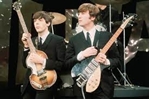
Making the “last” ever Beatles song brought a bit of joy to Paul McCartney – and a spiritual reunion with his old friend, the late John Lennon.
The Beatles released “Now and Then” on Thursday, November 2, a song marketed as the “last” single from The Beatles – McCartney, 81, Lennon, Ringo Starr and George Harrison. Lennon recorded a demo of the song in the late 1970s, and AI was able to extract his vocals for this now-complete track. For McCartney, it was a way to once again work with his friend, who was murdered in 1980.
“When we were in the studio, we had John’s voice in our ears,” McCartney told BBC Radio 1, per Billboard. “So you could imagine he was just in the next room in a vocal booth or something and we were just working with him again, so it was joyful. It was really lovely, you know, because we hadn’t experienced that for a long time, obviously, and then suddenly here we were working with ol’ Johnny.”
Source: Jason Brow/yahoo.com
details
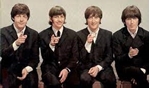
Last week, Now and Then – which was called the final Beatles song – was released and is expected to hit UK No 1 in the singles chart.
Peter Jackson, who directed The Beatles: Get Back, used modern technology to resurrect John Lennon’s vocals and George Harrison’s guitar strumming for the long-lost track.
He then combined the late duo's work with Sir Paul McCartney and Sir Ringo Starr’s voices and instrumentation today to create a complete new Beatles song, the first in decades.
The Lord of the Rings director also helmed the Now and Then music video which ended with a bow from the Fab Four on The Ed Sullivan Show before they faded away.
Yet despite this goodbye, it may not be the end. After all, there’s much from over 60 houses of footage and 150 hours of audio of the Let It Be sessions that remain unused.
Source: George Simpson/express.co.uk
details
The Beatles remain perhaps the most successful and beloved musical act of all time. It makes sense, then, that if anyone were to learn that the group was working on new material, it would immediately become headline news and ruin a surprise that was yet to be formally announced. Now that the band has released its new single, Paul McCartney has also detailed how they managed to keep the track a secret for what turned out to be a long time.
The two remaining Beatles—McCartney and Ringo Starr—released what’s being labeled the band’s last song, "Now and Then," on November 2. The tune had been a major topic of interest in the entertainment world for months since its announcement in mid-2023, and only after the single debuted was one of its architects able to share the tricks he had to pull to keep word from getting out.
The session musicians who lent their talents to "Now and Then" played for the recording without realizing it was for The Beatles. The string section for the song was recorded at Capitol Studios in Los Angeles in May of 2022, yet the musicians were kept in the dark regarding the true nature of the project.
Source: Hugh McIntyre/forbes.com
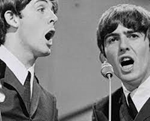
During the 1970s, George Harrison dismissed Paul McCartney's band Wings as a Beatles redux. Meanwhile, Paul said the group was underrated.
He might’ve been a hippie, but he didn’t pull punches. George Harrison dismissed Paul McCartney’s band Wings as a Beatles redux. Meanwhile, Paul said the group was underrated.
During a 1974 interview with Rolling Stone, George said he didn’t just want to repeat what The Beatles did. “I certainly am going to control my own concept of me,” he explained. “Gandhi says ‘Create and preserve the image of your choice.’ The image of my choice is not Beatle George. If they want to do that they can go and see Wings, then. Why live in the past? Be here now and now, whether you like me or not, this is what I am.”
George then discussed his expectations of life and the expectations people had of him. “I don’t have control over anything,” he said. “I believe in God and he is the supreme controller even down to the rehearsal.” George explained why his voice on his then-recent song “Dark Horse” sounded so husky. “It’s more like I am right at this minute,” he revealed. details
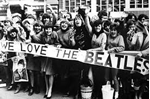
As soon as I heard John’s voice in the opening lines, I was transported back to December 1980. A 16-year-old schoolboy sitting in a small empty cafe in an outer southern suburb of Brisbane listening to the track Starting Over on the juke box and mourning my songwriting hero’s death. This new song sounds like it could’ve been on the Double Fantasy album. Now and Then has a recurring dreamy quality and Ringo’s beat is beautifully calm, supportive and understated. It filled me with immense joy, sadness and reflection.
I had no idea how emotionally I would react to this song. My youngest brother passed away last year from a brain tumour at 27. He was a big Beatles fan; he chose Beatles songs for his wedding and for his funeral – a lot of people commented that he had the music taste of someone twice his age. I had been wondering, in the lead-up to the release, what he would have thought of the band using AI to finish it, and if he’d have liked the final result.
When I heard the opening lines, and the melancholy in John’s voice, I got chills all over. The sadness of the song encapsulates the emptiness you feel when you lose someone you love, and you know you have to continue o details
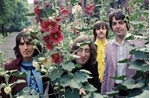
"Now And Then" is outselling the rest of the top 5 combined, the Official Charts Company reports.
The Beatles’ “last” song “Now And Then” is on track for the U.K. chart title.
Based on sales and streaming data captured from the first 48 hours in the chart week, “Now And Then” is in pole position, outselling the rest of the top 5 combined, the Official Charts Company reports.
If it holds its spot, “Now And Then” will become the Fab Four’s 18th U.K. chart-leader, and their first in 54 years, since “The Ballad of John and Yoko” topped the weekly tally back in 1969.
“Now And Then” actually debuted at No. 42 in the U.K. last week based on just 10 hours of sales, but is now expected to jump 41 places to the top of the Official Singles Chart when chart is published this Friday, Nov. 10.
The crown would cap a remarkable journey for “Now And Then.” The track began life as a demo written and sung by John Lennon, was later developed and worked on by Paul McCartney, George Harrison and Ringo Starr, and now completed by Paul and Ringo, the surviving members of The Beatles, more than 40 years after the group details
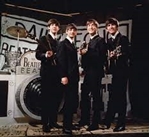
Paul McCartney never thought the Beatles would last — pop music, after all, was not always such an old man’s game. “When we started,” he says, thinking back to 1960 in Liverpool, “we thought that, maybe, we’d have ten years — that was the maximum span for a rock’n’roll group.” In one way he was right. He jumped ship in 1970 and the Beatles soon split amid rancour and financial wranglings. In another way, though, his band never really went away. “I like the idea of not letting go of each other,” McCartney continues. “You know, when you have somebody you love so much. In many cases it’s a relative, and even though they go, you don’t want to let go — that’s what people
Source: Jonathan Dean/ thetimes.co.uk
details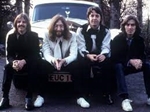
The deaths of John Lennon and George Harrison are still bitter pills to swallow, Paul McCartney has said, as he marks the release of the “last” Beatles song.
“Now and Then”, released with the help of AI technology from Lord of the Rings director Peter Jackson, arrived on Thursday 2 November to much fanfare. It is the final song from the storied pop band to feature all four original members.
Understandably, the song’s release has been an emotional moment for McCartney and drummer Ringo Starr, the band’s last surviving members.
Speaking to The Times, McCartney admitted that he never thought the band would last, but now he enjoys the idea that each member will live forever, in the memories of fans and in the music they made.
“I like the idea of not letting go of each other,” he said. “You know, when you have somebody you love so much. In many cases it’s a relative, and even though they go, you don’t want to let go — that’s what people say when somebody dies. They’re in your memory, always in your heart. And, yes, that’s certainly true of me and the boys.”
Source: Roisin O'Connor/independent.co.uk< details
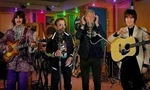
It was a heartwarming trick of editing which left many fans in tears.
In the music video for the Beatles' final song, Now and Then, Sir Paul McCartney and Sir Ringo Starr were seen appearing to perform with John Lennon and George Harrison one last time.
Acclaimed director Peter Jackson - who was entrusted with the band's precious archives to create Disney+ documentary Get Back - cleverly used footage filmed for their 1967 hit Hello, Goodbye to make the scene work.
The Beatles recorded three bits of footage at London's Saville Theatre to promote the track. One - not that which features in Now and Then - then debuted on the Ed Sullivan show in the US in November 1967.
The Now and Then video also shows scenes from footage that was filmed for John Lennon's 1973 song and album Mind Games - after the Beatles had split up acrimoniously.
Among the other archive clips used was a short segment showing Lennon in an electronics shop in Japan in 1979, the Beatles at Twickenham in 1968 and footage of the band performing in Manchester in 1963.
Source: Harry Howard, Jon Brady/dailymail.co.uk
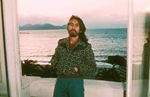
Only 58 when he passed away, George Harrison knew that his time was coming.
In the lead-up to his death, Harrison told his friend and former producer, George Martin, that he "knows that he is going to die soon" and that he accepted it.
George had to keep dealing with cancer that kept on coming back; first a tumour developed in his throat.
The year was 1997 when he learned of the cancerous mass, which he blamed on smoking.
"I got it purely from smoking," Harrison had said at the time. "I gave up cigarettes many years ago, but had started again for a while and then stopped in 1997."
Source:Chanelle Georgina/express.co.uk
details
The last album the Beatles recorded ended with “The End.” (Unless you count “Her Majesty.”) But the actual end of the band’s official output—at least according to the marketing materials—came on Thursday, when the corporate entity called the Beatles released “Now and Then.” The song, which was written by John Lennon in the late 1970s and demoed on a handheld cassette recorder perched on his piano, was considered for the full-band treatment during the 1995 Beatles Anthology project, when the surviving “Threetles” (Paul McCartney, George Harrison, and Ringo Starr) worked with producer Jeff Lynne of Electric Light Orchestra and Traveling Wilburys fame to finish a few of Lennon’s songs.
Included on the tapes Lennon’s widow, Yoko Ono, had given McCartney were demos of four tracks: “Free As a Bird,” “Real Love,” “Grow Old With Me,” and “Now and Then.” Lennon’s former bandmates recorded the first two but passed on recording “Grow Old With Me,” which had already been released on the posthumous Milk and Honey in 1984. (Starr and McCartney would eventually cover it on Starr’s 2019 s details
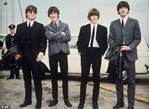
Sir Paul McCartney has said it was 'magical' to be reunited with John Lennon for The Beatles' new and final song Now And Then - as he revealed it was like having the late star in the room again.
Emotional Beatles fans broke down today as they heard the band's 'masterpiece' which was written and sung by Lennon, developed by the late George Harrison and finished by Sir Paul and Sir Ringo Starr decades after the original recording.
Some 43 years after Lennon's death – and more than two decades on from Harrison's passing – The Beatles have come together with the help of AI and audio tech pioneered by Lord of the Rings and Get Back director Sir Peter Jackson.
Now And Then, written and sung by John in 1977, features acoustic and electric guitar played by Harrison in 1995. Sir Paul McCartney completed the bass and Sir Ringo Starr recorded the drums in the last year.
Source: Arthur Parashar, Martin Robinson/dailymail.co.uk
details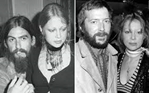
George Harrison's, Pattie Boyd's and Eric Clapton's love-triangle has been called "one of the most mythical romantic entanglements in rock 'n' roll history"
"Something in the way she moves".
The subject of the lyrics from The Beatles' timeless ballad 'Something' was none other than Pattie Boyd, George Harrison's wife. Well, then-wife at the time of the song's release at least.
Evidently, there was something in the way she moved, as the model and photographer was the object of affection and longing admiration from not only one rock star, but two.
The two musicians in question were of course George Harrison, but also his best friend and frequent musical collaborator Eric Clapton.
In fact, Eric reached the point of desperate obsession with Pattie, that he was also inspired to write one of his most beloved and devastating songs about her, 'Layla', performed by Clapton's short-lived blues-rock group Derek and the Dominos.
Source: Thomas Curtis-Horsfall/goldradiouk.com
details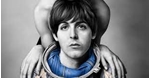
Infamous Rock journalist and internationally acclaimed interviewer Claude Balzac recently sat down for an in depth conversation with the legend and International treasure, Paul McCartney.
Madhouse Magazine: Hi Paul, thanks for hanging with me today. It is great to see you again.
Paul McCartney: Claude my man, last time I saw you was at my bachelor party. You were trying to talk me out of marrying Heather Mills. Then You gave that toast and you made the one legged joke about her working at IHOP restaurant. You were drunk but you were right on, I should have listened. By the way I love Madhouse. The Beatles used to read Madhouse all the time. The Maharishi used to read it to us out loud during our trip to India. He laughed so hard that milk came out of his nose. I love when you make fun of Yoko.
Madhouse: Good Times, speaking of Heather, did you really steal her fake leg?
McCartney: [laughs] I sure did. Did you know that Heather joined the circus when she was 17 and lost her leg in a monkey tricycle accident? She was a bad woman and stole a lot of my money. As I was leaving the courtroom, I snatched her fake leg and took it on tour with me. I would strum it like a guitar and make jokes. Funny bante details
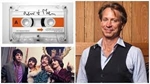
Giles Martin on Producing the Beatles’ ‘Now and Then,’ Remixing the Red and Blue Albums, and How Technology Is Enabling a Mass Emotional Experience
Of the newly completed 'Now and Then': 'It's not some cynical marketing exercise to try and push catalog sales.… I think Paul just misses John and he wants to work on a song with him.'
Christmas has come early for Beatles fans… who fortunately have been granted a week between gifts, so they don’t have to choose which to unwrap first. There was Thursday’s release, of course, of the newsmaking “Now and Then” single, a track that features the late John Lennon and George Harrison that was recently completed by Paul McCartney and Ringo Starr, with Martin on board as McCartney’s co-producer. Following a week later, only slightly in the new song’s shadow, are new iterations of the “1962-66” and “1967-70” collections that came out in the early ’70s, featuring dozens of tracks newly remixed by Martin to be heard in modern stereo or Dolby Atmos.
Source: Chris Willman/variety.com