- Register
- Log in to Tune-In
- Wishlist (0)
-
Shopping cart
(0)
You have no items in your shopping cart.

Beatles News
Nearly six decades have passed since The Beatles first stepped foot in America, but one of their own enjoyed a sneak peek of the states months before his close comrades. That included a brief, yet monumental trip to southern Illinois.
In 1963, The Beatles released their first two studio albums and several chart-topping singles to critical acclaim, and it was only a matter of time until they ventured full force to the United States. The Beatles agreed to a small break in September in which all four band members planned to travel, recharge, and learn more about life away from their England roots.
Lead guitarist George Harrison ended up in southern Illinois for several days. Archives from BeatlesBible.com note that he flew into New York and caught a connecting flight to St. Louis before a roughly hour-and-a-half car ride to southern Illinois.
At the time, Harrison’s sister, Louise, had recently moved to Benton, Illinois, with her husband, Gordon Caldwell. He was a passionate engineer and found opportunities within Illinois’ coal mining industry.
Source: Joey Schneider/fox2now.com
Now and Then may be the band’s final song, but the appetite for books, exhibitions, films and TV series about the Fab Four seems never to wane Perhaps the real surprise behind this week’s release of the “final” Beatles song, Now and Then, is not that Paul McCartney and Ringo Starr wanted to resurrect the band one last time – uniting them with the “crystal clear” voice of John Lennon from a 1970s home tape, a feat enabled by technology Peter Jackson developed for his 2021 Get Back documentary – but that there remains a seemingly insatiable thirst for all things Fab Four. It is now 60 years since Beatlemania engulfed first Britain and then, via America, the world. No one then imagined that in 2023 we would still be entranced by the group. The shelf life of pop acts was measured in months, or at best years – the Beatles themselves didn’t make it past their 1970 break-up. Yet this month sees a fresh surge of interest. Accompanying Now and Then are expanded versions of the Red and Blue compilations first issued in 1973, Philip Norman’s biography of George Harrison (to go alongside his tomes on Lennon and McCartney), and an Apple TV series, Murder Without A Trial, exam details
Beatles legend Paul McCartney got the inspiration for one of his most iconic compositions from a deeply personal dream.
"Let It Be" is one of the Beatles' most beloved songs.
The song was inspired by a dream in which Paul McCartney's late mother appeared.
The legacy of "Let It Be" includes its success as a chart-topping hit.
Music legend Paul McCartney wrote one of his most commercially and critically acclaimed compositions in a turbulent time for his iconic band, the Beatles. In fact, "Let It Be" would be one of the last songs McCartney ever wrote as a Beatle.
"Let It Be" has become one of the Beatles' most recognized and beloved songs. People around the world of all ages know the chorus and melody to it. More so, the song is perhaps McCartney's most personal work. McCartney, whose artistry and songwriting ability is unquestioned, looked to a heartbreaking dream for inspiration as he penned the 1970 track.
What Inspired Paul McCartney To Write "Let It Be"?
During the height of the Beatles' popularity, the band was at their creative peak. They emphasized more time in the studio experimenting with musicality, rather than touring. Unfortunately, relationship issues began to emerge details
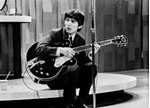
Some of us were always Team George.
In early 1964, the Beatles rolled out of JFK Airport, onto the stage of “The Ed Sullivan Show” and into the frenzied hearts of millions of teenagers. What were four identical musicians to parents were quickly individuated by their children. My two older sisters fought over the “Meet the Beatles” LP and locked horns in the eternal teleological debate: John vs. Paul. I was 6, and most of my grammar school peers favored Ringo: He was funny and funny-looking, a natural clown. But whether it was because of his cartoon monobrow, his terse self-possession or the simple fact that the other three seemed taken, I was drawn to George Harrison as my personal Beatle. That was part of the revolution: For the first time in popular culture, every member of a pop group was indispensable to the whole, and yet you had to choose just one favorite.
Source: Ty Burr/washingtonpost.com
details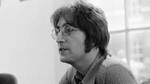
A new three-part docuseries is set to take a deep dive into the murder of The Beatles legend John Lennon.
John Lennon: Murder Without a Trial, narrated by actor Kiefer Sutherland, will air on Apple TV +, promising the “most thoroughly researched examination” of Lennon’s 1980 murder.
According to a press release, the series will feature “exclusive eyewitness interviews and previously unseen crime scene photos, shedding new light on the life and murder of music and cultural icon John Lennon and the investigation and conviction of Mark David Chapman, his confessed killer.”
The series includes interviews with eyewitnesses to the murder, Lennon’s friends, detectives and prosecutors, and Chapman’s defense lawyers and psychiatrists.
So far, an airdate for the docuseries has not been announced.
Source: digital.abcaudio.com
details
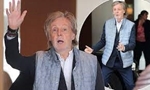
Sir Paul McCartney took Sydney by storm on Friday night.
The music legend, playing the first of two night's at the massive Allianz stadium, sent fans into a frenzy with an epic length show featuring his greatest hits.
Wearing a sleek black double-breasted suit of the kind he made famous during his Beatles hey day 60 years ago, the 81-year-old rocker amazed the sell-out crowd with his non-stop energy.
He completed his 60s-inspired look with a white shirt, and snug-fitting black stove-pipe trousers.
Wearing his shoulder length grey hair in a side part, Sir Paul appeared to be sporting a three-day growth.
Source: A. James/dailymail.co.uk
details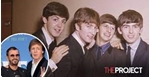
'Now And Then' was written and sung by John Lennon and later developed by the other band members including George Harrison. It has now been finished by McCartney and Starr decades after the original recording.
The track was sourced from a Lennon demo, technology used to extricate and isolate his voice.
It will be released on November 2 by Apple Corps, Capitol and Universal Music Enterprises (UMe).
A 12-minute documentary, written and directed by Oliver Murray, known for My Life As A Rolling Stone, and with commentary from Sir Ringo and Sir Paul, will be released with the new song.
The demo was recorded by Lennon in the late 1970s at his home in New York's Dakota Building, and also features piano music.
After his death in 1980 aged 40, Lennon's wife Yoko Ono gave the recording to the remaining Beatles in 1994 along with 'Free As A Bird' and 'Real Love', which were released by the band in the same decade.
During this period, Harrison, McCartney and Starr recorded new parts and completed a rough mix for Now And Then with producer and musician Jeff Lynne.
However, the band did not release the song, citing issues extracting Lennon's vocals and piano in a clear mix due to limite details
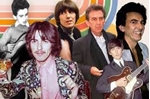
It was arguably rock’n’roll’s most brutal and historic piece of passive aggression. Midway through The Beatles’ umpteenth rehearsal attempt to nail down “Two of Us”, the song destined to open 1970’s Let It Be album, George Harrison grew frustrated at Paul McCartney’s overbearing direction, and subtly cracked. “I’ll play whatever you want me to play, or I won’t play at all if you don’t want me to play,” Harrison placidly intoned, steely and faux-subservient. “Whatever it is that will please you, I’ll do it.”
Seething behind those seemingly innocuous words – captured on film as part of the Let It Be project, in which the fracturing Beatles attempted to write an album on camera – lurked seven years of resentment on the part of the most underrated Beatle. Seven years of having his songcraft crushed beneath the wheels of Lennon and McCartney’s hit-making juggernaut. Of exclusion from the band’s creative hierarchy, borderline insulting publishing splits and fighting to the point of exhaustion for his songs to be heard, let alone recorded. A resentment that would soon play a significant role in tearing the wo details
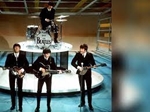
Sixty years after the onset of Beatlemania and with two of the quartet now dead, artificial intelligence has enabled the release next week of what is promised to be the last “new” Beatles song.
The track, called “Now And Then,” will be available Thursday, Nov. 2, as part of a single paired with “Love Me Do,” the very first Beatles single that came out in 1962 in England, it was announced Thursday.
“Now And Then” comes from the same batch of unreleased demos written by the late John Lennon, which were taken by his former bandmates to construct the songs “Free As a Bird” and “Real Love,” released in the mid-1990s.
Paul McCartney, Ringo Starr and George Harrison worked on “Now And Then” in the same sessions, but technological limitations stood in the way.
With the help of artificial intelligence, director Peter Jackson cleared those problems up by “separating” Lennon’s original vocals from a piano used in the late 1970s. The much clearer vocals allowed McCartney and Starr to complete the track last year.
The survivors packed plenty into it. The new single contains guitar that Harrison had re details
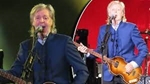
He's a music legend adored by fans the world over.
And Sir Paul McCartney wowed a packed stadium in Newcastle, New South Wales, on Tuesday with his greatest hits.
The 81-year-old former Beatle was every inch the showman as he took to the stage in a double-breasted navy blue jacket.
He completed his 60s-inspired look with a white shirt, and snug-fitting black stove-pipe trousers.
The famed singer-songwriter and Beatles founder wore his long greying hair with a side part.
The former Beatle was every inch the showman as he took to the stage in a double-breasted navy blue jacket
For the nostalgia-filled show which included Beatles tunes like Can't Buy Me Love, Got To Get You Into My Life and Love Me Do, Sir Paul played a classic Hofner bass, which he made famous during his days playing with the Fab Four.
The sold-out Newcastle concert, held at the 33,000 capacity McDonald Jones Stadium, was Sir Paul's third show in Australia for his Get Back World Tour.
Sir Paul treated fans to some of his most famous tunes from every part of his career during the show, including hits he penned with his band Wings.
Source: A. James/dailymail.co.uk
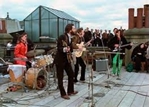
I know, I know: You’re looking at that headline and thinking, “Uh, the Beatles broke up years ago, there are only two of them that are alive, how could they release a new single?”
Here’s the answer: Back in June, Paul McCartney announced he would be using AI to help turn a demo with John Lennon into a new single with all four Beatles on it. There was a ton of speculation — would it be the much-discussed Now and Then? — and some uproar over the idea of using AI assistance.
McCartney then tweeted this to clear up confusion, which … didn’t clear up much beyond “It’s all real and we all play on it.”
Been great to see such an exciting response to our forthcoming Beatles project. No one is more excited than us to be sharing something with you later in the year.
We’ve seen some confusion and speculation about it. Seems to be a lot of guess work out there. Can’t say too much…
— Paul McCartney (@PaulMcCartney) June 22, 2023
Got all that? Good. Because this was a tweet from The Beatles on Wednesday:
Source: Charles Curtis/ftw.usatoday.com

Legendary classic rock producer George Martin predicted that one of The Beatles' songs would hit No. 1. He was wrong multiple times over.
Legendary classic rock producer George Martin predicted that one of The Beatles’ songs would hit No. 1. He was wrong multiple times over. However, he still worked on many other Beatles songs and one of Paul McCartney’s most famous solo hits.
During a 2020 interview with Uncut, Martin discussed the impact Martin had on The Beatles. “‘Please, Please Me,’ originally we brought to him as a very slow [Roy] Orbison-esque ballad,” he recalled. “‘Last night I said these words … Come on — joojoo — come on — joojoo’ — you can imagine Roy Orbison doing it.
“George said, ‘It might be good a bit faster,'” he said. “We go, ‘No.’ He used this skill of persuasion and he got us. ‘Oh, go on then, we’ll try it.’ So we did, ‘Last night I said.‘ He goes, ‘There’s your first No 1.'”
Source: Matthew Trzcinski/cheatsheet.com
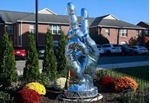
It did not take long for the pieces to come together.
Through the efforts of legendary Beatles drummer Ringo Starr, local drummer and Beatles historian Gary Astridge, and Daemen University leader John R. Yurtchuk and his wife, Carolyn, an 8-foot, 6-inch “Peace & Love” sculpture was unveiled earlier this month in the International Honorary Peace Garden in the university’s Saffrin Square.
The installation of the sculpture didn’t coincide with one of Starr’s tour stops with his All-Starr Band, so he didn’t attend the unveiling, but the 83-year-old drummer – known for flashing the peace sign throughout his musical career – posted a video to social media at the end of his tour to share his excitement about the debut.
Source: Ben Tsujimoto News Staff Reporter/buffalonews.com
details
George Harrison’s witty response to being stabbed 40 times has been revealed in a new biography.
Released today (October 24), the new book is written by Philip Norman and explores the life of the Beatles member in a new light.
Titled George Harrison: The Reluctant Beatle, the biography also discusses the 1999 incident, which left the musician fighting for his life after being stabbed 40 times.
The moment took place when Harrison and his wife Olivia became victims of a home invasion, and upon hearing someone break into his home, the guitarist got out of bed to investigate.
From there, he was soon confronted by a man named Michael Abram who was holding a knife. An altercation followed as Harrison attempted to wrestle the knife out of Abram’s hands, however, the intruder managed to get on top of the Beatle and stabbed him 40 times. He only stopped upon being struck over the head with a lamp by Olivia.
In the book, the incident is described in detail and it is also revealed how Harrison described the attack to his son Dhani with a darkly witty sense of humour (via Far Out).
According to the musician’s son, Harrison described Abram by saying: “He wasn’t a bur details

Not only did launch The Beatles into superstardom, he also offered up his home in London as a hideout for the Fab Four to escape their hordes of screaming fans. Fast forward to today, and the late manager’s Mayfair townhouse has hit the market for £8.75 million (or roughly $10.7 million).
The Grade II-listed Georgian dwelling measures 3,800 square feet and features five bedrooms plus an adjoining mews house. The latter is connected to the main house through the basement and is where Paul McCartney, , , and Ringo Starr used to hang. It’s also believed to be the place where they worked on their eighth studio album, Sgt. Pepper’s Lonely Hearts Club Band.
Originally built in the 1750s, Epstein acquired the swank abode in the 1960s as his private residence. He later turned the townhouse into an early version of the Apple Corps headquarters before he died of an accidental overdose in 1967. Following Epstein’s passing, the residence was purchased by author and politician Norman St John-Stevas, Lord St John of Fawsley, a close advisor to Margaret Thatcher.
Source: Abby Montanez/yahoo.com