- Register
- Log in to Tune-In
- Wishlist (0)
-
Shopping cart
(0)
You have no items in your shopping cart.

Beatles News
Paul McCartney recently kicked off the latest leg of his ongoing Got Back Tour, delighting audiences in Australia with a setlist that spans the many chapters of his illustrious career. During the opening night performance in Adelaide at the city’s Adelaide Entertainment Centre, the rocker surprised fans by bringing back a Beatles classic he hadn't performed live in nearly two decades.
After playing a handful of tracks from his solo career, as well from as his band Wings, McCartney shocked many in the crowd who know his full discography well by breaking out the Beatles' 1964 single, "She's A Woman.” The singer-songwriter has reportedly not played the tune in 19 years. According to Stereogum, the last time McCartney performed “She’s A Woman” in concert was back in 2004, when he headlined the U.K. music festival Glastonbury.
Before launching into the song, McCartney let the audience know that nostalgia was about to take over, stating, "This is from a long time ago." The thousands in attendance understood that something from his distant past was about to be played, and they were reportedly thrilled with the mere hint of what was to come.
McCartney continued to tease his fans, ad details
On February 7, 1964, the English rock and roll band The Beatles stepped onto U.S. soil for the first time. As they stepped off their flight from Heathrow Airport in London to John F. Kennedy International Airport, the quartet was greeted by a swarm of eager fans.At the time, Paul McCartney, John Lennon, George Harrison, and Ringo Starr were all in their early twenties and were still getting used to the band’s sudden success. They earned a streak of hits in the U.K. following the release of The Beatles’ debut album Please Please Me in 1963. But the band’s arrival in America helped elevate them from a regional success to a true global phenomenon.
According to The History Channel, 3000 fans were on hand at the airport to get a glimpse of the “Fab Four.” The excited crowd filled every inch of the terminal rooftop and airport tarmac, screaming joyfully. As the band made its way through the chaos, reporters were on hand to document the chaotic scene.
That moment marks the unofficial start of the so-called “Beatlemania” craze, which was elevated even further by the band’s appearance on The Ed Sullivan Show two days after their arrival. Their debut appearance on American t details
Ringo Starr discussed his memories of writing "Photograph" with George Harrison. One musician put 16 tracks together by himself to finish the tune.
Ringo Starr‘s “Photograph” proved that Ringo and George Harrison could be just as potent a duo as Lennon-McCartney. Ringo revealed he and George wrote “Photograph” at a famous film festival. It took a combination of 16 tracks to get the song just right.
George and Ringo co-wrote “Photograph,” making it possibly the most famous song with a writing credit from Ringo. During a 2023 interview with Billboard, Ringo discussed his memories of writing the tune with the “My Sweet Lord” singer. “We were on a yacht,” he recalled.
“We were at the Cannes Film Festival,” he added. “I’ve very little memory of whatever went on on that holiday.” The Cannes Film Festival is one of the most famous film festivals in the world, with movies from across the globe competing for an award called the Palme d’Or (Golden Palm). The festival has helped launch the careers of cinematic geniuses like Quentin Tarantino, Steven Soderbergh, and Jane Campion.
Source: Matthew Trzcinski/ch details
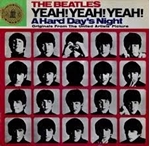
There are so many iconic Beatles hits that it’s tough to rank any single one above the rest. But if you were looking for the most propulsive single by the Fab Four, “A Hard Day’s Night” would have to be very near the top of the list. With that starter’s pistol of an opening chord and an unrelenting pace, just listening to it will leave you somehow energized and breathless all at once.But how did this song come to be in relation to the movie of the same name? What exactly is that opening chord anyway? And what in blazes does that title phrase even mean? All those answers and more as we explore “A Hard Day’s Night.”
The Beatles found themselves amid a whirlwind of activity in the early part of 1964. Fresh off the massive success of their first visit to America, they hustled back to England to begin work on their first feature film with director Richard Lester. While they were doing that, they also had to record the music that would accompany the film.
So busy were the four men that Ringo Starr found himself stumbling out of the studio on one occasion not quite aware if it was morning, afternoon, or evening. He started to complain about what a hard day it had been whe details
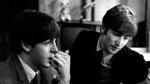
John Lennon’s ex May Pang says that the late musician still wanted to write with Paul McCartney even after The Beatles split.
Pang — who dated Lennon for 18 months from 1973 to 1975 amid a break in his marriage with Yoko Ono — spoke with USA Today in an interview published Friday about the retelling of her relationship with the legendary musician in her documentary,The Lost Weekend: A Love Story.
In a wide-ranging chat about how she and Lennon became involved romantically and details covered in the documentary, Pang, 72, is asked by the outlet if it was “surprising” that Lennon’s “mind goes to ‘Maybe I should start writing with Paul again,’” (in the documentary).
She then explained: “The pressure was off. All of them were now free to do whatever they wanted to do.”
“So in January 1975, Paul and Linda [McCartney] were saying, ‘We’re going to go down to New Orleans and do a new album [Venus and Mars].’ So John says, “Oh, great, New Orleans, always loved it,’” Pang recalled.
She continued, “A couple of days later, he’s tinkling on the guitar, and he goes, ‘What details
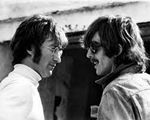
John Lennon and George Harrison’s creative differences on the song ‘Norwegian Wood’ almost ruined their friendship.
The Beatles had their fair share of fights and conflicts during their time together, with instances of near fistfights and getting kicked out of homes.
John Lennon believed that George Harrison and Ringo Starr were unnecessary to the band's success, but thought Starr would have found success regardless, while he didn't see Harrison reaching his full potential.
Lennon and Harrison had some tension while recording the song "Norwegian Wood," but ultimately managed to record it the way Lennon wanted, despite disagreements.
The Beatles are one of the biggest rock bands of all time. With 2 studio albums, 5 live albums, 51 compilation albums, 36 extended plays (EPs), and 63 singles, they sold millions of copies across the world. Despite their ability to create incredible songs together, John Lennon, Paul McCartney, Ringo Starr, and George Harrison didn’t always get along.
Source: By Astrid Longi/thethings.com
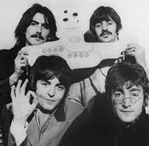
Producer George Martin's son compared The Beatles' "Yellow Submarine" demo with John Lennon's vocals to gold. Ringo Starr discussed the tune's evolution.
The son of a famous producer found a demo of The Beatles‘ “Yellow Submarine” with John Lennon singing the lead vocal. The demo includes some morose lyrics. Ringo Starr revealed that other members of the band decided to “liven up” the song before they had him sing it.
In 2022, USA Today reported John moped a lot in a demo of The Beatles’ “Yellow Submarine.” In the demo, he sangs lines like “In the place where I was born, no one cared, no one cared,” “and the name that I was born, no one cared,” and “in the town where I come from, no one cared.”
Giles Martin, son of Fab Four producer George Martin, discussed the demo. “I had no idea it existed,” he said. “It was a complete discovery and I was surprised. One of the thrills I get when doing this is for people to experience the same thing I experience. Going through the cobwebs and finding the gold — that’s what I want to transfer to other people.”
Martin felt the sad version of &ld details
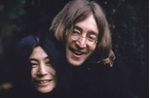
John Lennon was a big fan of a Yoko Ono song he co-produced. He compared himself to Ike Turner and his wife to Tina Turner.
John Lennon and Yoko Ono had a more fruitful musical partnership than many Beatles fans acknowledge. John thought one of Yoko’s songs was so good he wanted it to be an A-side single. The track later influenced the work of the couple’s only child, Sean Ono Lennon.
During a 1980 interview with Rolling Stone, John discussed “Walking on Thin Ice,” Yoko song he co-produced. “We were thinking that this song is so damn good that she should put her own single out, with me on the B side,” he said. “I’d love to be on the B-side of a hit record after all these years.” Several of John’s most famous songs, such as “(Just Like) Starting Over,” “Woman,” and “Happy Xmas (War Is Over).”
“I’d love to be the guitarist — I’m playing backwards guitar on this song,” John added. “I’d settle for it any day. Yoko deserves it, it’s been a long haul. I wouldn’t fight about it at all.” Yoko had a huge impact on popular music, having produced the album Imagi details
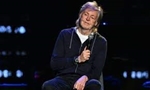
Paul McCartney kicked off a new tour of Australia in Adelaide, and to celebrate the trek’s launch, the former Beatles star took part in a special live Q&A event Tuesday (October 17) attended by a small group of lucky fans.9 News Australia reports that only about 20 contest winners got to attend the gathering, each one getting to ask McCartney one question. They also were treated to a six-song soundcheck performance that, according to Setlist.fm, included renditions of The Beatles’ tunes “Can’t Buy Me Love,” “Drive My Car,” and “Birthday,” the Wings hit “Let ‘Em In,” and his solo songs “Coming Up” and “Come On to Me.”
ABC.net.au reports that during the Q&A, McCartney mused about the sometimes-magical occurrences that led to the creation of some of his most famous Beatles songs.
“Someone said to me once, ‘Do you believe in magic?’ and I said, ‘Well, I’ve kind of got to,’ because a couple of my songs I didn’t write,” he explained. “I woke up one morning and then there was this tune in my head and it turned out to be ‘Yesterday.’ … It just ar details
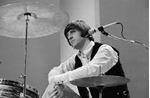
Ringo Starr never played The Beatles' "Get Back" in full in the studio. John Lennon said the song was connected to Paul McCartney's feelings about Yoko Ono.
While The Beatles wrote great harmonies, they were far from a harmonious band. Ringo Starr and John Lennon had different takes on The Beatles’ “Get Back.” One had fond memories of the song, especially a famous live version of it, while the other dismissed the track. John famously claimed Paul McCartney wrote the song to express his feelings about Yoko Ono. He also said it sounded a lot like one of the Fab Four’s other hits.
During a 2023 interview with USA Today, Ringo looked back at “Get Back.” “I love [the song] ‘Get Back,'” he said, beaming. “If you look at the [Peter Jackson documentary Get Back] … I never played to the whole song [in the studio]. Anyway, all the bits we were writing, it was regular rock.”
Source: Matthew Trzcinski/CheatSheet
details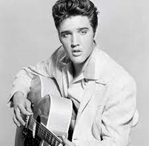
John Lennon's "(Just Like) Starting Over" was a callback to Elvis Presley and other artists who inspired John. John's song is more mature than the Elvis tune that inspired it.
It doesn’t take a genius to hear that John Lennon‘s “(Just Like) Starting Over” was inspired by Elvis Presley’s music. During an interview, John named the Elvis song and the Roy Orbison song that inspired “(Just Like) Starting Over.” He also revealed how much he was indebted to both artists.
During a 1980 Rolling Stone interview recorded in the book Lennon on Lennon: Conversations With John Lennon, John discussed the genesis of “(Just Like) Starting Over.” “All through the taping of ‘Starting Over,’ I was calling what I was doing ‘Elvis Orbison:’ ‘I want you I need only the lonely,'” he said. His words were a clear callback to Elvis’ “I Want You, I Need You, I Love You” and Roy Orbison’s “Only the Lonely,” two songs that influenced “(Just Like) Starting Over.”
Source: Matthew Trzcinski/cheatsheet.com
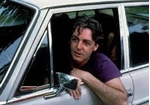
The Rolling Stones are set to release their first album of original material in nearly 20 years later this week. The set, titled Hackney Diamonds, features a slew of superstar collaborators, including the one and only Paul McCartney. According to one of the members of the band, it seems the former Beatle was as thrilled to be involved as fans of both acts likely are that he was in on the fun.
“He was so happy,” explained Rolling Stones guitarist Ronnie Wood when asked about McCartney's experience playing on the band’s new album. The rocker spoke to music outlet NME about Hackney Diamonds and their new work with the Beatles legend, who Wood referred to lovingly as "The schoolboy!"
McCartney is featured on the song "Bite My Head Off" on Hackney Diamonds. The tune has been described as leaning into "punk," which makes it sonically different from much of what’s been heard from the title so far. McCartney played bass on the track, and he's only credited on the liner notes, not as a featured artist or a songwriter.
Source: Hugh McIntyre/forbes.com
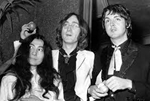
Paul McCartney says he would’ve liked to give Yoko Ono a quick “hello, goodbye” when she showed up to the recording studio.
On the latest episode of the “McCartney: A Life in Lyrics” podcast released last week, McCartney confirmed what most fans have long suspected: Ono’s presence during The Beatles’ recording sessions was a workplace “interference.”
McCartney dug into the making of “Let It Be” — The Beatles’ final album in 1970 — during the episode, and spoke candidly about how John Lennon and Ono’s “inseparable” romance only added more tension to his and his bandmates’ already strained relationships with one another.
“So things like Yoko being in the middle, literally in the middle of the recording session, was something you had to deal with,” McCartney said seven minutes into the episode. “And the idea was if John wanted this to happen, then it should happen. There’s no reason why not.”
Source: Elyse Wanshel/huffpost.com
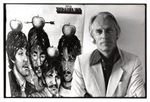
The Beatles hired someone to build them a new studio. According to George Harrison, the entire project was a disaster for the band.
In the late 1960s, George Martin, Paul McCartney, and George Harrison, among others, began voicing their concerns about someone working with The Beatles. “Magic” Alex Mardas was one of Apple Corps’ earliest employees and a friend of John Lennon. He promised them unique electronic decorations and improved recording equipment. The band enlisted him to build them a shiny new studio, a project Harrison later described as a complete disaster.
As an Apple employee, Mardas grew familiar with The Beatles’ recording equipment and told them it was terribly out of date. Per the book Paul McCartney: Many Years From Now by Barry Miles, Mardas began telling them he could design a seventy-two-track studio that would be more advanced than any existing studio.
Source:Emma McKee/cheatsheet.com
details
It must have been tough at times for George Harrison. To be in a band with the likes of Paul McCartney and John Lennon—that’s like being an All-Star athlete but sitting behind Michael Jordan and Scottie Pippen, Kobe and Shaq.
But despite that situation, Harrison was able to write more songs that fans might remember for the Beatles. Many of the tracks he wrote became some of the group’s biggest hits. These are five songs you likely didn’t know Harrison wrote for the Beatles.
Source: Jacob Uitti/americansongwriter.com
details