- Register
- Log in to Tune-In
- Wishlist (0)
-
Shopping cart
(0)
You have no items in your shopping cart.

Beatles News

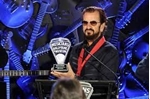
Ringo Starr is inducted into the Musicians Hall of Fame where he was the Inaugural recipient of the ... [+] Joe Chambers Musicians Legacy Award on September 24, 2023.
On Sunday afternoon, in front of an invitation-only group of friends and musicians, the legendary Ringo Starr was inducted into the Musicians Hall of Fame. While the Nashville museum honors musicians of all genres, with the names of many notable recipients on the walls, there was something special in paying tribute to one of the Beatles, and the man Peter Frampton calls “one of the greatest drummers of all time.”
Before the ceremony, Ringo graciously agreed to briefly walk a small red carpet answering a few questions from the media. He touched on his love of country music, noted he has three new EPs in the works, and when asked if he has any advice for up-and-coming musicians he simply said, “Just keep playing. I have grandsons and I tell ‘em the same thing.”
Source: Pam Windsor/forbes.com
details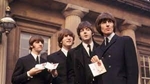
The Beatles were awarded their MBE's on 26 October 1965
A complete set of Beatles autographs obtained by a firefighter who was receiving his MBE on the same day as the band are to be sold at auction.
John Lennon, Paul McCartney, George Harrison and Ringo Starr signed a book for George Goodman at Buckingham Palace on 26 October 1965.
He said it was for his daughter, adding "I don't know what she sees in you" - a comment later repeated by McCartney.
The signatures go on sale in Lichfield, Staffordshire on 9 October.
Mr Goodman's daughter Joy, now 70, said she had had the autograph book "tucked away for years", but felt it was now time to pass it on to a collector who would appreciate it.
Source: Caroline Gall/bbc.com
details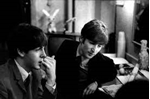
John Lennon used the phrase "a hard days night" in a short story that came out before The Beatles' song with a similar name. The short story hasn't aged well.
Ringo Starr‘s contributions to The Beatles get understated, but there’s one way they might be overstated. Ringo is credited with coming up with the title of The Beatles’ “A Hard Day’s Night.” John Lennon gave Ringo a lot of credit, while still acknowledging he used the name first. Specifically, John used it in a nonsense story that hasn’t aged particularly well.
In a 1980 interview from the book All We Are Saying: The Last Major Interview with John Lennon and Yoko Ono, John discussed the origins of the name A Hard Day’s Night. “[Director] Dick Lester suggested the title Hard Day’s Night from something Ringo’d said,” he said. “I had used it in In His Own Write, but it was an off-the-cuff remark by Ringo. You know, one of those malapropisms. A Ringoism, where he said it not to be funny, just said it.” John published In His Own Write, a book of avant-garde stories, in March 1964. For comparison, the film A Hard Day’s Night and the song and album of the same name came in details
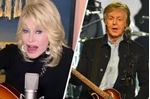
1. Ringo Starr
2. Bob Dylan
3. Dolly Parton
4. Willie Nelson
5. Paul McCartney
6. Frankie Valli
7. Mick Jagger
8. Yoko Ono
9. Rod Stewart
10. Dionne Warwick
11. Brian Wilson
12. Buddy Guy
13. Barbra Streisand
14. Pat Boone
15. Dick Van Dyke
16. Neil Diamond
17. Billy Joel
18. Paul Simon
19. Chubby Checker
20. Bill Hayes
21. Bobby Rush
22. Petula Clark
23. Smokey Robinson
24. Linda Ronstadt
25. Dion DiMucci
26. Billie Jean Horton
In the last several years we’ve lost many of our musical heroes. Though it’s sad that so many legends are gone, we’re also fortunate that many are still around.
If you’re interested in the oldest musicians still alive in 2023, you’ve come to the right place. Let’s dive into 26 artists who have reached significant age milestones.
Source: Hope Davis/musicinminnesota.com
details
The legacy and fascination of The Beatles continues in the city - but not many know what it is like to walk in the same footsteps every day as a member of the Fab Four before their days in the spotlight.
The late John Lennon lived in his childhood home, Mendips in Woolton, from 1945 to 1963 and it was there that he wrote some of his earliest work before The Beatles rose to stardom. Living with his aunt Mimi, in later years it was Lennon's widow Yoko Ono who bought the house in March 2002, donating it to the National Trust in order to save it from demolition and property speculators.
The childhood home of Paul McCartney - 13 Forthlin Road - is also owned and managed by the National Trust, with many citing it as the birthplace of The Beatles. And whilst the sites continue to attract thousands upon thousands of tourists and Beatles fans from across the globe year on year, not a lot of people can say they have lived in a house of this historic significance to The Beatles story.
Source: Jess Molyneux/liverpoolecho.co.uk
details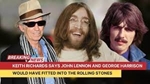
Keith Richards has said that John Lennon and George Harrison would have fitted into The Rolling Stones in a new interview.
Speaking to The Telegraph, Richards opened up about The Beatles and the rivalry between the band’s fans in the sixties.
Richards explained: “I don’t think John Lennon would have had much problem fitting into the Stones, or George, if you can imagine that sort of thing happening.”
He continued: “We were the same generation, and we all loved the same music. When we first heard The Beatles, we were relieved that there was some other band in England on the same track that we were on. And within a few months, that track was the main track.”
Source: Elizabeth Aubrey/nme.com
details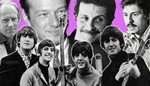
The notion of a Fifth Beatle emerged when US radio DJ Murray the K joked about giving The Beatles so much airtime in America, that he should be considered the ‘Fifth Beatle’. From the early days of ‘Beatlemania’ the legend grew. However, the answer to the puzzle is clear: there wasn’t a Fifth Beatle. Instead, The Beatles’ immense success sparked the legend of an honorary ‘fifth’ member. Lennon, McCartney, George Harrison and Ringo Starr were the undisputed Fab Four. Nevertheless, here are the candidates for the elusive fifth spot.
A serious contender for the role of ‘Fifth Beatle’ was Brian Epstein. Manager of the band from 1962, until his untimely death in 1967. Publicly The Beatles addressed him as ‘Mr Epstein’ or ‘Brian’, in private they affectionately referred to him as ‘Eppy’, or ‘Bri’. Epstein wasn’t involved in the music. But he was nonetheless the key architect of ‘Beatlemania’. He expertly engineered the ‘mob’ of screaming fans that met The Beatles at every public turn and profoundly influenced their public image from their early ‘clean cut’ appearance to the psyc details
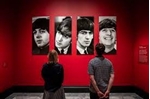
Over 250 unseen photographs of the Beatles taken by Sir Paul McCartney are currently being displayed for the first time at the United Kingdom’s National Portrait Gallery in an exhibition titled ‘Eyes of the Storm’.
Paul McCartney had thought that most of the images taken in 1963/64 were lost – until to his surprise, one of his P.A’s mentioned that they have them stored safely in an archive.
At the beginning of their fame, Pentax gave away SLRs to all members of the Beatles. Paul enjoyed experimenting with the camera the most and started snapping candid and posed shots of the band while jamming, recording, relaxing backstage and on tour.
McCartney commented: “The truth is, I have always been interested in photography, from the time I was very young, when our family owned a little box camera in the 1950s. I use to love the whole process of loading a roll of Kodak film into our Brownie camera.”
Source: Tim Levy /capturemag.com.au
details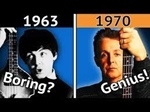
From his early days with the Beatles to a stellar solo career that has spanned decades, Sir Paul McCartney has secured his place as a music giant. The legendary musician is a touchstone of popular culture, but there’s more to McCartney than meets the eye—and the ear.
Beyond the iconic hits and the headline-grabbing moments, McCartney’s journey reveals a multifaceted artist who has deftly navigated the changing tides of the music industry while continuing to redefine his artistry.
It is with that in mind that we’re setting aside the familiar narratives and diving into the lesser-known aspects of McCartney’s life that illustrate his immeasurable influence and timeless appeal. Here are five things worth knowing about the most successful songwriter in music history.
Source: Matthew Kayser/americansongwriter.com
details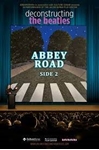
Sedona International Film Festival is proud to present “Deconstructing The Beatles: Abbey Road, Side 2” on Thursday, Sept. 28 at 7 p.m. at the Mary D. Fisher Theatre. In Deconstructing Abbey Road, Beatleologist Scott Freiman has created one of his most in-depth “deconstructions.” Freiman takes the audience on a journey track-by-track explaining the inspiration for the songs and their evolution in the studio.
This popular 9-show series — featuring composer/producer and The Beatles historian Scott Freiman — is returning to Sedona in September in preparation for Freiman coming in person in early October to present three brand new Deconstructing The Beatles programs LIVE at the Mary D. Fisher Theatre.
The Beatles’ Abbey Road, Side 2 is a masterpiece filled with classic Beatles songs, such as “Come Together,” “Something,” and “Here Comes the Sun.” George Martin told the Beatles to think “symphonically,” and they responded by creating the remarkable side two song suite.
Abbey Road was the last time that the Beatles recorded together at EMI Studios — soon-to-be-christened Abbey Road Studios after the album’s re details
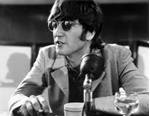
John Lennon was initially optimistic about The Beatles' Apple Records. Within a year, he completely changed his opinion. Here's what he said.
John Lennon was initially a proponent of The Beatles’ Apple Records, but he eventually changed his opinion of the company. In an interview, Lennon spoke about how wasteful he found Apple. He expressed the belief that they had to entirely change their business model if they wanted to avoid going broke.
In 1968, The Beatles launched Apple Records. By 1969, Lennon began to question their business model.
“I think it’s a bit messy and it wants tightening up. We haven’t got half the money people think we have,” he said in the book Lennon: The Definitive Biography by Ray Coleman, adding, “We have enough to live on but we can’t let Apple go on like it is. We started off with loads of ideas of what we wanted to do — an umbrella for different activities. But like one or two Beatle things, it didn’t work because we aren’t practical and we weren’t quick enough to realize that we need a businessman’s brain to run the whole thing.”
Source: Emma McKee/cheatsheet.com
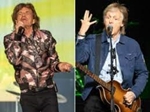
“He said, ‘It’s great playing with a band!'”
Mick Jagger has spoken about working with Paul McCartney on The Rolling Stones‘ upcoming new album ‘Hackney Diamonds’.
The legendary band announced their 24th studio record on September 6 and shared its lead single, ‘Angry’. Following on from 2005’s ‘A Bigger Bang’, the LP will mark the Stones’ first collection of original music in 18 years.
Last week, it was revealed that Beatles icon McCartney had played bass on a song called ‘Bite My Head Off’. He’ll appear on ‘Hackney Diamonds’ alongside Lady Gaga, Elton John and Stevie Wonder.
During a recent interview with Q on CBC, host Tom Power asked Jagger how the collaboration with Macca came about.
“Paul was in LA when we were recording, and he was supposed to work with Andy [producer Andrew Watt] one week,” the frontman replied. “Andy said, ‘I’m working on this record [‘Hackney Diamonds’], and if it takes six months I’m gonna do nothing else’.
“Suddenly we get to this one week and he says, ‘I forgot to tell you – details

Several higher ups at The Beatles' Apple Records quit in quick succession. One wrote letters to the band to emphasize their dire financial situation.
The Beatles were the most successful band of their time, but they still found themselves mired in financial problems. By the late 1960s, the band dealt with constant infighting, which was not helped by their money problems. After the last of three higher-ups at Apple Corps quit, the band received a warning about their finances. Stephen Maltz, an accountant and financial adviser for the band, stepped away from his position after he warned the band they were in danger.
In the 1960s, the tax laws in the United Kingdom had The Beatles paying 90% of their earnings to the government. This meant that despite the vast amount of money the band brought in, they weren’t necessarily in a good financial position. It didn’t help that their accountants began quitting in droves at the end of the decade.
One of their accountants quit because of John Lennon and Yoko Ono’s Two Virgins cover. Not long after, accountant Harry Pinsker left.
Source: Emma McKee/cheatsheet.com
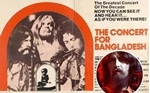
The Concert For Bangladesh was arguably the first ever benefit rock concert.
A star-studded relief concert that transformed how people perceived musicians at the time, no longer were rock stars simply countercultural outsiders indulging in life's many excesses.
After George Harrison put together the historic concert, wider society realised that musicians weren't mere celebrities but also had the power to make genuine change.
The event brought together icons of the era that nobody had ever witnessed before, and also brought two former members of The Beatles together on stage for the first time in five years.
Source:Thomas Curtis-Horsfall/goldradiouk.com
details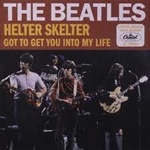
“Helter Skelter” is undoubtedly the Beatles’ most controversial song. However, the controversy is no fault of the group and all to do with the infamous Charles Manson co-opting the song for his own use.The track, penned by Paul McCartney and John Lennon, has far less nefarious origins. According to McCartney, the song was one part inspired by The Who’s rowdy musicality and one part of childhood memories.
“Pete Townshend had been talking in the music press about how The Who had just recorded the loudest, the dirtiest, the rockiest thing ever,” McCartney wrote in his book, The Lyrics: 1956 to the Present. “I loved that description, so I came into the studio and said to the guys, ‘Let’s just see how loud we can get and how raucous.’
“Let’s try and make the meters peak,” McCartney added.
The Who inspiration accounts for the grungy guitar and pounding drums, but what exactly is a “Helter Skelter?”
Source: Alex Hopper/americansongwriter.com
details