- Register
- Log in to Tune-In
- Wishlist (0)
-
Shopping cart
(0)
You have no items in your shopping cart.

Beatles News
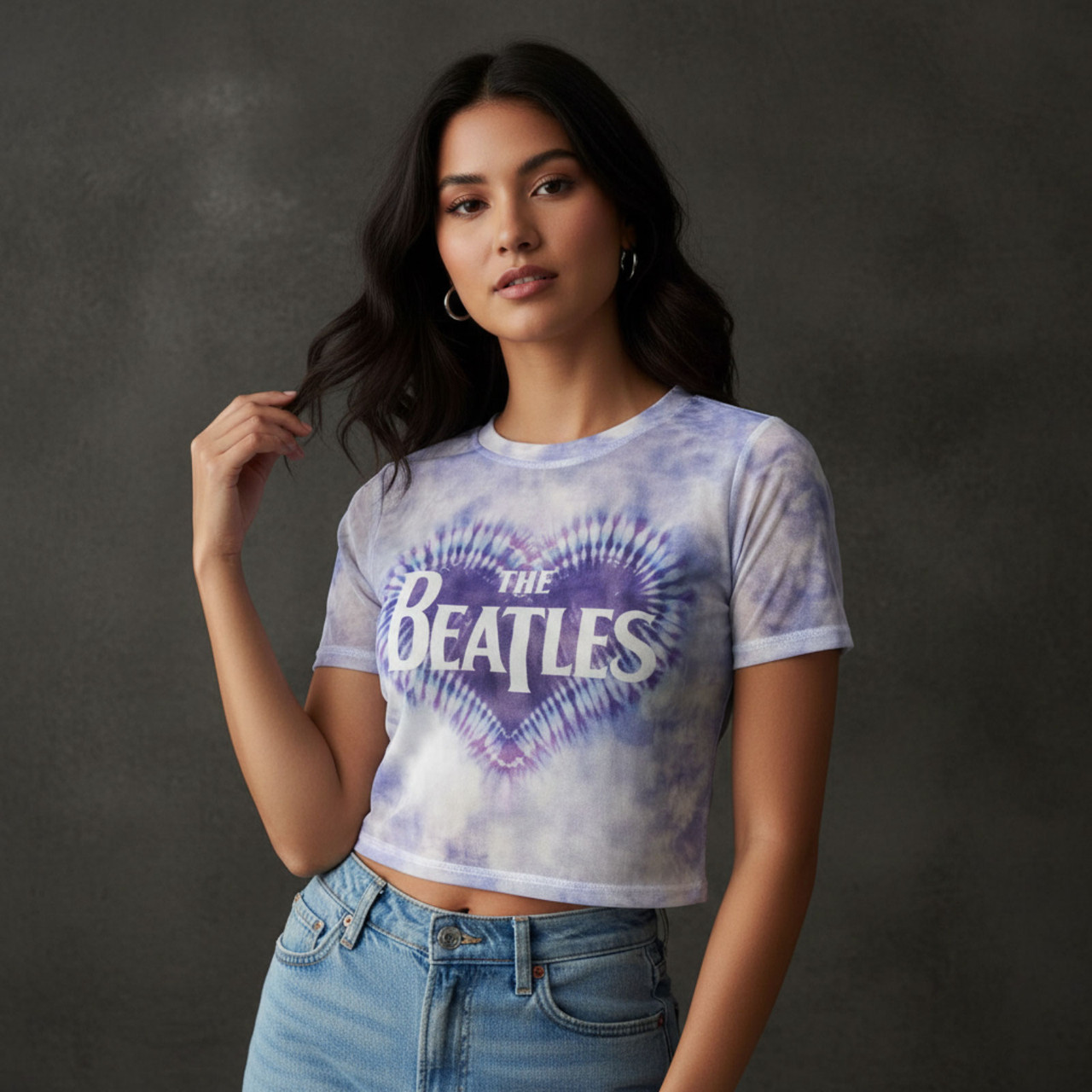
After the early 1960s, John Lennon and Paul McCartney didn’t collaborate as closely when writing Beatles songs. Still, they gave each other their opinions and helped finish pieces. McCartney asked Lennon for help completing “Eleanor Rigby.” Lennon explained that he was hurt when his bandmate asked him to work on it.
Lennon agreed that “Eleanor Rigby” was one of McCartney’s more complex songs, but he said this was partly thanks to him.
“Ah, the first verse was his and the rest are basically mine,” Lennon said in the book All We Are Saying: The Last Major Interview With John Lennon and Yoko Ono. “But the way he did it … Well, he knew he had a song. But by that time he didn’t want to ask for my help, and we were sitting around with Mal Evans and Neil Aspinall, so he said to us, ‘Hey, you guys, finish up the lyrics.’”
Lennon understood that McCartney was really only asking him for help, so they began working on the song together.
Source: Emma McKee/cheatsheet.com
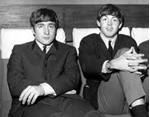
In 1968, a year after Brian Epstein set up Apple Corps – the umbrella company that would allow The Beatles to pay less tax than they would as individuals – drummer Ringo Starr set up his own venture.
Called ROR (short for 'Ringo or Robin', the latter being business partner and designer Robin Cruickshank) and run from the Apple offices on Saville Road, it was a company that made rather exclusive homeware. And in 1971, Ringo appeared on The BBC's flagship children's show Blue Peter to talk about their goods.
On the show, Starr took host John Noakes through some of ROR's catalogue: a stainless steel shelf set built around an eight-foot steel column with a removal occasional table/storage unit perched on top; a small chrome-plated storage box; a reversible perspex desk ornament filled with dangerous liquid mercury ("Perspex, I like as much as steel," explains Ringo), and a kinetic sculpture called 'Another One' (described in the original literature as a "mercury filled object containing zigzagging discs powered by a small motor which sits in the opaque light box underneath and all housed in a transparent perspex case”). IKEA, this was not.
Source: Fraser Lewry/loudersound.com
George Michael wrote an R&B song about John Lennon and Elvis Presley. The tune uses the deaths of John and Elvis to ask a question about God.
George Michael wrote an R&B song about John Lennon and Elvis Presley. The tune uses the deaths of John and Elvis to ask a question about God. While that might sound odd, it’s the inevitable result of the deification of the two rock stars.
While Michael is primarily known for the pop music he made in the 1980s and 1990s, “John and Elvis Are Dead” is a sultry R&B tune. It sounds more like Usher than The Beatles or the King of Rock ‘n’ Roll. In the tune, Michael asks “If Jesus Christ is alive, how come John and Elvis are dead?”
The tune is basically a variation on theodicy — the theological question of why God allows bad things to happen to good people. It’s interesting that Michael uses the deaths of John and Elvis as symbols of injustice. Thanks to songs such as “Imagine,” “Give Peace a Chance,” and “All You Need Is Love,” as well as his untimely death, John garnered a saintly image in pop culture. While Elvis wasn’t a peace activist like John, his sudden deat details
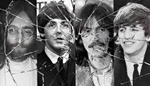
The end of The Beatles marked the end of an era. The enduring question – over 50 years after the event – persists: why did The Beatles split up? In reality, the breakup of The Beatles was multifaceted and complex: money problems, Brian Epstein’s death, John’s relationship with Yoko, not to mention creative divergences, internal power struggles, and the evolving artistic impulses of all four Beatles. Nonetheless, at the end of the day, the pivotal factor was John Lennon’s abrupt decision to quit the band.
In 1966, The Beatles finally decided to stop performing live after years of relentless touring. The plan was to focus on recording and the results were momentous. The release of ‘Sgt. Pepper’s Lonely Hearts Club Band’ (1967) changed the musical landscape forever and secured The Beatle’s status as counter-cultural icons.
However, Brian Epstein’s death in 1967 left the Beatles without their manager – a charismatic figure that handled their finances, and more importantly, their egos. Lennon, Harrison, and Ringo wanted the manager of the Rolling Stones, Allen Klein to take over, while Paul McCartney favored his soon-to-be wife Linda’s father to details
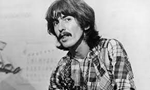
Though George Harrison was often left out of the songwriting dyad of Paul McCartney and John Lennon, he would write plenty of Beatles songs on his own. Throughout his time with The Beatles, Harrison wrote hundreds of songs, yet only a handful made the cut on several of the band’s albums.
Harrison penned Help! tracks “I Need You” and “You Like Me Too Much” and was relegated to singing some covers in between before his Rubber Soul contributions “Think For Yourself” and “If I Needed Someone.”
Later on, Harrison’s sweeping “While My Guitar Gently Weeps,” which featured his friend Eric Clapton, and the song “Piggies” made The White Album. Harrison wrote more with his most famous Abbey Road offerings “Something” and “Here Comes the Sun,” before “I’ll Be Me” and “For You Blue” on the third and final opus, Let It Be, in 1970.
Source: Tina Benitez-Eves/americansongwriter.com
details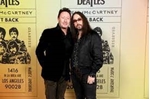
Do Julian Lennon and his brother Sean Ono Lennon have something special up their sleeves?
Just like their late father John Lennon, both Julian and Sean have established themselves as successful musicians — and now, Julian is teasing the possibility that the two might team up to make music together at some point in the future.
“We’ve talked about it. We have a plan at some point, when we both have the time to do it,” Julian told Bill Maher on an episode of his Club Random podcast that will air on Monday. “Yes, there’s something we want to do together. We want to play around with an idea. I think it’s a nice idea. I have to wait and see. I’m not winding you up, but it’ll have its time and place.”
Julian, 60, didn’t offer any additional clues as what he and Sean, 47, might be conjuring up, but acknowledged that there was something special about the idea of them working together, as it’s “the whole sibling thing and how our voices should sound together and do sound together.”
Julian was born to Lennon and his first wife Cynthia, while Sean’s mom is the “Imagine” singer’s second wife, Yoko Ono.< details
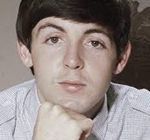
A teenager got to meet Paul McCartney after he heard her cover of The Beatles' "Blackbird." She discussed what she thought about meeting Paul.
If anything proves that music is the universal language, it’s the fact that The Beatles songs have been translated into so many dialects. A teenager covered The Beatles’ “Blackbird” in the Indigenous language Mi’kmaq to promote a social cause. Paul McCartney himself chimed in on the cover.
During a 2019 interview with the CBC Radio, singer Emma Stevens explained she hoped Paul would hear her cover of “Blackbird.” While the track is performed in an Indigenous dialect, its sparse folk arrangement is very faithful to the original “Blackbird” from The White Album.
Stevens’ teacher, Carter Chiasson, wanted the cover to draw attention to the Mi’kmaq language. Chiasson said his brother, Adam Chiasson, “emailed the right person and said the right things and all of a sudden we had an invitation” to see Paul in concert — and meet him before the show.
Source: Matthew Trzcinski/cheatsheet.com
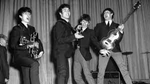
The Beatles were an English rock band that formed in Liverpool in 1960. The band consisted of John Lennon, Paul McCartney, George Harrison, and Ringo Starr. Widely regarded as one of the most important and influential bands in the history of rock music, the Beatles are known for their innovative songwriting, complex harmonies, and catchy pop melodies.
The Beatles’ early music was heavily influenced by American rock and roll, but as they matured as songwriters, they began to incorporate a wide variety of styles, from Indian classical music to avant-garde experimentation. Their impact on popular culture and music is immeasurable, and their music has continued to inspire and influence generations of musicians.
The Beatles released a string of groundbreaking albums throughout the 1960s, including Rubber Soul, Revolver, Sgt. Pepper’s Lonely Hearts Club Band, and Abbey Road. They disbanded in 1970, but their music remains popular to this day, and their influence on popular culture has endured. The Beatles were inducted into the Rock and Roll Hall of Fame in 1988, and they continue to be recognized as one of the most important and influential bands in the history of popular music.
Source: Edward Tom details
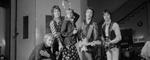
Paul McCartney has put together a marvelous solo career, with most of the output coming from 1980 forward. Before that, he was in a pair of bands, the first of which he joined, the second of which he formed. Those two bands, of course, are the Beatles and Wings. The Beatles were recognized by many as the greatest rock band of their time and beyond, while Wings had to deal with critical pot shots for much of their existence. Macca later went on to try his hand at experimental music with The Fireman, as well. Let’s take a look at these three groups and how they compare.
3. The Fireman
Is it possible there’s a band including Paul McCartney that even some diehard rock fans don’t know? It could be, because The Fireman is technically only a duo: McCartney and Martin Glover, the British musician and producer known by the stage name of Flood. It could also be because McCartney and Flood don’t do a lot of publicizing of their albums, of which there have been three as of this writing (the last was Electric Arguments from 2008).
Source: Jim Beviglia/americansongwriter.com
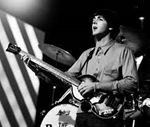
Paul McCartney didn't initially want strings on 'Eleanor Rigby.' When he agreed to it, the string musicians resented his vision. Here's why.
When George Martin told Paul McCartney that they should add a double string quartet to “Eleanor Rigby,” he was wary. He didn’t necessarily want that type of sound. Eventually, though, he agreed, so long as they followed his vision for the song. This particular vision horrified the string musicians. A Beatles audio engineer shared how they reacted and how they finally achieved the finished product.
McCartney initially played “Eleanor Rigby” on the acoustic guitar. When producer George Martin suggested they get a double string quartet, McCartney hesitantly agreed. He insisted that they achieve a “really biting” sound with the strings, though. This request meant that audio engineer Geoff Emerick had to get creative in the studio.
Source: Emma McKee/cheatsheet.com
details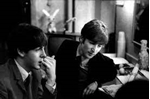
John Lennon said the work he put into a Paul McCartney was akin to educating a child. He shared why he felt this way.
By the mid-1960s, John Lennon and Paul McCartney wrote their songs apart, but they turned to each other for help perfecting them. According to Lennon, he helped a great deal with some of McCartney’s most popular songs. He explained that while one song was McCartney’s “baby,” he helped write all but the first verse.
McCartney began working on “Eleanor Rigby” based on the image of someone picking up rice after a wedding. He believed this was so poignant that he wanted to write a song about loneliness.
When asked about the song, Lennon said it was “Paul’s baby, and I helped with the education of the child.” By this, he meant that the song would never have grown and matured if it hadn’t been for him.
“Ah, the first verse was his and the rest are basically mine,” Lennon said in the book All We Are Saying: The Last Major Interview With John Lennon and Yoko Ono. “But the way he did it … Well, he knew he had a song. But by that time he didn’t want to ask for my help, and we were sitting around with details
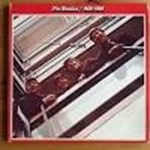
Do we need another compilation album of Beatles covers from their early years 1962-1966? Well, judging from the 85 tracks on the upcoming We Can Work It Out: Covers of The Beatles 1962-1966 the answer would appear to be a resounding yes. The title, on 3-CDs, from U.K. reissue label Cherry Red’s Strawberry imprint, arrives November 24, 2023.
The set includes a broad range of recording styles from such artists as Peter and Gordon, the Supremes, the Mamas & the Papas, Count Basie, Joe Cocker, the Ventures, the Fifth Dimension, Mae West, Jose Feliciano, and Petula Clark.
From the label’s September announcement: “After the release of the band’s first single, ‘Love Me Do,’ in October 1962, Beatlemania commenced almost instantly and soon their own recordings, as well as covers by others, were omnipresent. In this collection we find artists from France, Holland, America, Italy, New Zealand, Hungary, and Puerto Rico, all proving that The Beatles songs were so great that it didn’t matter what language they were sung in. Sunshine pop sits next to raw soul while bluegrass nudges up against jazz.”
Source: Best Classic Bands Staff/bestclassicbands.com
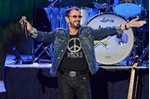
In 1964, The Beatles’ John Lennon, Paul McCartney, George Harrison and Ringo Starr crossed the pond to perform in the United States for the first time.
What followed was an unprecedented level of fanaticism as Beatlemania took hold of America.
Now, a mere 59 years later, 83-year-old drummer Ringo Starr is still out and about on the road with his All Starr Band made up of classic rock icons from Men At Work, Toto, The Edgar Winter Band and more this fall.
However, it appears Beatlemania has subsided a bit; some tickets are shockingly cheap to see the Rock and Roll Hall of Famer live in 2023.
At the time of publication, we found some tickets going for only $8 before fees on Vivid Seats. Yes, there are somehow tickets under $10 available to see one of the two living Beatles live.
Prices for most other shows start anywhere from approximately $45 to $210 before fees.
Source: Matt Levy/nypost.com
details
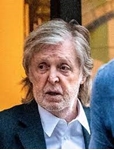
Paul McCartney is embracing a more natural look after being pictured in London this week with white hair and a white beard
Looking closer to his 81 years of age, The Beatles rocker definitely has good hair genes as there is no sign of a receding hairline despite him being an octogenarian. But instead of dying his locks brown - as he was rumoured to have done for 30 years - they are now more of a grey/white.
Although Paul was dressed smartly in a dark suit with a white shirt underneath, he looked like he might be in a hurry to get somewhere as he hadn't shaved. Or could his white stubble be an attempt to regrow the famous beard he rocked in his glory days?
The Hey Jude singer sported a thick beard between 1969 and 1971. Such is the love for it, there are even dedicated blog posts telling his legions of fans how to create the look themselves.
Source:Katie Wilson/mirror.co.uk
details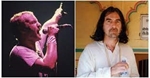
Beatle George Harrison was pigeon-holed as the "Quiet Beatle," but the youngest member of the Fab Four had an acerbic, dry sense of humor that was as sharp as the rest of his bandmates.
He gave great performances in the musical comedy classics, "A Hard Days Night" and "Help!" while holding his own during The Beatles' notoriously anarchic press conferences. After he left the band in 1970, in addition to his musical career, he would produce the 1979 Monty Python classic, "The Life of Brian."
Harrison clearly didn't lose his sense of humor for the rest of his life. Shortly before his death in 2001, he played an elaborate prank on Phil Collins that shows how the "Here Comes the Sun" singer would go the extra mile for a laugh.
Source: Tod Perry/good.is
details