- Register
- Log in to Tune-In
- Wishlist (0)
-
Shopping cart
(0)
You have no items in your shopping cart.

Beatles News
In his six decades in the public eye, Paul McCartney has shared so many Beatles stories that he has a hard time thinking of any he hasn’t told. McCartney, John Lennon, George Harrison, and Ringo Starr have all spoken so extensively about their time in the band that many of their experiences feel like common knowledge. McCartney said that because of this, whenever he starts telling a story about The Beatles, he can sense he’s boring people.
In 1957, McCartney joined The Quarrymen, Lennon’s band. By 1958, after much urging by McCartney, the group welcomed Harrison as their guitarist. By 1960, they called themselves The Beatles and hired drummer Pete Best. In 1962, they fired Best and brought on Starr as their drummer, and the iconic Beatles lineup was complete. The band was so successful that McCartney knew anything he did after they broke up couldn’t compare.
Source: Emma McKee/cheatsheet.com
details
George Harrison achieved international notoriety with The Beatles. The so-called quiet Beatle was instrumental to the band’s success, but he considered quitting while recording Let it Be. George once said he’d have to make a hundred Beatles albums just to get through the songs he wrote during one very prolific year.It took him nearly a decade to admit it, but John Lennon was a big fan of George’s “Within You Without You” from Sgt. Pepper’s Lonely Hearts Club Band. John said it showcased George’s innate songwriting talent.
It wasn’t popular in the United Kingdom, but George finally earned a No. 1 single with The Beatles in 1969. The Abbey Road double A-side of “Come Together” and George’s “Something” spent 16 weeks on the Billboard singles chart and peaked at No. 1 in late November 1969.
Finding chart success for his songs was a bonus for George, but it was too little too late. He realized his Beatles problems years before the band broke up.
Source: Jason Rossi/ cheatsheet.com
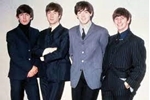
George Harrison spent his adolescence and early adulthood with The Beatles. He saw his bandmates more than anyone else, and they experienced the highs and lows of fame together. They also, as time went on, grew increasingly frustrated with one another. The arguments eventually led to the band’s breakup. Harrison said that this was the saddest part of being in The Beatles for him.“There was a certain amount of relief after that Candlestick Park concert,” he told Rolling Stone in 1987. “Before one of the last numbers, we actually set up this camera — I think it had a fisheye, a very wide-angle lens. We set it up on the amplifier, and Ringo came off the drums, and we stood with our backs to the audience and posed for a photograph, because we knew that was the last show.”
Source: Emma McKee/cheatsheet.com
details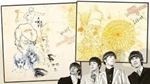
When you think of The Beatles’ non-musical pursuits, what comes to mind? Paul McCartney’s poetry may be the first thing, but the Fab Four’s visual side shouldn’t be discounted, either. At least, that’s one of the takeaways you might get upon learning of the latest high-profile auction related to The Beatles — the pending sale of a tablecloth the group drew on as they dined prior to their Candlestick Park concert in 1966.
That Candlestick Park concert holds a very specific place in Beatles history — it was the last concert they played as a band. (At least, the last one they played in a traditional venue; their rooftop concert was still a few years ahead of them.) Bonhams is selling the tablecloth as part of its “Legends of Music” online auction, running through October 19, along with items connected to the likes of Billie Holiday and John Coltrane.
Source: Tobias Carroll/insidehook.com
details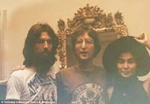
George Harrison and John Lennon had a heated argument about Yoko Ono performing at George’s 1971 benefit concert, the Concert for Bangladesh. John was on George’s list of friends and fellow musicians he wanted to perform. Yoko wasn’t. However, John couldn’t leave his wife behind. Or could he?In 1971, George’s musical guru, Ravi Shankar, told him of a humanitarian crisis in Bangladesh. George immediately felt compelled to organize a benefit concert to raise money for the refugees. He could raise a lot of money if he got his famous friends and fellow musicians to perform.
Source: Cheatsheet
details
John Lennon complained about his former bandmates in an interview. Some believe that John Lennon was being tongue-in-cheek in the interview. John Lennon and Paul McCartney improved the state of their relationship.
In 1970, John Lennon gave a lengthy, wide-ranging interview about his new music, his relationship with Yoko Ono, and his reflections on The Beatles. Much of what he had to say about his former bandmates was not flattering, and it stoked beliefs that the band hated each other. Some people who knew Lennon weren’t as sure. One of Lennon’s friends said the interview came across as more bitter than Lennon had likely intended.
Source: Emma McKee/cheatsheet.com
details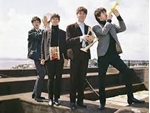
Sixty years ago this week, The Beatles changed the face of British music and pop culture with the release of first single Love Me Do. The Fab Four created some of the greatest pop songs of all time together, but McCartney revealed that one of their most iconic tunes was entirely his own work and filled with "indescribable pain."
Love Me Do was the first 'official' Beatles release on October 5, 1962, and reached number 17 on te UK charts. Two years later it would go straight to number one in the US (with Andy White on drums not Ringo Starr), but the band was already a global phenomenon by that time. Even though it lists Lennon-McCartney as the songwriters, 1965's Yesterday stands out as a rare "solo song" that didn't feature Lennon, Starr and George Harrison in any capacity. McCartney admitted, "It was a big deal at the time."
Source: Stefan Kyriazis/express.co.uk
details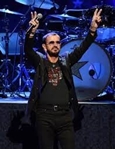
Rock legend Ringo Starr canceled his show at Four Winds Casino the day after playing a sold-out show in Mt. Pleasant last week and has since been diagnosed with Covid.
Ringo Starr and his All Starr Band played at Soaring Eagle Casino & Resort last Friday before canceling their Saturday show in New Buffalo, Mich., the musician’s website announced.
“It has been confirmed today that Ringo has Covid and his current All Starr tour will be on hold while he recuperates,” Starr’s Facebook page said on Tuesday.
Source: Rick Mills/themorningsun.com
details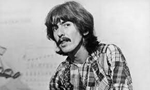
While promoting the new Beatles album, Abbey Road, in 1969, John Lennon described George Harrison’s “Something” as “about the best track on the album” – high praise, indeed. Released as a single in October that year (October 6 in the US and October 31 in the UK), “Something” would be George’s first (and only) Beatles A-side in the UK.
It hadn’t been easy for George to get his songs onto Beatles records. As John noted in 1974: “Paul and I really carved up the empire between us, because we were the singers… George never wrote a song till much later.”
George’s first composition, “Don’t Bother Me,” appeared on With The Beatles, the group’s second album, released in time for Christmas 1963. By the time of “The White Album,” five years later, his quota had risen to four songs out of 30.
Source: Paul McGuinness/news.yahoo.com
details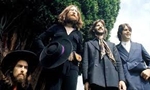
The John Lennon-penned “Come Together” may have been a memorable opener for Abbey Road, but it was actually one of the last songs The Beatles would begin working on. Unlike the majority of the songs on the album, which had first been brought to the group during January’s “Get Back” sessions, “Come Together” was written once Abbey Road was under way.
Source: Yahoo
details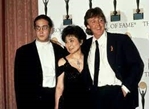
After The Beatles broke up, the band’s former members feuded through song lyrics and interviews, but John Lennon’s son said the arguments were blown out of proportion. Lennon and Paul McCartney, who wrote many of the group’s songs together, had many arguments in the time after the group broke up. While the fighting between them was painful, Sean said it could have been worse.
Lennon grew increasingly frustrated with his bandmates because of the way they treated Yoko Ono.
“You can quote Paul, it’s probably in the papers, he said it many times at first he hated Yoko and then he got to like her,” Lennon told Rolling Stone in 1971. “But, it’s too late for me. I’m for Yoko. Why should she take that kind of s*** from those people?”
THE DAY JOHN MET PAUL, 6 JULY 1957.
John: The day I met Paul I was singing 'Be-Bop-A-Lula' for the first time on stage. There's a picture of me with a checked shirt on, holding a little acoustic guitar – and I am singing 'Be-Bop-A-Lula'.
Source Emma McKee/cheatsheet.com

It was 60 years ago today when “Love Me Do” introduced the Beatles to the United Kingdom. A few months later, came their first album with a different version of “Love Me Do,” one featuring John, Paul, George, and … Andy.
During recording, producer George Martin had decided to pass by new drummer Ringo Starr in one session, in favor of veteran session drummer Andy White. (That version was later released in America.) Starr was relegated to the tambourine; on the single’s B side, “P.S. I Love You,” he’d been limited to the maracas.
Source: Yvonne Abraham/bostonglobe.com
details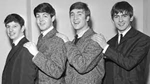
According to BeatlesBible.com, the Fab Four had first recorded the song with original drummer Pete Best on June 6, 1962, at London’s EMI Studios — later Abbey Road Studios. Then, after Ringo Starr had replaced Best, the band took a second crack at the song at EMI on September 4 of that year.
Producer George Martin wasn’t happy with the quality of Ringo’s drumming on that version, so The Beatles reconvened once more time at EMI, on September 11, 1962, with session drummer Andy White sitting in and Starr on tambourine.
Initial copies of the “Love Me Do” single actually featured the version with Ringo, although the one with White was included on The Beatles’ debut U.K. album, Please Please Me, and The Beatles’ Hits EP, which were released in 1963 in March and September, respectively.
Source: ABC NEWS/kshe95.com
details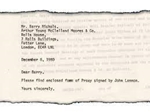
Hours before John Lennon's murder he put pen to paper, for perhaps the final time in his life, and now that document is up for grabs ... to any collector with deep pockets.
The typed letter was personally signed by JL on December 8, 1980 -- the day he was shot and killed outside his NYC home -- and it's believed to be the last legal doc with his autograph.
John sent it to his accountant, Barry Nichols, and it lists 3 people to whom John gave his proxy to vote at an annual meeting for the Beatles corporations ... which was happening 9 days later in London.
This particular memorabilia is expected to fetch between $30k and $50k ... and if it does, that would be a sweet deal considering his last autograph sold for $100k!
Source: tmz.com
details
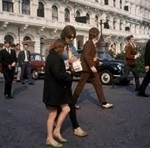
In 1976, George Harrison was in India, and a local journalist set out to interview him — and score an autograph for a friend. After much searching, the journalist, C.Y. Gopinath, managed to track Harrison down. He had no interest in giving an interview, though. When Gopinath asked for his autograph, Harrison responded sourly.
After many exhausting years of touring and recording music, The Beatles took a trip to India to study Transcendental Meditation.
“The weeks the Beatles spent at the ashram were a uniquely calm and creative oasis for them: meditation, vegetarian food and the gentle beauty of the foothills of the Himalayas,” photographer Paul Saltzman wrote, per Rolling Stone. “There were no fans, no press, no rushing around with busy schedules, and in this freedom, in this single capsule of time, they created more great music than in any similar period in their illustrious careers.”
Source: Emma McKee/cheatsheet.com
details