- Register
- Log in to Tune-In
- Wishlist (0)
-
Shopping cart
(0)
You have no items in your shopping cart.

Beatles News
After The Beatles broke up, John Lennon, Paul McCartney, George Harrison, and Ringo Starr set off on separate careers. While they would work together sporadically over the years, they were now solo artists. This was uncharted territory for them, but they all found success. Starr said that his former bandmates were shocked when his music hit number one.
By the end of the 1960s, tensions within The Beatles were at an all-time high. After disagreements over the band’s creative direction and management, they decided to call it quits. Lennon said it was good that they were moving on.
“It’s far better music (we’re all making now) because we’re not suppressed,” he said in 1971, per Express. “In the Beatles, by the time the Beatles were at their peak we were cutting each other down to size. We were limiting our capacity to write and perform by fitting it into some kind of format and that’s why it caused trouble … I knew I wouldn’t be doing the same thing. It just doesn’t work like that. It’s like a rugby team. Sometimes you just have to get married and leave the boys on a Saturday night. That’s just how it is.”
After the band&rsquo
details
John Lennon was often known for his surreal and psychedelic sayings. Some of them wouldn’t make any sense, while others were humorous quotes that made the other Beatles laugh. In the early days of The Beatles, Lennon shared a bizarre anecdote about the band’s origins that Paul McCartney later used as the basis for one of his solo albums.
McCartney released his 10th solo album Flaming Pie in 1997. The project debuted shortly after The Beatles Anthology, an extensive retrospective of The Beatles that included a book, a documentary, and a three-volume set of double albums. McCartney worked on the project with Ringo Starr and George Harrison and was inspired to create an album with a Beatles influence.
For Flaming Pie, McCartney worked with Electric Light Orchestra’s Jeff Lynne and former Beatles producer George Martin. He also brought in family and friends to help record songs, including Starr on drums and his son, James, on guitar. The album was a critical and commercial success, peaking at No. 2 on the U.K. album charts and the U.S. Billboard 200.
Source: Ross Tanenbaum/cheatsheet.com

Paul McCartney’s post-Beatles music career will be the focus of an upcoming documentary directed by Morgan Neville.
The tentatively titled Man on the Run, “the definitive document of Paul’s emergence from the dissolution of the world’s biggest band and his triumphant creation of a second decade of musical milestones — a brilliant and prolific stretch,” was announced at a pre-Grammy Universal Music Group party Saturday night; UMG’s television arm Polygram Entertainment will also produce the documentary, a teaser for which was shown at the event.
According to the Hollywood Reporter, the film was given access to never-before-seen material from McCartney’s own archives, as well as features new interviews with the legendary singer and his collaborators.
Source: Daniel Kreps/rollingstone.com
details
Though Ringo Starr has the reputation as “the Funny Beatle” and is frequently photographed flashing a peace sign, he has admitted that he gets angry just like everyone else. He said that he was furious for years after The Beatles broke up. He also admitted that he didn’t like answering questions about The Beatles in interviews. Sometimes, he could get prickly even anticipating that line of questioning. A talk show host said Starr was her least favorite guest because of how angry he was.
“I was mad,” he said, per the New York Daily News. “For 20 years. I had breaks in between of not being.”
He began drinking to cope, blurring the edges of many of his experiences after the band broke up.
Source: Emma McKee/cheatsheet.com
details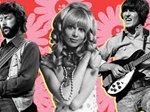
When a 19-year-old Pattie Boyd arrived at Paddington Station in 1964, she had no idea she would become the object of two of the world's biggest rockstar's affections and change the face of Rock 'n' Roll itself.
Boyd had been working numerous modelling jobs a day when her agency called her to Paddington Station for a secret gig. At this point of her career, the young model had only worked on a handful of coveted roles including the opportunity to say a few lines in a Smiths Crisps television commercial directed by Richard Lester.
Boyd didn't expect much from this top-secret opportunity, she assumed it would be another casting call or maybe even the filming for an ad. However, she began to grow suspicious when she ran into Richard Lester and he refused to tell her what she was there for.
Source: Georgia Weir/honey.nine.com.au
details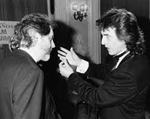
George Harrison loved talking to people and revealed that it took a long time for anyone to bore him. The former Beatle enjoyed hearing people’s stories and perspectives, especially if they had interesting opinions about religion.
George Harrison talking to director David Puttnam in 1986.
In a November 1964 issue of The Beatles Book Monthly (per Beatles Interviews), George interviewed himself. He asked the questions he thought reporters missed, including if he made friends easily.
George replied that he was “extremely” interested in people. “I think I make an easy target for folk who like to talk about themselves,” he added. “It takes a long time for them to bore me because I enjoy listening to new ideas and different opinions. That’s what life is for– to find out fresh things and learn new facts.”
George asked himself if his life as a Beatle had put a stop to that. He replied no because he hates rushing. The pace of things was one drawback to being a Beatle for him. However, The Beatles knew each other inside and out. George said their individual characteristics balanced against one another well. “It is because our personalities work at di details
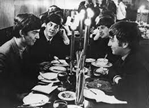
According to George Harrison, American fans sometimes “bother[ed]” the Beatles while at restaurants. Still, this band made time to dine out, as noted in one interview with Playboy Magazine.
The Beatles’ music (and fans) followed them — even at dinner. In All We Are Saying: The Last Major Interview with John Lennon and Yoko Ono, the songwriter mentioned hearing Beatles songs while in public.
“I go to restaurants and the groups always play ‘Yesterday,’” Lennon said. “Yoko and I even signed a guy’s violin in Spain after he played us ‘Yesterday.’ He couldn’t understand that I didn’t write the song. But I guess he couldn’t have gone from table to table playing ‘I Am the Walrus.’”
During a 1965 interview with Playboy, the Beatles were asked if they could “safely” enjoy meals at restaurants. Ringo Starr replied by saying he went out to eat “the other night,” with McCartney chiming in with, “we’re known in the restaurants we go in.”
“Usually it’s only Americans that’ll bother you,” Harrison said (via Beatles Interviews). “If we details
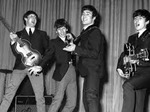
In the year 1966, “it seemed to Western youth that The Beatles knew — that they had the key to current events and were somehow orchestrating them through their records.” So writes Ian McDonald in the critical study Revolution in the Head: The Beatles’ Records and the Sixties. But some had been looking to John Lennon, Paul McCartney, George Harrison, and Ringo Starr as pop-culture oracles since they put out their first album in 1963. Unlike the youth-oriented stars who came before, they fully inhabited the roles of both performers and creators. If anyone knew how to read the zeitgeist of that decade, surely it was the Beatles.
Source: openculture.com
details
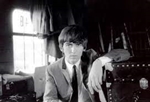
By the time The Beatles were at the height of their fame, John Lennon, Paul McCartney, George Harrison, and Ringo Starr were making more money than they could spend. Despite this, they never carried money with them. There was always an aide or assistant available to pay, so they didn’t bother. On a night out in Wales, though, nobody had enough money to pay for dinner. Luckily Harrison remembered that he had stored cash in an unusual place.In 1967, The Beatles traveled to Bangor, Wales, to attend a seminar on Transcendental Meditation. They took a train from London to Bangor with their wives and Mick Jagger. The band had first met Maharishi Mahesh Yogi after a seminar in London, and they were eager to follow him to Maine. Per The Guardian, Starr said that meeting him was “one of those mind-altering moments of your life.”
Source: Emma McKee/cheatsheet.com
details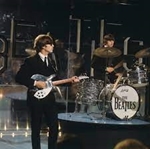
Ringo Starr’s Beatles bandmates often overshadowed the drummer. The timekeeper born as Richard Starkey shined on several occasions, but John Lennon, Paul McCartney, and George Harrison took the spotlight much of the time. Ringo got it wrong when he said young drummers would never get anywhere listening to his playing. But he always got it right with his Fab Four beats. Ringo also got it right when he praised his drumming on The Beatles’ song “Get Back” while giving John Lennon’s guitar playing a backhanded compliment.
The Beatles were barely holding it together when they convened for the Get Back sessions, songs that surfaced as their final album, Let It Be.
Paul pushed (and pushed and pushed) for a cohesive return to the band’s roots. George, fed up with never having an opportunity to rise above third wheel, got in a fight with John, temporarily quit the band, and went into a shell at home.
Source: Jason Rossi/cheatsheet.com
details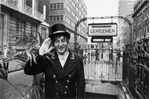
John Lennon didn’t stray away from controversial topics, activism, and noteworthy statements. When it comes to late-night talk shows, the Beatles member said there shouldn’t be “any limits at all” regarding hot topics.
The Beatles’ Lennon didn’t stray away from activism and hot topics. The rock band released “Get Back” as commentary on anti-immigration rhetoric in England. While performing in front of the Royal Family, Lennon joked that instead of cheering, they should “just rattle [their] jewelry.”
As a solo artist, Lennon debuted “Give Peace a Chance” and “Happy Xmas (War is Over.)” He also appeared in his honeymoon “Bed-In for Peace” alongside Yoko Ono.
Lennon appeared in interviews with the Beatles and as a solo artist. In 1966, the songwriter was asked about “hot” conversations on talk shows.
“I don’t think there should be any limits at all,” Lennon said (via Beatles Interviews). “That is why they should put late-night shows on at two o’clock in the morning. That way people wouldn’t have to watch it and say how disgusting so-and-so’s behavior w details
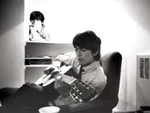
Harrison met McCartney on the bus to school, and the two bonded over their love of music. When McCartney joined Lennon’s band, The Quarrymen, he pushed for the group to welcome Harrison as well.
“I know this guy,” McCartney told Lennon, per the book George Harrison: Behind the Locked Door by Graeme Thomson. “He’s a bit young, but he’s good.”
“George was the youngest, and it was obvious,” author Tony Bramwell said. “He looked very young, even younger than his years. John Lennon didn’t particularly like him and didn’t want him in the band. He regarded him as too young, a kid, but Paul was pushing for him.”
Source: Emma McKee/cheatsheet.com
details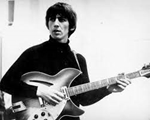
George Harrison is the solo artist behind “My Sweet Lord,” also earning praise for his work with the Beatles. After releasing music (and producing films) for several years, this celebrity earned an impressive net worth — and even elaborated on his relationship with money.
Harrison was a member of the “Fab Four,” performing songs like “Let It Be,” “Strawberry Fields Forever,” and “Here Comes the Sun” with the Beatles. Celebrity Net Worth reported that Harrison had an estimated $400 million at his time of death.
That’s primarily thanks to his role with the Beatles, although he also worked as a film producer. Harrison also released solo music and starred in films like A Hard Day’s Night and Help.
The website explained that at the time of Lennon’s death in 1980, he was worth $200 million, with George worth $100 million, Ringo worth $80 million, and Paul worth $400 million. “Being worth $100 million in 1980 is the same as $300 million in today’s dollars.”
Source: Julia Dzurillay/cheatsheet.com
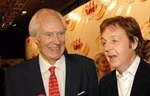
Paul McCartney always seemed to be able to create a song from thin air. Anyone who watched The Beatles: Get Back saw Macca pull the song “Get Back” out of thin air. He proved his genius as a songwriter when he wrote “Ob-La-Di, Ob-La-Da,” based solely on a slang phrase one of his friends uttered. When inspiration struck, Paul arranged one gentle Sgt. Pepper song without producer George Martin.
Paul once said writing songs with John Lennon was easy because they had a pleasabt back and forth relationship (at least for a while). That allowed them to work quickly. Yet Paul also wrote rapidly on his own. The supposedly wistful Get Back sessions and “Ob-La-Di, Ob-La-Da” weren’t the only examples of his songwriting prowess.
Macca wrote Let It Be opener “Two of Us” while on a date with Linda. He pulled a similar trick several years later. Paul wrote the song “Picasso’s Last Words (Drink to Me)” on the spot and put it on a Wings album when Dustin Hoffman asked him to. Paul famously churned out “Wonderful Christmastime” in a few minutes during the sweltering summer heat.
Source: Jason Rossi/cheatsheet.com
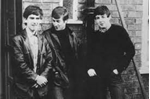
Los Beatles It was one of the most iconic bands in history. But the group made up of Paul McCartney, George Harrison, John Lennon and Ringo Starr had another name: originally it was called The Quarry Men. Those were times when Harrison had yet to join the biggest musical phenomenon of the 20th century.
On July 6, 1957, Lennon and McCartney had met: they were both 16 years old. A few months later they met Harrison, the youngest of the Liverpool Fabulous Four, who at just 14 years old dazzled the two founding members with his skills as a guitarist.
As part of a trip in a two-seater bus, which took place on February 6, 1958, Harrison made everyone present delirious. The musician was about to turn 15 and was on his way to an audition with the aim of being part of a group that needed a third artist to be able to display his talent in all its splendor. In that vehicle, George played a version of “Raunchy”an instrumental song that had been made popular by Ernie Freeman.
Source: Eliana Ramsey/zyri.net
details