- Register
- Log in to Tune-In
- Wishlist (0)
-
Shopping cart
(0)
You have no items in your shopping cart.

Beatles Music
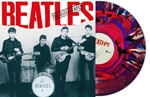
When Dick Rowe infamously passed on four young Liverpudlians on New Year’s Day 1962, he didn’t just make a historic blunder—he also kicked off the greatest vinyl detective story in rock history.
New Year’s Day 1962.
Most of London was sleeping off a hangover. But The Beatles arrived at Decca Studios in West Hampstead, London.
They arrived after a grueling 10-hour overnight drive from Liverpool through a severe snowstorm. They were in London to perform a high-stakes audition that their manager, Brian Epstein, hoped would secure their first major recording contract.
Over the course of the session, the group dashed through 15 tracks chosen specifically by Epstein to showcase their range.
Rather than unleashing the raw, sweaty rock-and-roll energy that was currently tearing the roof off the Cavern Club, the setlist leaned heavily into polite pop covers and stage standards.
This is the 15-song track list from the audition session.
Lennon-McCartney originals:
“Like Dreamers Do”
“Hello Little Girl”
“Love of the Loved”
Covers and standards:
“Money (That’s What I Want)” details
Much has been said and written about the break-up of The Beatles - and what might have been the catalyst that drove the final nail in the coffin. It was a combination of things - band members feeling neglected, resentment (“We’re the grooves, so just watch it, okay?”), pressure to deliver new music, the aftermath of Brian Epstein’s premature death, the drudgery of living in each others pockets day-to-day for years... and according to the narrative at the time, Yoko’s presence while the group was at work.
The Fabs fall apart
It’s not even entirely clear who split the group. John Lennon claimed he wanted out but didn’t know how to break it to the other three so rather than confront them, he let it simmer - perhaps hoping it would all run its natural course and peter out. Then, in April 1970, Paul McCartney let slip that it was all over in a press release interview for his new solo album that there would be no more Beatles - no new music, no tours or shows, no more writing collaborations with John.
To the question, “Are you planning a new album or single with the Beatles?” Paul bluntly replied, “No”. He elaborated, citing “personal diff details
The argument about who the “Fifth Beatle” might have been is a bit of a pointless one. No one was on a par with the contributions made by the four members themselves. But it’s intriguing to look back at the group’s history and note some of the fascinating characters who were a part, however tangential, of their story.
For instance, there was Alexis Mardas, aka Magic Alex, who briefly popped up in the group’s orbit in the late 60s. Alas, when the group needed Mardas to step up with his supposed technical expertise in 1969, things didn’t go as planned.
The Magic Man
A native of Greece, Alexis Mardas first started making the rounds of British pop stars when he became acquainted with Brian Jones of The Rolling Stones. In 1966, he met John Lennon when both men were frequenting the Indica book shop in London. Soon, Mardas joined Lennon’s entourage.
Mardas often boasted of his undiscovered technological innovations, many of which drew the wonder of Lennon. Some of his promised (but never quite realized) innovations included a house that hovered above the ground and music speakers embedded in wallpaper.
Unfortunately, Mardas also seemed to be a magnet for co details
There are lots of opinions swirling on the internet about The Beatles’ final years as a band, with some Fab Four fans posthumously judging the musicians for what they did (and didn’t do) in the tumultuous last few years of the 1960s. However, I would argue that Paul McCartney showed tremendous foresight when he—along with Ringo Starr and George Harrison—rejected a song John Lennon proposed the band release as their next single in the fall of 1969.
For some context, The Beatles had just released their penultimate album, Abbey Road, on September 26 of that year. The album’s lead single, “Something”, with “Come Together”, was set to come out on October 6. On September 30, fresh from the album release, John Lennon went into the studio to record “Cold Turkey” with the Plastic Ono Band, having been turned down by his other bandmates.
The Plastic Ono Band version came out on October 20. The songwriting credit was solely John Lennon. This marked a first for the musician who previously released all of his other compositions, even the personal ones, under the Lennon-McCartney partnership.
“Cold Turkey” Never Would Have Worked as a Beatles S
details
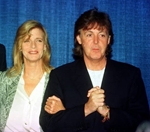
There's quite a lot of ground to cover in the upcoming Beatles biopics, but a source tells Closer that one of the four-part films' heartbreaking plotlines will center around the death of Paul McCartney's beloved first wife, Linda.
"Linda is a big character in the world of the Beatles," reveals the source, and director Sam Mendes "has opted to make her a huge part of these movies by hiring Saoirse Ronan, who is a four-time Oscar nominee, to play her."
McCartney, 84, wed Linda in 1969 and the pair, who shared daughters Mary, 57, and Stella, 55, and son James, 49, were married for nearly 30 years. He also adopted the photographer's daughter Heather, 63, from a previous marriage.
After the Beatles broke up in 1970, "it was Linda who saved" McCartney from his "deep, deep anger," the "Maybe I'm Amazed" singer told biographer Tom Doyle, per The Times U.K., and the pair went on to play together in the band Wings.
Then in 1998, Linda tragically lost her battle with breast cancer at the age of 56.
"When it comes to Linda's illness, the movies will go there, and they're doing it in a tasteful way that is fully aligned with Sir Paul's own wishes for the project," insists the source, adding that McCar details
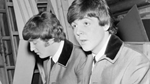
There are lots of opinions swirling on the internet about The Beatles’ final years as a band, with some Fab Four fans posthumously judging the musicians for what they did (and didn’t do) in the tumultuous last few years of the 1960s. However, I would argue that Paul McCartney showed tremendous foresight when he—along with Ringo Starr and George Harrison—rejected a song John Lennon proposed the band release as their next single in the fall of 1969.
For some context, The Beatles had just released their penultimate album, Abbey Road, on September 26 of that year. The album’s lead single, “Something”, with “Come Together”, was set to come out on October 6. On September 30, fresh from the album release, John Lennon went into the studio to record “Cold Turkey” with the Plastic Ono Band, having been turned down by his other bandmates.
The Plastic Ono Band version came out on October 20. The songwriting credit was solely John Lennon. This marked a first for the musician who previously released all of his other compositions, even the personal ones, under the Lennon-McCartney partnership.
“Cold Turkey” Never Would Have Worked as a Beatles S
details
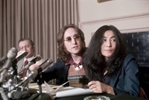
On October 24th, John Lennon filed a lawsuit against the US government, accusing it of tapping his phone.
After Lennon and Yoko Ono held their famed "bed-ins" in Montreal and Amsterdam, the FBI began keeping elaborate records on the muscian, including taking notes on his media appearances and wiretapping his phone.
During the tumult of the Vietnam War, the famous couple were self-proclaimed "peaceniks," frequently criticizing Nixon and the conflicts. The couple was vocal about their anti-war opinions, creating a huge anti-war movement in the USA and making friends with several members of the "New Left." Their political movement advocated for civil rights, gay rights, drug reforms, and feminism.
The FBI took note of their political opinions and affiliations. They became concerned that Lennon and Ono were planning a "large rock concert" in front of the convention hall in Miami Beach, where the Republican National Convention was being held. They were concerned this would interfere with the presidential election.
So, the FBI, tapped Lennon's phone and sent their agents to follow the former Beatles. He was very aware of this, admitting these practices made him "scared" and "paranoid."
"When it details
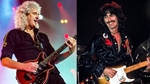
Brian May believes George Harrison deserves more recognition for his contributions to the electric guitar’s legacy. In his view, guitarists who dazzle with speed and fireworks have overshadowed the quieter virtues of the instrument — qualities Harrison possessed in abundance.
May knows a thing or two about making an electric guitar speak. He was crowned the world’s greatest guitarist in Total Guitar’s 2020 rankings, narrowly beating Jimi Hendrix to the top spot.
His work with his fabled Red Special is testament to his own formidable talent, though May’s playing often falls on the flashier end of the spectrum. Consider his solo on “Don’t Stop Me Now,” which he fought to include after Freddie Mercury argued that the song was better suited to piano. Yet, speaking to the Express in 2022, May explained why Harrison’s less showy approach deserves equal respect.
George Harrison plays his 1963 Rickenbacker 360/12 guitar on stage during rehearsals for the TV show 'Thank Your Lucky Stars' Summer Spin at Teddington Studios in London on 11th July 1964.
“At every stage in their career and their music development, they were models,” he sai details
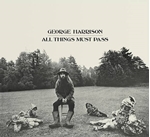
Though it would showcase the strengths of George Harrison as a songwriter better than The Beatles ever did, All Things Must Pass was not a smooth time for the so-called quiet one.
Harrison’s breakout solo album would come just a year after The Beatles had formally dissolved. His fellow bandmates had released projects of their own, but it was All Things Must Pass and songs like My Sweet Lord that gave Harrison a head start in his post-Beatles career. Despite the triple album featuring some of Harrison’s all-time great songs, including the Bob Dylan-inspired I’d Have You Anytime, the Something songwriter found himself feeling musically “paranoid” as a result of working with Paul McCartney and John Lennon. The songwriting duo would hardly let Harrison’s songs feature on The Beatles’ albums, leaving Harrison with a backlog of quality material that he placed on All Things Must Pass.
Speaking back in 1977 to Crawdaddy Magazine, Harrison confirmed that having Derek and the Dominos play on most of the songs, as well as finding a love for the Dylan-inspired I’d Have You Anytime, helped with the pains of recording his massive studio album.
He said: “I liked dif details
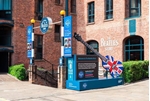
Kev McManus, Head of Liverpool UNESCO City of Music, reflects on this week’s announcement about a new home for The Beatles Story and how it will help support future talent…
Apple Corps will be opening a huge, new state of the art Beatles attraction in Liverpool in 2028. It is great news for the city in so many ways but for me what really struck home were the quotes from Paul McCartney and Ringo Starr. Both acknowledged that The Beatles and Liverpool are inseparable. The city made them, and their ongoing love for the place shone through in their words.
The other really exciting element for me was the announcement that every ticket sold to The Beatles Story will contribute to the Apple Corps Liverpool Trust, a charitable initiative established to provide financial support and opportunities for emerging Liverpool artists. This type of support is absolutely vital at the moment – a time when it is increasingly difficult for emerging artists to breakthrough into a music industry that has changed beyond all recognition since the days that The Beatles did so.
This gift back to the city and its musicians is a brilliant gesture and it is why during the local press launch we had some musicians wh details
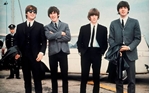
I like the Beatles, and I'm almost definitely sure that you do too. But I'm afraid their 21st-century omnipresence – impressive for a band that split up 56 years ago – is starting to bring me slightly down.
It has been revealed that there is to be a ginormous new Beatles museum in Liverpool, opening in 2028. Its 9,290 sq m will be packed with props and costumes from the four – yes, four – biopics of the band to be released the same year under the auspices of Sam Mendes. All this will come on top of the opening to the public of the band's former Apple Records headquarters in Savile Row, repurposed as another sanctum. This one promises seven floors of memorabilia.
Oh, and the dodgy Richard Curtis film Yesterday is being transformed into a stage musical, featuring the songs of Showaddywaddy – no, not really, it's The Beatles again.
One can't help feeling a little bit over-Beatled. Growing up in the Seventies, I naturally found the Sixties a bit naff, and the lingering overhang of The Beatles a bit tedious. Were people ever going to stop boring on about them?
After all, when you grow up after a big sensation has flared and died, you take it for granted. It will never be details
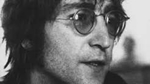
John Lennon was one of the first writers whose lyrics were studied by fans for their insight and depth. But Lennon became a little bit wary of those who’d try to find meanings that he didn’t think were there.
As a result, he adjusted late in The Beatles years and early in his solo career. He started keeping the lyrics simple. And he still found ways to captivate with his words and music.
“Don’t Let Me Down”
Lennon’s first response to those who went diving deep into his lyrics was to make them deliberately obtuse and nonsensical. The Beatles’ tracks “I Am The Walrus” and “Glass Onion” offer excellent examples of this approach. He eventually decided that he’d try to keep things as simple and direct as possible. “Don’t Let Me Down”, released as a B-side in 1969, offered the first evidence of this approach. Still relatively new to his relationship with Yoko Ono, Lennon used the song to plead for reliability from her. He doesn’t do anything fancy with the lyrics. Instead, he relies on his impassioned vocals, recorded during The Beatles’ rooftop concert at the start of 1969, to communicate.
“I Want You
details
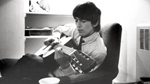
George Harrison may not have been part of The Beatles’ legendary songwriting partnership of Paul McCartney and John Lennon, but he had a talent early on for songwriting that deserved to be nurtured. He really stepped into his own in 1969 with a few self-penned Beatles tunes that would go on to change songwriting forever. These tunes were just a preview of what Harrison would do with his solo career.
“Something” from ‘Abbey Road’
Let’s start with the obvious. “Something” is one of The Beatles’ most enduring hit songs. And it’s easily one of the biggest releases from the Fab Four in 1969. Harrison penned “Something” as a love song with a beautifully constructed melody. The way those harmonics shift throughout the song is gorgeous. Many listeners at the time couldn’t believe how little Harrison had contributed to the band as a songwriter up until that point. “Something” would be Harrison’s first composition to get the A-side single treatment.
“Something” was a smash hit across the board back in 1969. It peaked at the top of the Billboard Hot 100 chart and No. 4 on the UK Singles chart. “Here C details
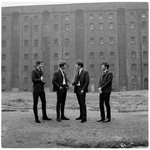
Apple Corps will take over management of the award-winning attraction The Beatles Story in 2028, moving it to a new location in St Johns Shopping Centre. The new experience will transport fans from The Beatles' post-war Liverpool childhoods through Hamburg, The Cavern, Beatlemania, Abbey Road, Shea Stadium, Savile Row and beyond, using immersive technology, original artefacts and spectacular reconstructed sets to bring the Beatles’ extraordinary story to life.
Fans will also be able to visit a brand new Yellow Submarine experience at Liverpool's iconic St Johns Beacon tower, also arriving in 2028.
Add your details below to confirm your interest in The Beatles: Liverpool 2028, be the first to receive all updates and to be notified when tickets go on sale.
The Beatles Story will be open as usual in 2026 and 2027. Please visit beatlesstory.com for more information
details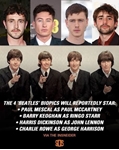
Nearly 59 years after the Beatles’ historic 1968 visit to the iconic Chaurasi Kutia in Rishikesh in Uttarakhand, the popular Beatles Ashram is all set to feature in an ambitious four-film project on the legendary band, directed by Oscar-winning filmmaker Sam Mendes.
An international film production delegation on Sunday met Chief Minister Pushkar Singh Dhami to discuss the proposed February 2027 shoot for The Beatles – A Four-Film Cinematic Event, being made by Neal Street Productions for Sony Pictures Entertainment in collaboration with Apple Corps.
The production is expected to bring more than 100 international crew members and around 150 Indian professionals to the state. Local arrangements are being coordinated by On The Road India, with opportunities expected for local technicians and service providers.
The four films will tell the individual stories of John Lennon, Paul McCartney, George Harrison and Ringo Starr. The cast includes Harris Dickinson as Lennon, Paul Mescal as McCartney, Joseph Quinn as Harrison and Barry Keoghan as Starr. A simultaneous global theatrical release is planned for April 2028.
The Beatles visited Rishikesh in February 1968 to study transcendental meditat details
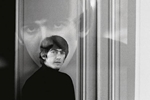
Some biographies give you a glimpse into music history. Others make you feel like you’ve stumbled into a private family album belonging to the greatest band that ever lived.
There are Beatles fans, and then there are Beatles obsessives. You know the type. The ones who can tell you which version of a song appeared on which release, who played what on a particular recording, and why a seemingly insignificant moment in a documentary deserves an entire afternoon of discussion. The ones who have spent years devouring every photograph, interview, bootleg and scrap of Beatles history they can get their hands on, convinced there must still be something out there they haven’t seen.
Enter THE THIRD EYE: Early Photographs, a remarkable collection of George Harrison’s personal photography, published by Penguin Random House, and quite possibly one of the most exciting things to land in the hands of a Beatles tragic in some time.
We’ve seen the Beatles from just about every conceivable angle. We’ve watched the documentaries, read the biographies, studied the album sleeves and pored over countless photographs of four lads from Liverpool who somehow changed the world. But there’s some details
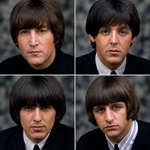
How should you listen to the Beatles? However you like, and as often you can. But faced with all that material, how – to coin a phrase – do you do it? In the aim of offering something like a benign, George Martin-style guiding hand, we’ve put together this series to put Beatles songs in your weekly calendar – hopefully bringing some fresh takes on their music, and on the hectic nature of their lives and creative development along the way.
The week of October 19th contains many of the different colours in the Beatle spectrum. In 1966, this is the week that George Harrison returns from India, where he has been taking a sitar course with Ravi Shankar. Today in 1968 is the day that John and Yoko are in court after a drugs bust. At the start of the career, however, the autumn is a time for harder work: a date at the Pavilion Gardens, Buxton (October 19th, 1963), and in 1964, where they enter the Scottish phase of their UK tour, with dates in Edinburgh, Dundee and Glasgow.
In Dundee they are interviewed for Scottish TV. “Where are we now?” someone asks. In the face of weariness, John Lennon enters the mildly surreal by way of reply.
“Cake,” he says.
Even details
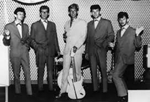
A Lincolnshire holiday camp played a little-known but crucial part in the birth of The Beatles.
A young, bearded Ringo Starr was playing drums with Rory Storm and the Hurricanes at the Butlins in Skegness in the summer 1962 when Paul McCartney and John Lennon arrived to try and recruit him to the band. Bobby Thomson, who was bassist in the Hurricanes, recalls the duo arriving early one morning after driving all night from Liverpool. "I think that was the whole idea, to invite him to join the Beatles," he said.
"Because I was with Ringo they didn't come out with it. They could have, it wouldn't have bothered me." He said that a few weeks later in mid August the band were having breakfast when an announcement over the speaker system asked Starr to report to reception.
He asked Thomson to come with him and the pair arrived to find a phone call from Beatles manager Brian Epstein asking if Starr would like to join the group. Keystone via Getty Images Black and white photograph of the five members of Rory Storm and the Hurricanes with the group wearing matching dark suits Bobby Thomson stands on the far left and Ringo Starr is far rightKeystone via Getty Images
Bobby
details
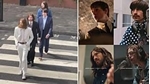
As Beatles fans are transported back to Abbey Road for Sam Mendes‘ upcoming biopic, Paul McCartney has some thoughts on the casting.
The Beatles alum said he was concerned that Paul Mescal looks “markedly shorter” compared to his co-stars, and he even reached out to Mendes about it, but doesn’t know how the director is “gonna deal with it” in the four-film cinematic event.
“Yeah, and guess what? He’s smaller than the guy who’s playing John [Lennon],” explained McCartney on the Good Hang with Amy Poehler podcast. “Sam Mendes is making the film. I heard Sam Mendes is making the film. I said, ‘Sam, I’ve got just one thing that I need to say to you. Paul’s a bit smaller.'”
After the movies’ cast re-created the iconic Abbey Road (1969) album cover while filming in London back in August, McCartney said his concerns worsened.
“So, I don’t know how Sam’s gonna deal with it, but he sent me a picture, a still from the filming they were doing,” he recalled. “They were crossing the Abbey Road crossing, and the Paul character is markedly smaller.”
McCartney continued, &ld details
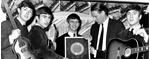
George Martin helped steward each Beatles album. His steady, experienced hand and a willingness to explore musical boundaries with the band’s four members made a huge difference. Throughout their catalog, his musical genius is a subtle constant.
But Martin nearly wasn’t a part of Abbey Road, the last album that the group ever recorded together. It took some last-minute convincing. Only then did he come aboard and offer his expertise on that monumental record.
George’s Anger
The Let It Be project, initially titled Get Back, did more damage to The Beatles than it was probably worth in the end. Among the casualties was George Martin’s ego. He was largely sidelined by the Fab Four during the sessions at the Twickenham film studio, which were being filmed for a documentary.
Martin later helped the band by convincing EMI to lend portable studios to the group when they decided to relocate the sessions to their Apple home base. But Martin disliked the chaotic nature of the recording process and the fact that the group wasn’t seeking his input as they had in the past.
When the sessions ended following the group’s rooftop concert in 1969, Martin truly thought that h details
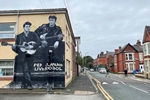
A community tourist attraction celebrating the Beatles has been put up for sale after closing its doors.
The Penny Lane Community Trust in Liverpool shut on New Year's Eve after struggling with rising costs and declining visitor numbers.
Former Lord Mayor and Penny Lane councillor, Richard Kemp, said: "It is disgraceful that this has taken so long and it will be well over a year before a successful bidder can start to use the building for the local community."
Liverpool City Council said it was "working with the liquidators and their representatives to explore future options for the building and secure the best possible outcome for the local community".
The site became a popular stop for tourists visiting Penny Lane and nearby Strawberry Fields, housing a visitor centre filled with Beatles memorabilia. The successful bidder must demonstrate financial viability and compliance with the building's permitted use.
The council owns the freehold of the Penny Lane Development Centre site, of which a lease was granted to Penny Lane Development Trust.
The property is held under a 99-year lease, granted by the council in 2009 at a peppercorn rent of £1 a year.
Source: details
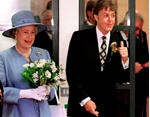
Sir Paul McCartney revealed the surprising crush the late monarch, Queen Elizabeth II, had on him when he was part of The Beatles with John Lennon, George Harrison and Ringo Starr.
The 84-year-old sat down on the Good Hang with Amy Poehler podcast on Tuesday, and had an answer ready when he was asked if any famous person he'd met had ever blown him away.
"The Queen," he replied. "And that's an autograph you're not going to get. She's great. I love the Queen."
Elizabeth, who passed away in September 2022, met Paul on several occasions throughout his life, including when she knighted him in 1997. Did Queen Elizabeth have a crush on Paul McCartney?
"She was a babe," the singer said. "We all used to think, 'Wow, this is amazing.' You know, like, having a king, he's got this girl. This babe. So, we kind of liked her in other ways than we shouldn't have liked her."
"So meeting her was special," he added. Paul was nine years old when the Queen ascended to the throne in 1952, and said he was around 21 when they met in person for the first time.
Source: hellomagazine.com/Faye James
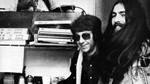
Paul McCartney wasn't informed by the rest of the Beatles that "Let It Be" would feature more than they'd planned together.
John Lennon and George Harrison brought in producer Phil Spector to work on the tapes in March 1970, and he added an orchestra to the sound palette.
Lennon later stated he'd hoped a rough, unglamorous release would poke holes in the band's all-encompassing myth. Spector's avenue of approach was to create a wall of sound. How Phil Spector Overdubbed "The Long and Winding Road" in One Day
Phil Spector recorded orchestral and choral overdubs for three songs at Abbey Road in one day, ironically on April 1. The tracks in question were "I Me Mine", "Across the Universe", and "The Long and Winding Road".
He didn't economize - the Paul McCartney Project lists eighteen violins, four cellos, four violas, three trombones, three trumpets, a harp, two guitarists, and fourteen singers for "The Long and Winding Road" alone.
The orchestral parts for "The Long and Winding Road" were scored by conductor Richard Hewson, who was paid £40 for the night of work. Ringo Starr was the only member of the Beatles attending the session, and he drummed along when needed.
Spect details
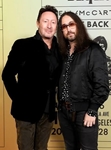
Sean Ono Lennon took to X over the weekend to clarify how his late father, John Lennon, provided for him and his half brother Julian Lennon before the former Beatles’ tragic murder in 1980.
Replying to a post on Sunday (Oct. 11) in which someone presumed, “One guy inherited most of the estate, the other largely cut out and forced to engaged in decades-long litigation in pursuit of a comparatively small share of it. Unbearably painful and enraging for the one, surely pretty darn awkward for the other. That they remain friends (and largely always were) is testimony to the redemptive power of being a chill dude with broad implications for the wider world.”
The comment was tied to a post from Sean a day earlier of the Lennon brothers enjoying a nice day out in nature to celebrate his 51st birthday and, according to Sean, the commenter got it all wrong.
“Julian and I inherited the same amount from our dad,” he wrote. “Our trusts were equal. Although his was slightly more, but negligibly so.”
Sean is the adult son of John and wife Yoko Ono and Julian, 63, is Lennon’s eldest, from his six-year marriage to his first wife, Cynthia Lennon. The men appear to h details
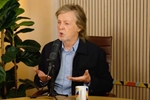
During the Beatles‘ heyday, by all accounts, Paul McCartney and John Lennon had a loving, as well as deeply competitive, personal relationship. And while it ended in messy animosity during the Fab Four’s breakup in 1970 and in a series of thinly veiled musical shots they took at each other in their solo material in the years after — check out McCartney’s “Too Many People” and “Silly Love Songs” and Lennon’s “How Do You Sleep?” — in the end they made peace before Lennon’s murder in 1980.
But, as it turns out, there is still one sore subject you can bring up about the two men that will get McCartney riled up: their heights.
On this week’s new episode of the pod Good Hang with Amy Poehler, the Parks and Recreation star waded into the subject with a simple question about the age gap between the Beatles, which unexpectedly turned into a Macca rant about the one fact about the band that he thinks filmmakers keep screwing up.
“George was how many years younger than you, Paul?,” Poehler asked. “I think like about one and a half [years younger],” he said of the late Beatles guitarist/singer, noting that Len details