- Register
- Log in to Tune-In
- Wishlist (0)
-
Shopping cart
(0)
You have no items in your shopping cart.

Beatles News
Much has been said and written about the break-up of The Beatles - and what might have been the catalyst that drove the final nail in the coffin. It was a combination of things - band members feeling neglected, resentment (“We’re the grooves, so just watch it, okay?”), pressure to deliver new music, the aftermath of Brian Epstein’s premature death, the drudgery of living in each others pockets day-to-day for years... and according to the narrative at the time, Yoko’s presence while the group was at work.
The Fabs fall apart
It’s not even entirely clear who split the group. John Lennon claimed he wanted out but didn’t know how to break it to the other three so rather than confront them, he let it simmer - perhaps hoping it would all run its natural course and peter out. Then, in April 1970, Paul McCartney let slip that it was all over in a press release interview for his new solo album that there would be no more Beatles - no new music, no tours or shows, no more writing collaborations with John.
To the question, “Are you planning a new album or single with the Beatles?” Paul bluntly replied, “No”. He elaborated, citing “personal diff details
The argument about who the “Fifth Beatle” might have been is a bit of a pointless one. No one was on a par with the contributions made by the four members themselves. But it’s intriguing to look back at the group’s history and note some of the fascinating characters who were a part, however tangential, of their story.
For instance, there was Alexis Mardas, aka Magic Alex, who briefly popped up in the group’s orbit in the late 60s. Alas, when the group needed Mardas to step up with his supposed technical expertise in 1969, things didn’t go as planned.
The Magic Man
A native of Greece, Alexis Mardas first started making the rounds of British pop stars when he became acquainted with Brian Jones of The Rolling Stones. In 1966, he met John Lennon when both men were frequenting the Indica book shop in London. Soon, Mardas joined Lennon’s entourage.
Mardas often boasted of his undiscovered technological innovations, many of which drew the wonder of Lennon. Some of his promised (but never quite realized) innovations included a house that hovered above the ground and music speakers embedded in wallpaper.
Unfortunately, Mardas also seemed to be a magnet for co details
There are lots of opinions swirling on the internet about The Beatles’ final years as a band, with some Fab Four fans posthumously judging the musicians for what they did (and didn’t do) in the tumultuous last few years of the 1960s. However, I would argue that Paul McCartney showed tremendous foresight when he—along with Ringo Starr and George Harrison—rejected a song John Lennon proposed the band release as their next single in the fall of 1969.
For some context, The Beatles had just released their penultimate album, Abbey Road, on September 26 of that year. The album’s lead single, “Something”, with “Come Together”, was set to come out on October 6. On September 30, fresh from the album release, John Lennon went into the studio to record “Cold Turkey” with the Plastic Ono Band, having been turned down by his other bandmates.
The Plastic Ono Band version came out on October 20. The songwriting credit was solely John Lennon. This marked a first for the musician who previously released all of his other compositions, even the personal ones, under the Lennon-McCartney partnership.
“Cold Turkey” Never Would Have Worked as a Beatles S
details
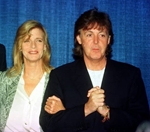
There's quite a lot of ground to cover in the upcoming Beatles biopics, but a source tells Closer that one of the four-part films' heartbreaking plotlines will center around the death of Paul McCartney's beloved first wife, Linda.
"Linda is a big character in the world of the Beatles," reveals the source, and director Sam Mendes "has opted to make her a huge part of these movies by hiring Saoirse Ronan, who is a four-time Oscar nominee, to play her."
McCartney, 84, wed Linda in 1969 and the pair, who shared daughters Mary, 57, and Stella, 55, and son James, 49, were married for nearly 30 years. He also adopted the photographer's daughter Heather, 63, from a previous marriage.
After the Beatles broke up in 1970, "it was Linda who saved" McCartney from his "deep, deep anger," the "Maybe I'm Amazed" singer told biographer Tom Doyle, per The Times U.K., and the pair went on to play together in the band Wings.
Then in 1998, Linda tragically lost her battle with breast cancer at the age of 56.
"When it comes to Linda's illness, the movies will go there, and they're doing it in a tasteful way that is fully aligned with Sir Paul's own wishes for the project," insists the source, adding that McCar details
There are lots of opinions swirling on the internet about The Beatles’ final years as a band, with some Fab Four fans posthumously judging the musicians for what they did (and didn’t do) in the tumultuous last few years of the 1960s. However, I would argue that Paul McCartney showed tremendous foresight when he—along with Ringo Starr and George Harrison—rejected a song John Lennon proposed the band release as their next single in the fall of 1969.
For some context, The Beatles had just released their penultimate album, Abbey Road, on September 26 of that year. The album’s lead single, “Something”, with “Come Together”, was set to come out on October 6. On September 30, fresh from the album release, John Lennon went into the studio to record “Cold Turkey” with the Plastic Ono Band, having been turned down by his other bandmates.
The Plastic Ono Band version came out on October 20. The songwriting credit was solely John Lennon. This marked a first for the musician who previously released all of his other compositions, even the personal ones, under the Lennon-McCartney partnership.
“Cold Turkey” Never Would Have Worked as a Beatles S
details
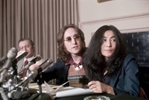
On October 24th, John Lennon filed a lawsuit against the US government, accusing it of tapping his phone.
After Lennon and Yoko Ono held their famed "bed-ins" in Montreal and Amsterdam, the FBI began keeping elaborate records on the muscian, including taking notes on his media appearances and wiretapping his phone.
During the tumult of the Vietnam War, the famous couple were self-proclaimed "peaceniks," frequently criticizing Nixon and the conflicts. The couple was vocal about their anti-war opinions, creating a huge anti-war movement in the USA and making friends with several members of the "New Left." Their political movement advocated for civil rights, gay rights, drug reforms, and feminism.
The FBI took note of their political opinions and affiliations. They became concerned that Lennon and Ono were planning a "large rock concert" in front of the convention hall in Miami Beach, where the Republican National Convention was being held. They were concerned this would interfere with the presidential election.
So, the FBI, tapped Lennon's phone and sent their agents to follow the former Beatles. He was very aware of this, admitting these practices made him "scared" and "paranoid."
"When it details
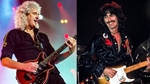
Brian May believes George Harrison deserves more recognition for his contributions to the electric guitar’s legacy. In his view, guitarists who dazzle with speed and fireworks have overshadowed the quieter virtues of the instrument — qualities Harrison possessed in abundance.
May knows a thing or two about making an electric guitar speak. He was crowned the world’s greatest guitarist in Total Guitar’s 2020 rankings, narrowly beating Jimi Hendrix to the top spot.
His work with his fabled Red Special is testament to his own formidable talent, though May’s playing often falls on the flashier end of the spectrum. Consider his solo on “Don’t Stop Me Now,” which he fought to include after Freddie Mercury argued that the song was better suited to piano. Yet, speaking to the Express in 2022, May explained why Harrison’s less showy approach deserves equal respect.
George Harrison plays his 1963 Rickenbacker 360/12 guitar on stage during rehearsals for the TV show 'Thank Your Lucky Stars' Summer Spin at Teddington Studios in London on 11th July 1964.
“At every stage in their career and their music development, they were models,” he sai details
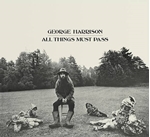
Though it would showcase the strengths of George Harrison as a songwriter better than The Beatles ever did, All Things Must Pass was not a smooth time for the so-called quiet one.
Harrison’s breakout solo album would come just a year after The Beatles had formally dissolved. His fellow bandmates had released projects of their own, but it was All Things Must Pass and songs like My Sweet Lord that gave Harrison a head start in his post-Beatles career. Despite the triple album featuring some of Harrison’s all-time great songs, including the Bob Dylan-inspired I’d Have You Anytime, the Something songwriter found himself feeling musically “paranoid” as a result of working with Paul McCartney and John Lennon. The songwriting duo would hardly let Harrison’s songs feature on The Beatles’ albums, leaving Harrison with a backlog of quality material that he placed on All Things Must Pass.
Speaking back in 1977 to Crawdaddy Magazine, Harrison confirmed that having Derek and the Dominos play on most of the songs, as well as finding a love for the Dylan-inspired I’d Have You Anytime, helped with the pains of recording his massive studio album.
He said: “I liked dif details
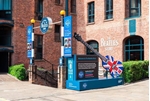
Kev McManus, Head of Liverpool UNESCO City of Music, reflects on this week’s announcement about a new home for The Beatles Story and how it will help support future talent…
Apple Corps will be opening a huge, new state of the art Beatles attraction in Liverpool in 2028. It is great news for the city in so many ways but for me what really struck home were the quotes from Paul McCartney and Ringo Starr. Both acknowledged that The Beatles and Liverpool are inseparable. The city made them, and their ongoing love for the place shone through in their words.
The other really exciting element for me was the announcement that every ticket sold to The Beatles Story will contribute to the Apple Corps Liverpool Trust, a charitable initiative established to provide financial support and opportunities for emerging Liverpool artists. This type of support is absolutely vital at the moment – a time when it is increasingly difficult for emerging artists to breakthrough into a music industry that has changed beyond all recognition since the days that The Beatles did so.
This gift back to the city and its musicians is a brilliant gesture and it is why during the local press launch we had some musicians wh details
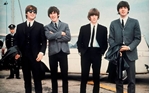
I like the Beatles, and I'm almost definitely sure that you do too. But I'm afraid their 21st-century omnipresence – impressive for a band that split up 56 years ago – is starting to bring me slightly down.
It has been revealed that there is to be a ginormous new Beatles museum in Liverpool, opening in 2028. Its 9,290 sq m will be packed with props and costumes from the four – yes, four – biopics of the band to be released the same year under the auspices of Sam Mendes. All this will come on top of the opening to the public of the band's former Apple Records headquarters in Savile Row, repurposed as another sanctum. This one promises seven floors of memorabilia.
Oh, and the dodgy Richard Curtis film Yesterday is being transformed into a stage musical, featuring the songs of Showaddywaddy – no, not really, it's The Beatles again.
One can't help feeling a little bit over-Beatled. Growing up in the Seventies, I naturally found the Sixties a bit naff, and the lingering overhang of The Beatles a bit tedious. Were people ever going to stop boring on about them?
After all, when you grow up after a big sensation has flared and died, you take it for granted. It will never be details
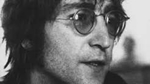
John Lennon was one of the first writers whose lyrics were studied by fans for their insight and depth. But Lennon became a little bit wary of those who’d try to find meanings that he didn’t think were there.
As a result, he adjusted late in The Beatles years and early in his solo career. He started keeping the lyrics simple. And he still found ways to captivate with his words and music.
“Don’t Let Me Down”
Lennon’s first response to those who went diving deep into his lyrics was to make them deliberately obtuse and nonsensical. The Beatles’ tracks “I Am The Walrus” and “Glass Onion” offer excellent examples of this approach. He eventually decided that he’d try to keep things as simple and direct as possible. “Don’t Let Me Down”, released as a B-side in 1969, offered the first evidence of this approach. Still relatively new to his relationship with Yoko Ono, Lennon used the song to plead for reliability from her. He doesn’t do anything fancy with the lyrics. Instead, he relies on his impassioned vocals, recorded during The Beatles’ rooftop concert at the start of 1969, to communicate.
“I Want You
details
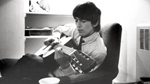
George Harrison may not have been part of The Beatles’ legendary songwriting partnership of Paul McCartney and John Lennon, but he had a talent early on for songwriting that deserved to be nurtured. He really stepped into his own in 1969 with a few self-penned Beatles tunes that would go on to change songwriting forever. These tunes were just a preview of what Harrison would do with his solo career.
“Something” from ‘Abbey Road’
Let’s start with the obvious. “Something” is one of The Beatles’ most enduring hit songs. And it’s easily one of the biggest releases from the Fab Four in 1969. Harrison penned “Something” as a love song with a beautifully constructed melody. The way those harmonics shift throughout the song is gorgeous. Many listeners at the time couldn’t believe how little Harrison had contributed to the band as a songwriter up until that point. “Something” would be Harrison’s first composition to get the A-side single treatment.
“Something” was a smash hit across the board back in 1969. It peaked at the top of the Billboard Hot 100 chart and No. 4 on the UK Singles chart. “Here C details
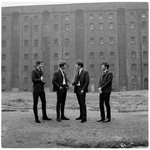
Apple Corps will take over management of the award-winning attraction The Beatles Story in 2028, moving it to a new location in St Johns Shopping Centre. The new experience will transport fans from The Beatles' post-war Liverpool childhoods through Hamburg, The Cavern, Beatlemania, Abbey Road, Shea Stadium, Savile Row and beyond, using immersive technology, original artefacts and spectacular reconstructed sets to bring the Beatles’ extraordinary story to life.
Fans will also be able to visit a brand new Yellow Submarine experience at Liverpool's iconic St Johns Beacon tower, also arriving in 2028.
Add your details below to confirm your interest in The Beatles: Liverpool 2028, be the first to receive all updates and to be notified when tickets go on sale.
The Beatles Story will be open as usual in 2026 and 2027. Please visit beatlesstory.com for more information
details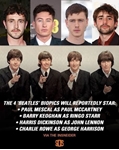
Nearly 59 years after the Beatles’ historic 1968 visit to the iconic Chaurasi Kutia in Rishikesh in Uttarakhand, the popular Beatles Ashram is all set to feature in an ambitious four-film project on the legendary band, directed by Oscar-winning filmmaker Sam Mendes.
An international film production delegation on Sunday met Chief Minister Pushkar Singh Dhami to discuss the proposed February 2027 shoot for The Beatles – A Four-Film Cinematic Event, being made by Neal Street Productions for Sony Pictures Entertainment in collaboration with Apple Corps.
The production is expected to bring more than 100 international crew members and around 150 Indian professionals to the state. Local arrangements are being coordinated by On The Road India, with opportunities expected for local technicians and service providers.
The four films will tell the individual stories of John Lennon, Paul McCartney, George Harrison and Ringo Starr. The cast includes Harris Dickinson as Lennon, Paul Mescal as McCartney, Joseph Quinn as Harrison and Barry Keoghan as Starr. A simultaneous global theatrical release is planned for April 2028.
The Beatles visited Rishikesh in February 1968 to study transcendental meditat details
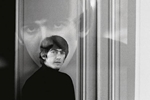
Some biographies give you a glimpse into music history. Others make you feel like you’ve stumbled into a private family album belonging to the greatest band that ever lived.
There are Beatles fans, and then there are Beatles obsessives. You know the type. The ones who can tell you which version of a song appeared on which release, who played what on a particular recording, and why a seemingly insignificant moment in a documentary deserves an entire afternoon of discussion. The ones who have spent years devouring every photograph, interview, bootleg and scrap of Beatles history they can get their hands on, convinced there must still be something out there they haven’t seen.
Enter THE THIRD EYE: Early Photographs, a remarkable collection of George Harrison’s personal photography, published by Penguin Random House, and quite possibly one of the most exciting things to land in the hands of a Beatles tragic in some time.
We’ve seen the Beatles from just about every conceivable angle. We’ve watched the documentaries, read the biographies, studied the album sleeves and pored over countless photographs of four lads from Liverpool who somehow changed the world. But there’s some details