- Register
- Log in to Tune-In
- Wishlist (0)
-
Shopping cart
(0)
You have no items in your shopping cart.

Beatles News
The childhood home of George Harrison of The Beatles is now open to visitors for the first time ever through scheduled guided tours.
Located at 25 Upton Green in Speke, the family home of George Harrison played a formative role in the ‘quiet’ Beatle’s early life and musical development, serving not only as his family residence from 1950 to 1962 but also as an early rehearsal space for The Beatles in the years before Beatlemania.
The experience has been developed and will be delivered by Dale Roberts, tour guide and co-owner of the property, who has spent over a decade sharing Beatles history with visitors from around the world. He became co-owner of the Harrison family home a year ago, after Ken Lambert asked him to come on board as an owner. Ken won the house at auction in 2022 in a well-publicised purchase of the property, Ken would turn into an Air BnB for guests to stay in.
“George’s story is a Liverpool story”
“This house is a reference point to a local Liverpool musician who would just so happen to be part of a phenomenon that changed the world. There has been huge interest globally in where The Beatles came from, and 25 Upton Green has always felt details
The Beatles are back on the Billboard charts thanks to Anthology 4, the new addition to the band’s Anthology series, which was recently reissued.
Anthology 4 features 36 tracks, including 13 previously unreleased demos, session recordings and more. It debuted in the top 10 on five Billboard charts, including both the Top Albums Sales and Top Current Album Sales charts, where it landed at #9.
The album is also at #7 on the Top Rock & Alternative Albums chart, #6 on the Top Rock Albums chart and #3 on the Indie Store Album Sales chart.
Anthology 4 was released as a standalone and was also part of the larger The Anthology Collection box set, with both debuting at #48 on the all-genre Billboard 200 chart. The Collection includes the first three Anthology releases, which originally came out in the '90s, and hit #1 on the Billboard 200 and the Top Album Sales chart.
The release of The Anthology Collection coincided with the Disney+ debut of the newly restored and remastered version of the Anthology documentary series, which aired on ABC in 1995. The new version was expanded from eight to nine episodes. A 25th anniversary edition of The Beatles Anthology book was also released in October.
details
The Beatles are famous for struggling to agree, but when it came to this one song Paul McCartney wrote for the Fab Four, three of them agreed unanimously about how much they hated the song. Nearly 60 years ago, the group released one of their most iconic albums, Abbey Road, and McCartney wrote one of their most forgotten hits, “Maxwell’s Silver Hammer”. However, the song and the sessions frustrated the group, and it is considered their worst song. Why Were the Beatles Members Frustrated With Paul McCartney and "Maxwell’s Silver Hammer"?
“Maxwell’s Silver Hammer” almost did not make it onto the album, as John Lennon, George Harrison, and Ringo Starr disliked the song due to the song’s complexity. McCartney first wrote the song in 1968 after the group’s trip to India, and it was intended for Let It Be. Even after the song was rejected, “Maxwell’s Silver Hammer” would soon find its way onto the Abbey Road album, but it almost destroyed the band.
As the songwriter, McCartney wanted the song to sound a certain way, but none of his bandmates were able to match his creative vision. This caused tension in the studio, as McCartney’s details
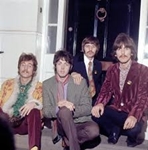
Two Beatles songs — "Real Love" and "I'll Get You" — return to multiple charts as the band's Anthology 4 and the Anthology Collection both debut inside the top 10. LONDON - MAY 19: English singer, songwriter and guitarist John Lennon (1940-1980), English singer, songwriter and bassist Paul McCartney, English musician, singer and drummer Ringo Starr and English musician, singer, songwriter and guitarist George Harrison (1943-2001) of the Beatles attend a press party at the home of manager Brian Epstein supporting the release of Sgt. Pepper's Lonely Hearts Club Band, May 19, 1967, in London, United Kingdom. (Photo by Jeff Hochberg/Getty Images)
The Beatles never have a completely quiet week on the charts, as people all around the world stream and buy the band’s music constantly. The group typically performs best in the United Kingdom, where all four musicians — John Lennon, Paul McCartney, George Harrison, and Ringo Starr — are originally from and where the outfit got its start.
As The Beatles score two new charting albums with both Anthology 4 and the larger, more all-encompassing The Anthology Collection, multiple tunes from the rockers find their way back to several different details

Sam Mendes has added eight to the cast of The Beatles — A Four-Film Cinematic Event, Sony announced on Thursday. They are David Morrissey (The Walking Dead), Leanne Best (Walk-In), James Norton (Happy Valley), Harry Lloyd (The Theory of Everything), Bobby Schofield (The Covenant), Daniel Hoffmann-Gill (Sherwood), Arthur Darvill (Broadchurch), and Adam Pally (Happy Endings).
Morrissey will play Paul McCartney’s father Jim McCartney, with Best as John Lennon’s Aunt Mimi, Norton as manager Brian Epstein, Lloyd as long-time music producer George Martin, Schofield as road manager and trusted confidant Neil Aspinall, Hoffmann-Gill as roadie Mal Evans, Darvill as press officer and friend Derek Taylor, and Pally as controversial music manager Allen Klein.
As previously announced, the films will star Paul Mescal as McCartney, Barry Keoghan as Ringo Starr, Joseph Quinn as George Harrison, and Harris Dickinson as John Lennon, with each telling the story of a different member of the band. Mia McKenna-Bruce, Saoirse Ronan, Anna Sawai, and Aimee Lou Wood also star in the respective roles of Maureen (Cox) Starkey, Linda (Eastman) McCartney, Yoko Ono, and Pattie Boyd.
We were first to report on the Bea details
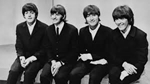
As if four upcoming Beatles biopics aren’t enough, the BBC is ready to give fans more.
The network has picked up a new drama series, Hamburg Days, which will focus on The Beatles’ early days as a band. The six-part series, based on the autobiography by German artist and musician Klaus Voormann, is set in the ’60s when Voormann and photographer Astrid Kirchherr meet a young Liverpool rock band, who are playing in the clubs of Hamburg’s St. Pauli’s red-light district.
“Together, they help spark a transformation that turns a scrappy group of teenagers into the greatest music phenomenon the world has ever known: The Beatles,” reads the series description.
“Hamburg Days is the fascinating story of how, in the space of two short years, a raw young band from Liverpool honed their music skills in Hamburg, before returning home to become an overnight worldwide success,” says Sue Deeks, head of scripted pre-buy acquisitions at the BBC. “It is an incredible story, accompanied (of course) by an amazing soundtrack!”
Voormann will serve as a consultant on the series. Casting on the project has not yet been announced.
Source: ABC New details
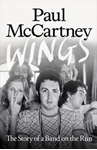
Paul McCartney had reached the pinnacle of global fame with the Beatles by the end of the 1960s. What he did for the next decade, after the end of the band themselves a few months later, is captured in this hefty oral history.
Wings: The Story Of A Band On The Run pairs McCartney with historian Ted Widmer, who has dug into archives and been given access to material from Man On The Run, a McCartney documentary due out early next year. There are comments from McCartney himself, ex-Beatles, other Wings personnel, family members and further figures in the Wings orbit – these including Sean Ono Lennon, Chrissie Hynde and graphic designer Aubrey Powell.
We get the inside track on Wings’ entry into the Bond theme annals – 1973’s Live And Let Die, perhaps the greatest example of the form to this day – and their ascent to American stadium rock status. There are also plentiful off-the-wall moments, from an attempted mugging in Lagos to the time some gnarly punk rockers approached McCartney in London, only to lavish unlikely praise on Wings’ exceedingly non-punk Mull Of Kintyre, 1977’s Christmas number one. Albums like Band On The Run itself are thoroughly dissected, alongside a cu details
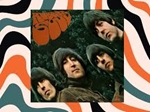
Exactly 60 years ago today, the Beatles released Rubber Soul, their sixth UK LP album.
Rubber Soul represented a sharp departure from the sound which had brought the group unprecedented worldwide success over the past three years. Even the atmospheric, autumnal cover portrait of the group hinted that what was on the record was going to be something new – more mature and introspective than what had come before. Rubber Soul ushered in the most intensely creative and experimental period of the Beatles’ career, which would continue to play out over the following two years.
Interestingly, this was only the second Beatles LP to completely eschew covers in favour of all-original material, following 1964’s A Hard Day’s Night. Although said by some – including producer George Martin – to be a pioneering example of a pop album being constructed as a cohesive whole rather than simply as a collection of songs, it did feature a few missteps, showing that the group were still in the early stages of honing this particular craft, which they would go on to perfect over their next two LPs, 1966’s Revolver and 1967’s Sgt. Pepper’s Lonely Hearts Club Band. Sonically, the group c details
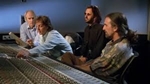
Producer George Martin revealed the "traumatic" aspect of making The Beatles' Anthology in the new ninth episode of the project's docuseries.
Thirty years after the original eight-part docuseries aired, the newly restored and expanded Beatles Anthology, which now includes the ninth episode, premiered over three nights on Disney+, starting on November 26. The larger project, The Beatles Anthology 2025, also features a reissued and expanded version of the project's original three double-album Anthology records. Meanwhile, a book, originally released in 2000, has also been reissued.
Anthology Nine offers fans a behind-the-scenes glimpse into the reunion of the remaining Fab Four — George Harrison, Paul McCartney, and Ringo Starr — and Martin, often referred to as the Fifth Beatle, who came together in the mid-1990s to create the project. While some have called the episod details
Paul McCartney‘s career endured into the music video era, but in the early years of the Beatles and his solo career, visual elements weren’t commonplace. Because of this, many McCartney songs are video-less. Below, find three McCartney songs, from the Beatles’ tenure or otherwise, that would’ve made killer music videos. McCartney should go back and give these songs their moment on screen.
Starting with a Beatles cut, “Yesterday” would be a strong contender for a music video. Though simple, this Beatles hit is narrative enough to lend itself well to visual storytelling. Moreover, the song’s emotionality has the perfect amount of melodrama for McCartney to flex his acting chops, if he had wanted to.
Because this song was released well before the ’80s music video craze, it never got its time to shine in this way. If we could move McCartney to make any visual retroactively, it would be this one.
“Jet”
“Jet” is one of McCartney’s most anthemic songs to date. The punchy, bright musicality of this song begs for a visual just as striking. There are aviation angles, ’70s glam angles, classic rock angles, and many more lenses details
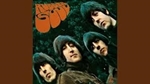
When Rubber Soul arrived in the UK on 3 December 1965, The Beatles stepped into a new phase of their creative lives, a phase that would soon define the sound and ambition of popular music. The sixth studio album from John Lennon, Paul McCartney, George Harrison and Ringo Starr landed during a frantic period in their global rise, yet the work itself came from a rare four-week window where the group were free of touring, filming and radio commitments, a gift they had never been offered before.
Recorded in London across October and November 1965, the album represented a shift away from Beatlemania’s high-volume demands, with the band focusing on the studio as a place of exploration. For the first time they had the space to work as recording artists rather than performers, a change that altered the direction of their career and the wider rock landscape.
Often described as a folk rock record, Rubber Soul grew from a mix of influences that the group absorbed during their August 1965 North American tour. They had played to more than 55,000 people at Shea Stadium, met Bob Dylan in New York and visited Elvis Presley in Los Angeles, events that broadened their sense of possibility. American radio during that trip in details
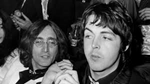
While it’s undeniable that the team of Lennon/McCartney produced some of the world’s most cherished hits, at least one of these gents was not a total fan. And he made no bones about going public with his opinions. Perhaps unsurprisingly, the naysaying Beatle in question was John Lennon.
While John and Paul teamed up brilliantly, John carried an albatross of perfectionism placed on himself. It made his artistic calling disproportionately difficult. This is, after all, the man with one of the most distinctive rock voices who hated hearing his self-described “thin, nasal” tones because they so differed from what he heard in his head.
As a general observation, it’s safe to say that Paul McCartney gravitated towards a more mainstream pop vibe than Lennon, who leaned into an experimental and often surreal approach. Paul had a fondness for old-timey music and rippling keyboards; John preferred more dissonance.
In the post-Beatles years, John came clean with some of his true feelings. His opinions are as enlightening as they are confounding. Here’s a partial list of Beatles standards that weren’t up to John’s exacting standards.
“Run for Your Life”
details
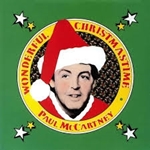
There are almost certainly worse holiday songs than Paul McCartney's 1979 "Wonderful Christmastime." But in a genre famous for cheesiness, it stands out as among the most polarizing. And it's notable for being written by the same Beatle who penned "Let It Be" on the band's final album.
The song? You know the one where McCartney sings "Simply having a wonderful Christmastime" a dozen times while a chorus of children chime in with "Ding dong, ding dong …" In the 46 years since it was released, it has become a seasonal staple — in inescapable rotation on radio, department store elevator music and streaming services.
For some, it's charming and joyful. For many others, it's hackneyed and repetitive. The vitriol against "Wonderful Christmastime" routinely lands it on perennial lists of the worst Christmas songs.
NPR Music's Stephen Thompson learned to abhor the song while working as a stocker at a grocery store in Iola, Wis., in the late 1980s.
"I hate that song," he says. It seemed to play nonstop for the whole of December, he recalls. "It's this insistent, tinny little synth-pop earworm that once it gets that hook under your skin, you can't shake it. And not in a good way."
"Pau details
In February of 1964, The Beatles scored their first-ever No. 1 hit on the Billboard Hot 100 with their single, “I Want To Hold Your Hand”. Following that No. 1 hit, The Beatles went on an incredibly dominant run and scored a string of No. 1 hit singles. Needless to say, The Beatles were are the height of their powers, and even if creating a No. 1 single wasn’t their objective, they still did it. Even though this is the ultimate goal of many bands and musicians, Ringo Starr and the rest of the band had a slight problem with it, because once you’ve gone No. 1 several times, where else is there to go?
Do No. 1 hits make a lot of money and produce deals for the opportunity to make more money? Yes, but if you’re a creative person, then you know money isn’t everything, and that the real currency is outperforming your former art. Well, that is seemingly what The Beatles wanted to do, but when they kept garnering No. 1 hit after No. 1 hit, they were worried that they had reached their creative peak. That being said, when they finally didn’t create a No. 1 hit, they were, weirdly enough, a bit relieved.
Why a Non-No. 1 Hit for The Beatles was a Breath of Fresh Air
Recalling details
A remastered edition of the classic documentary series about the legendary rock band — with an additional episode included.
“It’s almost impossible to get the definitive story of the Beatles,” says Paul McCartney in The Beatles Anthology. That hasn’t stopped people trying. The craze for filmed fodder about the Fab Four has barely relented since the band split up in 1970; in the last five years alone, we’ve had films ranging from excellent (Peter Jackson’s Get Back) to perfectly fine (Martin Scorsese-produced Beatles ‘64) to niche (the Cirque du Soleil/Beatles collab All Together Now). Not to mention the four major biopics on each member, from Sam Mendes, arriving in 2027.
Now we have the return of the account that arguably comes closest to “definitive”. The Beatles Anthology was a landmark project when it was released in the early ‘90s, consisting of an 8-part television series (broadcast on ITV in the UK and ABC in the US), a collection of albums, and a book. Made with full participation of the band’s surviving members (McCartney, George Harrison and Ringo Starr), it aimed to tell the exhaustive story of the band “more popular than Je details