- Register
- Log in to Tune-In
- Wishlist (0)
-
Shopping cart
(0)
You have no items in your shopping cart.

Beatles News
Staring at her reflection in the old recording booth window, Michelle Graham recalled a seemingly long-lost era.
“It is very, very sad,” Graham, 48, said, pausing to look around the damp, moldy studio. “I just wish you all had seen it back the way it was before.”
When it was opened by George Martin in 1979, AIR (Associated Independent Recording) studio was a state-of-the-art recording facility which just happened to be in Montserrat, a tiny British Overseas Territory in the eastern Caribbean. Stars including Paul McCartney, Elton John, Boy George, Stevie Wonder and Sting passed through this studio to record some of the biggest hits of a generation.
Seventy-six albums were made here before the studio shut its doors in 1989, when the island was devastated by a hurricane. Six years later, Montserrat took another hit when the Soufrière Hills volcano began erupting, ultimately destroying the island’s capital, Plymouth, in 1997.
Nowadays the wasp-infested building which once housed AIR is a mere shell of its former self. But for many Montserratians, it remains a symbol for what their nation used to be.
By: Ryan Shuessler
Source: The Guardian
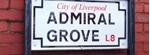
BEATLE fans looking for an extra special bit of memorabilia could find themselves getting into the grove after it was announced that Ringo Starr's childhood Liverpool home is to go under the hammer.
Number 10 Admiral Grove, in the Dingle, where the teddy boy drummer lived until he was 21, is up for auction after its tenant of 37 years died last year.
Owner social landlord Plus Dane will be selling the two-up-two-down to the highest bidder at a special March auction at Liverpool's world famous Cavern Club. It has a guide price of £55,000, but auctioneers Countrywide are hoping it might attract investors with an interest in the Fab Four.
According Plus Dane, which says profits raised will be ploughed back into its housing stock in the area, the Victorian terrace was a regular haunt for the Beatles and Cilla Black in their younger days. If that wasn't enticement enough, it also points to The Empress pub, at the end of the street, which graced the cover of Ringo’s first solo album, Sentimental Journey, in 1970.
A number of restrictions have been placed on the sale of the house so it cannot become a tourist attraction or museum.
Source: Liverpool Confidential
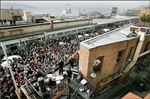
This weekend Creme Tangerine will be taking to a rooftop in downtown Kirkland to celebrate the Beatles final concert in London.
Creme Tangerine, headed by Kirkland Performance Center Executive Director Jeff lockhart, will perform on the rooftop balcony of the Livengood Alskog building at 121 3rd Ave on Saturday at noon. The free 45-minute event is put on by the KPC and the Kirkland Chamber of Commerce to benefit Northwest Harvest and will include well-known, memorable Beatles songs, including those performed during the last concert.
Previously, the rooftop concerts were held at Pike Place Market in Seattle starting in 2009 in tribute to the 40th anniversary of the Beatles last concert. This year, Lockhart said, they are holding the performance in Kirkland after they decided to play at Pike Place during the summer to accommodate the large crowds. “We just decided as long as people wanted to keep coming out we’ll keep doing it,” he said. “It’s been so cool over the years to see streets packed, shoulder-to-shoulder with people celebrating the music of the Beatles on the last weekend of January,” Crème Tangerine’s leader singer Byron Prather said in a press release. details
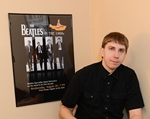
Butler University graduate Aaron Krerowicz has turned his love of music and the Beatles into a one-of-a-kind career. As in, he’s the only one. Krerowicz, who lives in Carmel near the border with Zionsville, bills himself as the country’s only full-time Beatles scholar, and fortunately for local Fab Four enthusiasts, he moved to the area in September after attending graduate school and living in New England the past seven years.
He’ll be giving his signature multimedia presentation, “The Beatles: Band of the Sixties,” at 6:30 p.m. Feb. 1 at the Hussey-Mayfield Memorial Public Library, 250 N. Fifth St., in Zionsvillle.
“That’s by far the most popular, because it’s just an overview in general scope,” Krerowicz said of the presentation. “A lot of the others are specific albums or specific songs or specific angles like Paul’s bass playing or something like that. We just go year by year, 1960 through 1970. It’s a very good survey of their career.”
While “Band of the Sixties” is Krerowicz’s most popular, it’s just one of more than two dozen Beatles presentations in his repertoire. Album- and song-specific prese details
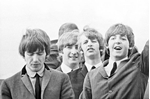
Roll up, step right this way – particularly if you’re a Beatles fan planning a weekend in the band’s home city of Liverpool. Tens of thousands of Fab Four followers do just that each year, with the most famous group in the world generating millions of pounds for the city. And all this despite the fact that John, Paul, George and Ringo parted ways almost five decades ago.
There’s certainly plenty to see and do if you do make the trip to the banks of the Mersey – whether it be from Argentina, Australia, Alamaty or Andover. Where to start? What to do?
Start your weekend on the Liverpool waterfront where you can admire – and have your photo taken with – the new Beatles Statue. The latest addition to the city’s Beatle attractions, the statue was commissioned and paid for by the Cavern Club and was unveiled on the Pier Head in December by John Lennon’s sister Julia Baird. It’s modelled on the giant image of the young John, Paul, George and Ringo walking along the street which adorns the front of the HMV store in Liverpool One.
By: Catherine Jones
Source: Liverpool Echo
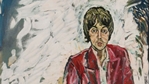
CAPTURING THE WHIMSICAL SPIRIT of one of the world’s great musicians and one of the ’60s best-dressed men, painter John Bratby’s Paul McCartney portraits ooze character, one of them freezing the Beatles tunesmith in mid-whistle, or perhaps even a trademark ‘Ooooooh!’.
Two Macca portraits that Bratby painted in 1967 are reunited for the first time at Hastings’ Jerwood Gallery between January 30 and April 17, 2016, in a show of the late painter’s works entitled John Bratby: Everything But The Kitchen Sink, Including The Kitchen Sink. But a third McCartney by Bratby – this one, presumably – appears to have hunkered down and has so far eluded curators.
Bratby, who died in his adopted home town of Hastings in 1992 whilst walking home from his local fish and chip shop the day after his 64th birthday, was one of the British art scene’s great “radical realists” of the 1950s and ’60s. Celebrities who sat for him included McCartney, Michael Palin, Arthur Askey and Claire Rayner. He is thought to have painted over 3,000 works, and many of the exhibition’s most fascinating items were crowdsourced after an appeal for submissions elicited an a details
It’s impossible to visit Liverpool and not intertwine your visit with The Beatles somehow. Whether it’s a visit to the museum down on Albert Dock or a pint in Mathew Street’s legendary Cavern Club, the influence of the most influential rock band in history can be seen right throughout the city.
In February of 1967, The Beatles released ‘Penny Lane’ as one half of a double A-sided single, accompanied by ‘Strawberry Fields Forever’. While the former did not top the charts in the UK – nor did the combination continue the band’s four-year stint of continually chart-topping singles – ‘Penny Lane’ remains one of the bands most revered records, and was ranked as the nation’s 6th favourite Beatles track in a recent ITV poll.
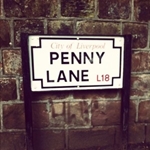
The song’s title is eponymous with the street of the same name, and can be found at Smithdown Place, just less than four miles from Liverpool Lime Street.
In an interview with Clash magazine in 2009, Paul McCartney discussed the song’s origin, saying: “’Penny Lane’ was kind of nostalgic, but it was really a place that John and I knew; it was actually a bus terminus. I’d get a bus details
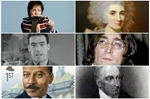
FROM time to time, Scousers like to give themselves a pat on the back (we’re all guilty of it). This set of Merseyside natives however deserve a pat on the back, a round of applause and your last Fruittella.
From war heroes to recording artists, throughout the centuries scousers have lit up the world stage. The banks of the Mersey have produced many men and women of magnitude- individuals that have changed the course of history with their talent, wit and bravery.
Paul McCartney
With sixty gold discs and over one hundred million album sales to his name, Paul McCartney is the most successful recording artist of all-time.
Born in 1942- a resident of Speke- McCartney was a founding member of The Beatles, who would influence a generation of music makers like no other. The list of Beatles firsts is as long as it is remarkable. The first band to occupy the top three places on the American Billboard. The first band to play a sports stadium. The first band to make a concept album. We could go on all day. Paul McCartney was central to the bands pioneering, giving us songs like ‘Yesterday’, ‘Blackbird’ and ‘All My Loving’. A songwriter of the highest order, his body details
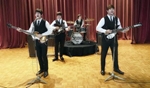
There is no better way to while a winter weekend away – unless you count the holes in Albert Hall – than attending the second annual Beatles Weekend this coming Friday and Saturday (Jan. 29 and 30) at the Spire Center for Performing Arts in downtown Plymouth.
Need a little nudge? Well first, it will be nice and warm inside the Spire, and it has a great sound system and a spectacular line up of local favorites, national experts, full-on imitators and talented musicians all paying tribute to the Beatles.
There will also be great food, beer on tap, fascinating memorabilia and a chance to stage your own mini Magical Mystery Tour.
The fun begins Friday evening at 6 with a showing of the world’s first full-length music video, the Beatle’s film “A Hard Day’s Night.”
At 9:30 Friday night the live music starts with Plymouth’s own Fab Four – give or take – 3rd Left! 3rd Left’s Brian Hitchings kicked off last year’s weekend with a unique take on "Blackbird," and this year the band has put together an entire set from the Lennon-McCartney songbook. Diehards can hang on after 3rd Left finishes and watch the extravagant psychedelia of the s details
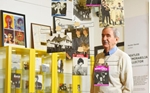
In an achingly cool canal-side gallery in London’s trendy East End, Tim Baker is showing me his deeply uncool collection of toy soldiers. Or rather, the 1,000 toy soldiers he is arranging on shelves today, which represent a mere twelfth of his total, and still-growing, stash. “These flat ones from the Franco-Prussian war are German, and are still produced today,” the 68-year-old actor tells me. “Those Danish ones you were supposed to make yourself: you bought the moulds and melted down bits of lead pipe. Those French ones were given away in cans of coffee, and you painted them yourself. A lot of these are hand-painted.”
His Beatles collection is probably the most valuable of all those represented at Proud: he bequeathed the original handwritten lyrics of Help, I Wanna Hold Your Hand and Yesterday (“a bit of a fiddle – Paul wrote that out later for me in 1966”) to the British Museum in 1985 when he realised “they were worth more than my house”. Kelle Blyth has some very rare items but just loves the way her multi-coloured, different-headed Pez dispensers look: she doesn’t even like the sweets. Jill Latter started making dolls’ house furniture while c details
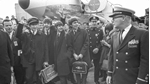
Bill Eppridge was sent on a photo assignment for Life Magazine on Feb. 7, 1964. Based on how his editor described the job, Eppridge had no way of knowing it would be one of the most important days of his career.
"Dick Pollard at Life told him 'go the airport, JFK, there's a rock group arriving called The Beatles,'" said Adrienne Aurichio, wife of the late photojournalist. "[Pollard] was not too impressed by them. He said for him to just get pictures of them arriving."
Eppridge, however, was impressed, not just by the four musicians, but also by the mob of fans. They were everywhere: against barricades, on the roof, inside and outside the terminal, most of them young girls, holding banners, reaching out to touch the stars, shrieking for all they were worth.
"He told Dick 'this is kind of interesting, I'd like to stick with it for a few days,'" Aurichio said. "He was more interested in the reaction. He liked to see what people saw in them."
He tagged along on their U.S. journey for six days. That road trip was the basis for a 2014 book, "The Beatles: Six Days that Changed the World," with 148 pictures. That book has been condensed into a 55-item exhibit, which is on view now at Western Connecticut details

The Beatles exemplify the enduring power of pop music — more than half a century old but still playing in headphones everywhere.
In December, the music of the Beatles appeared on streaming sites like Spotify and Apple Music for the first time. In the first three days, Beatles songs were played 70 million times. "They are the standards of the last 50 years," said songwriter and former Barenaked Lady Steven Page.
Page has long been an encyclopedic Beatles fan, and credits the band with greatly influencing his own music. On Thursday, he mounts a tribute to the Beatles, singing the songs of Sgt. Pepper's Lonely Hearts Club Band at the Sony Centre with the Art Of Time Ensemble.
He told Metro Morning host Matt Galloway that the Beatles are a part of life for a lot people, including him. "They were the ones who made me want to make records," he said. He remembered lying on his parents' floor, with his "giant Radio Shack" headphones, getting excited about songs like For No One, off of the album Revolver.
"I remember hearing it as a seven or eight-year-old, and feeling emotionally overwhelmed," he said. Page talked also about the shorter songs on the self-titled album The Beatles, better known as th details
As the opening lyrics to The Beatles’ first truly psychedelic album tell us, “It was twenty years ago today; Sgt. Pepper taught the band to play.”
But it’s been more than 50 years since John, Paul, George and Ringo arrived in the U.S. for the first time, to be photographed descending the steps of a jet to the hysterical greetings of more American fans than they anticipated.
More than 70 million Americans watched the Beatles’ first performance on the Ed Sullivan Show on Feb. 9, 1964. Nearly half the televisions in the country were tuned in. Beatlemania had begun.
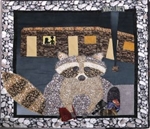
That half-century anniversary has been marked by quilters, both nationwide and around the world, in an installation of art quilts on display at the Barns of Rose Hill in Berryville starting Jan. 30.
“Inspired by The Beatles” is a collection of 149 quilts, each illustrating in fabric art the title of a Beatles song.
“It’s really great fun looking through these,” said Elaine Dennison, who organized the show. Each quilt is a 24-inch square. Some are simply stitched and others elaborately decorated with beads, lace and other materials.
By: Maggie Wolff Peterson
< details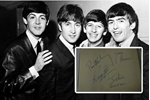
It's not every day you manage to get a celebrity's autograph. And you would think getting autographs belonging to each member of one of the most iconic bands of all time and players from England's only World Cup-winning team would be priceless. But this rare collection of hero signatures is something money can buy, thanks to a Sutton Coldfield woman who gave up her beloved collection of famous names, which sold at auction this week for £1,800.
The autographs of each member of The Beatles from when they performed in Coventry in the 1960s, plus football legends including Bobby Moore and Geoff Hurst, are contained within the precious autograph book which belonged to Jill Darby.
"It sounds very exciting but in fact it was a bit of a cheat because I had an aunt whose name was Marjorie Warden and she worked in the Coventry Hippodrome box office at the time and on this occasion she volunteered to get The Beatles' autographs for me, which is what she did," she explained. The exciting discovery caused quite a stir at Richard Winterton Auctioneers in Lichfield where the star lot went under the hammer on Wednesday (January 20).
Director Richard Winterton said: "You see quite a few autograph books details
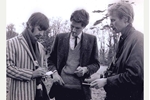
When Beatlemania hit Sevenoaks on a grey winter's day in 1967 – a story which has been well covered by this newspaper – five local girls were given a ringside seat while the filming of the first ever pop video took place in Knole Park.
One of the girls had discovered the best-kept secret of the century. John, Paul, George and Ringo were to film a sequence at a special location in the park to accompany the release of their forthcoming single, Strawberry Fields/Penny Lane.
She told four of her friends who all played truant and searched the park. They came out of the woods into a clearing and there were the Fab Four climbing out of a black Rolls Royce followed, in other cars, by a team of technicians.
The girls were invited to stay, given autographs and made to promise they wouldn't tell their friends. The Chronicle later spoke to the five truants, who wore headscarves so they should not be recognised, and then begged us not to print their surnames. One of them said: "None of us have ever had such a wonderful thing happen, but we should have been at school."
To this day I don't know the names of the five lucky girls who had the Beatles to themselves for the duration of that day's filming details