- Register
- Log in to Tune-In
- Wishlist (0)
-
Shopping cart
(0)
You have no items in your shopping cart.

Beatles News
When Beatlemania hit Sevenoaks on a grey winter's day in 1967 – a story which has been well covered by this newspaper – five local girls were given a ringside seat while the filming of the first ever pop video took place in Knole Park.
One of the girls had discovered the best-kept secret of the century. John, Paul, George and Ringo were to film a sequence at a special location in the park to accompany the release of their forthcoming single, Strawberry Fields/Penny Lane.
She told four of her friends who all played truant and searched the park. They came out of the woods into a clearing and there were the Fab Four climbing out of a black Rolls Royce followed, in other cars, by a team of technicians.
The girls were invited to stay, given autographs and made to promise they wouldn't tell their friends. The Chronicle later spoke to the five truants, who wore headscarves so they should not be recognised, and then begged us not to print their surnames. One of them said: "None of us have ever had such a wonderful thing happen, but we should have been at school."
To this day I don't know the names of the five lucky girls who had the Beatles to themselves for the duration of that day's filming details
Thirty-five years ago today, an issue of Rolling Stone magazine hit the newsstands featuring John Lennon and Yoko Ono on the cover. That photo, taken by the great Annie Leibovitz, answered for the last time any lingering question anyone might have about the bond between the famous couple.
On the morning of December 8, 1980, Leibovitz arrived at the Dakota, the apartment building west of Central Park where John Lennon and Yoko Ono lived. Although Rolling Stone editor Jann Wenner “never told me what do to” when she went on a photo shoot, Leibovitz has said, this one time he did: “Please get some pictures without her.”
Fortunately, that order was ignored.
Yoko Ono was still considered, among some rock fans, the interloper who had broken up the Beatles. John Lennon didn’t see it that way, of course. He’s never felt about anyone the way he felt about Yoko Ono. “It’s called love,” he told journalist Howard Smith. “It’s a precious gift.”
“I thought it was an abstract thing, you know,” Lennon added. “When I was singing about ‘all you need is love’ I was talking about something I hadn’t experienced. details

Given the ubiquity of The Beatles in popular music, you might think an artist would steer well clear of covering any of their songs.
That's not to take anything away from the biggest band of all time, but the unique stamp they put on every one of their songs makes it hard, when listening to a reimagined version, to think of anything but the usually superior original.
Milos Karadaglic, then, will have to forgive the fact more than a few eyebrows were raised when he announced he was releasing a whole album of Beatles covers.
"I understand any surprise, but I see music as one whole thing - music is music - and I'm not bound by the boundaries of genre," says the 32-year-old. "The Beatles were a perfect subject to take. This is music that has stood the test of time, similar to classical music in that it's been there for as long as we can remember, and its impact is the same as the first time it was played. I've taken something timeless, and brought it into my world, this is why it works."
Milos - like all the best musicians, he only needs to go by his first name - is a classical guitar player, arguably the world's best, born in what's now Montenegro in the former Yugoslavia.
Source: The Shuttl details

Here are some hypothetical scenarios that never actually happen:
You stroll into the gym, iPhone and earbuds in hand, and make your way to a treadmill to get a workout started. You get the treadmill to a nice speed, and you start your run. “Almost forgot!” you think to yourself: “Music!” You take out your iPhone, open Spotify, and play “Yellow Submarine” by the Beatles to get yourself going.
No.
What a night. You and your friends just had the time of your lives and are feeling on top of the world. The night is still young, and the group hops into your car. You can almost feel the vibrant energy in the air. “Hey! Give me that aux cord!” your pals yell. You grant their wish, and everyone braces for a bassline strong enough to barrel roll the vehicle in which they’re sitting. With the entire universe of music at their command, what do your friends play? “Dear Prudence” off of the Beatles’ “White Album.”
Again, no.
It must’ve been such a good idea at the time. The Beatles are the most popular band of all time, and Spotify is now becoming the most popular music service in the world. Why not finally combin details
The effect of Mersey Beat upon popular culture needs no exaggeration. Arguably the first major youth movement in Britain, spawning The Beatles and Rock N’ Roll in the UK, it’s difficult to imagine how music history might have turned out without it. But what got the beat going?
Back then in Liverpool- fifty years before Facebook and Spotify - people had to find out about bands and gigs the old fashioned way. Step forward Mersey Beat Magazine - the unsung hero of a scene that placed Liverpool at the centre of the musical universe.
In 1959, Bill Harry was getting the cash together to fund a jazz publication but, after becoming friendly with a then little known group called The Beatles, he decided to change tack. Harry was a close friend of John Lennon and Stuart Sutcliffe, who - alongside artist Rod Murray - made up The Dissenters (Lennon’s other band who preferred a pint and a rant to playing guitars).
They’d regularly meet in city-centre pub Ye Cracke (where a commemorative blue plaque hangs in their memory) and discuss how they would one day change the world. They did a pretty ‘gear’ job of it.
After numerous failed attempts to get the national press interested details

"I have a bit of an obsessive streak to my personality, and the Beatles are a band that rewards obsessive listening. There are all sorts of little nuggets buried that you didn't hear the first 99 times, but the 100th time, you hear them. By the time I was in college, I was a full-on Beatles completist. I had given myself, like, a Beatles PhD. After college, I applied to teach at Saint Gregory the Great at Ashland and Bryn Mawr in Andersonville. It was basically a charter high school within the archdiocese, and the administration was so incompetent. They had just fired all the teachers and left only one nun, Sister Mary. The yearbook that year had all these bitter messages: "After working here for 25 years and being told I'm no longer capable of using technology . . . "
"Sister Mary was behind the front desk when I handed her my resumé, and she put it on top of the pile because she liked me for some reason, so that's how I got hired. Three weeks before the school year started, we're sitting in this office, me and Sister Mary and two other new teachers, and it was like, "Who's gonna teach American history? How about journalism?" I said, "Well, if you need a Beatles class, I'm your man." She says, "Will you have tim details

Sean Lennon remains one of rock & roll's most fearless collaborators. Back in 2013, he teamed with Deerhoof drummer Greg Saunier in the "incredibly liberating" improv duo Mystical Weapons, and when Rolling Stone checked in with the singer, songwriter and multi-instrumentalist this past October, he was enthusing over the Moonlandingz, a "fictional band" — including members of U.K. scuzz-rock sensations Fat White Family — making very real music.
Below, you can hear the fruits of Lennon's latest collaboration: a new venture with Primus leader and bass virtuoso Les Claypool called the Claypool Lennon Delirium. The group's debut track is the raw, proggy psych-pop suite "Cricket and the Genie." Claypool plays bass, while Lennon handles all other instruments. Lennon sings lead on this track, but Claypool also contributes vocals to the project.
As Claypool explains it, the pair "hit it off" during a 2015 summer tour featuring Primus, Dinosaur Jr. and Ghost of a Saber Tooth Tiger, the band that Lennon co-leads with singer and multi-instrumentalist Charlotte Kemp Muhl. "We had a few backstage, acoustic jamborees that I found interesting but when [Sean] sat in with us and melted our faces with his gui details
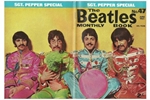
If the photos accompanying the Beatles’ 1967 album Sgt. Pepper’s Lonely Hearts Club Band haven’t already garnered enough attention — the dead historical icons! Hollywood stars! Wax figures! — it’s now Ontario’s turn to examine the photos in detail.
Paul McCartney’s powder blue military-style uniform is sporting an OPP badge on his left arm, right under his bright yellow fringed shoulder pad.
Beatles historian and author, Piers Hemmingsen, has tracked down this piece of memorabilia’s history and he will dish on it and other Beatles Canadian trivia pre-concert Jan. 21 when Art of Time presents a live performance of Sgt. Pepper’s Lonely Hearts Club Band at the Sony Centre. Accompanied by the Kitchener Waterloo Symphony Orchestra, singers Glen Phillips, Steven Page, Craig Northey and Andy Maize will present the album as it was originally recorded (with some extras added).
Long considered the first “concept album,” Sgt. Pepper’s created an alter-universe of circus performers and marching bands. Hemmingsen has written a book, "The Beatles In Canada — The Origins Of Beatlemania!” which is due out on Feb. 9. He points out t details
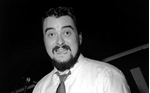
Giorgio Gomelsky,who has died aged 82, was one of the unsung heroes of the 1960s British rock scene as the operator of the Crawdaddy Club in Richmond-upon-Thames; he was effectively the Rolling Stones’ first manager, showed the young Beatles around London, produced the Yardbirds and put the Animals on stage.
He established the Crawdaddy Club (the name derived from Bo Diddley’s song “Doing the Craw-Daddy”) in a dingy back room of Richmond’s Station Hotel in January 1963, with the Dave Hunt Rhythm & Blues Band as its first house band. Gomelsky had already heard of the Rolling Stones, then a struggling blues tribute band, having met Brian Jones, who had formed the Stones in 1962. “At the Marquee and in the music pubs, Brian Jones had been bending my ear constantly,” Gomelsky recalled. “He used to say to me, 'Giorgio, Giorgio, you gotta come hear my band. Thith ith the betht blueth band in the land. Weally. Weally. Why are you not coming?’” When Hunt did not show one Sunday night, Gomelsky called the Stones’ piano player Ian Stewart and told him the gig was theirs. The fee was £1 each plus a share of the door takings.
In the meantime Gomelsk details
We already brought you part one of our list of 15 things you probably did not know about The Beatles, and now we’re back with part two! Check out eight more fascinating facts about the iconic English rock band that you definitely (probably) did not know below. You might be surprised by what you find out!
Number Eight: They Had Some Interesting Ambitions. In 1963, The Beatles were asked what their ambitions were. Lennon’s was “to write a musical,” McCartney’s was “to have my picture in the Dandy,” Harrison’s was “to design a guitar,” and Starr’s was “to be happy.”
Number Seven: They Had Their Own Talcum Powder. At the height of their fame, Beatlemania was so bad that consumers would buy literally anything that had The Beatles’ name attached to it. To capitalize on this, The Beatles released all sorts of merchandise, including bubble bath, women’s stocking, and talcum powder.
Number Six: “Yellow Submarine” Has Some Serious Sound Effects. To amp up “Yellow Submarine,” sound engineers added chains, whistles, handbells, and a tin bath to the track. This fell in line with The Beatles’ s details

When you walk into Penne Lane in Macomb Township, your senses are ignited.
The smell of fresh, homemade bread wafts from the kitchen, followed by the sweet sounds of ‘The Beatles’ pouring from the speakers, greeting you at the door.
“As the youngest of 5 brothers and sisters, I shared their passion for The Beatles in the 70’s and now I am able to combine both of my passions in my career – good food and good music.”
Chef Bob Halaas, a veteran of the U.S. Army’s food service program, is no rookie to the restaurant business. He and his wife Tonia owned a breakfast and lunch diner in Chesterfield for 11 years before selling it to new ownership, appropriately named Strawberry Fields.
“That restaurant became a shrine to The Beatles,” said Halaas. “My memorabilia was up on the walls, even the menu was Beatles themed, “I Want to Hold Your Hash”, the seafood portion of the menu was called “Octopuses Garden” and I could go on and now I am carrying my love for The Beatles over into our new venture.”
By: Lauren Podell
Source: Click on Detroit
If you don’t know any other band, you still probably know The Beatles. The Beatles remain one of the most relevant English rock bands of all time, and though not all members are still alive, it will be a long time before they’re forgotten. Despite the fact that The Beatles spent a considerable amount of time in the spotlight and under the scrutiny of the public eye, there are still some things that many people don’t know. With that in mind, here we present our list of 15 things you probably didn’t know about The Beatles. Check out part one below, and stay tuned for part two, coming soon!
Number Fifteen: Before They Were The Beatles, They Were The Quarry Men. John Lennon, Paul McCartney and George Harrison made a record in 1958 under the moniker of The Quarry Men. The record only cost them 17 and sixpence to create.
Number Fourteen: The Beatles Didn’t Come Up With Their Own Name. In fact, Stuart Sutcliffe was the one who came up with the name “The Beatals.” Sutcliffe was a friend of Lennon’s from art school.
Number Thirteen: They Didn’t Use Fender Guitars Until 1965. In an effort to distance themselves from fellow rock band The Shadows, The Beatl details
John Lennon swiped a fan's pint of beer and then pledged to buy one back for him during a gig which had long been forgotten, it is claimed. The singer was performing with band mates Paul, George and Ringo at the Ritz Ballroom in Kings Heath, Birmingham, in 1962.
The mop topped rockers had yet to hit the big time when they appeared in the second city and former Cadbury's worker Malcolm Ward told how he met Lennon - only to lose his drink to him. Now aged 75, Malcolm said: "I put my glass, as I always did, by a speaker. I shouted at Lennon ‘Oi, that’s my ale!’ "He shouted back ‘I’ll buy you one’. But he never did."
Malcolm, from Bartley Green, is among many readers who responded to the Sunday Mercury's call for details of the Beatles ’ ‘lost’ concert.
Last week the paper revealed how rock historians Bob Prew and Ken Whittaker issued an SOS after being tipped off about the group’s mystery February 1962 appearance, which predates what has always been thought the group’s first Birmingham appearance the following year. They wanted to know if it really happened. It did.
Malcolm, who now lives in Kent, knows – because he was there. A details
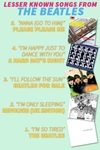
Thursday, Dec. 24, 2015, was a beautiful day for tech-savvy Beatles-lovers around the world: at last, the band's utterly amazing song catalogue was added to several music streaming services, including Spotify. While Beatles hits such as “All You Need is Love” and “Let It Be” are unquestionably familiar to practically everyone, some of their lesser-known songs are just as innovative, groundbreaking and catchy as the rest of their discography. If you’re looking to become more well-rounded in your familiarity with the Beatles’ music, check out these tracks.
5. “Anna (Go to Him)”
Album: "Please Please Me"
Though the song was originally written and performed by Arthur Alexander, the Beatles’ cover is often lauded as even better than the original. The Fab Four recorded the song for their debut album in 1963. While the Beatles were still incredibly young at the time of recording, the song beautifully showcases George Harrison’s mastery of the guitar, as well as John Lennon’s ability to produce an emotional, heartbreaking vocal performance.
By: Nicole Mulddon
Source: Los Angeles Loyolan
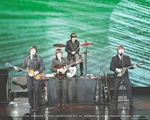
When Mark Benson decided to join a Beatles tribute band in the early 1980s, he never imagined the gig would last more than a few months, never mind a few decades.
“We never intended this would be full-time, and I never thought this would be anything other than a baby-boomer thing, playing a party or a class reunion or a nightclub or two,” said Benson, who has been playing John Lennon in the band 1964 ... The Tribute for 32 years. The band has been performing at venues large and small across the country since 1984.
“We were all in Top 40s bands, but none of us played in the same band at the same time,” said Benson, who hails from Akron, Ohio. “We were moving away from Top 40 and thought this would be fun to do to keep performing. We thought it was something we might do once a month, once every two months, but by the second year, we were doing it full time.”
“I don’t think The Beatles have ever gone out of style,” Benson said. “We falsely assumed it was going to be a baby boomer kind of thing, that the people who grew up in that time period would be most for it. There really isn’t any demographic that isn’t represented in The Bea details